SoSoActive
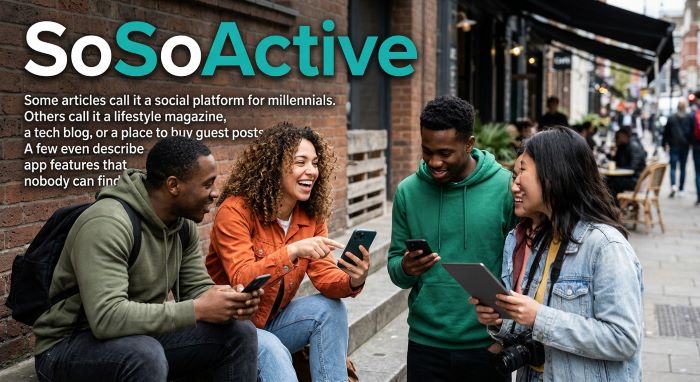
If you’ve searched for SoSoActive lately, you’ve probably found a confusing mix of answers. Some articles call it a social platform for millennials. Others call it a lifestyle magazine, a tech blog, or a place to buy guest posts. A few even describe app features that nobody can find.
So what is SoSoActive, really? This guide sorts fact from guesswork. We’ll look at where the name came from, what the website publishes today, why so many lookalike sites exist, and how you can decide whether to trust what you read there.
Quick Answer
| Question | Short Answer |
|---|---|
| What is it? | An online magazine covering business, finance, health, tech, travel, culture, and daily life |
| Where did the name start? | A Dallas interactive media company founded in 2011 |
| What did the original company cover? | Social and mobile music, music tech, and marketing for artists |
| When did the music coverage stop? | Around 2019 |
| Who runs the site now? | The current site doesn’t name an owner or company |
| Is there an official app? | No evidence of one has been found |
| Are there copycats? | Yes, several unrelated sites use similar names |
What Is SoSoActive?
Today, SoSoActive is best described as an independent online magazine. Its main site says it covers business, finance, health, technology, travel, culture, and everyday life. You’ll find how to guides, explainers, product roundups, celebrity profiles, and general advice articles.
That’s a long way from where the name began. To understand the brand, you need to know its history.
The Original Company: Music Media From Dallas
The name first belonged to a small interactive media company based in Dallas, Texas. According to its old LinkedIn and Crunchbase listings, it was founded in 2011 and described itself as “an interactive media company covering social and mobile music.”
Archived pages show the name had a meaning. It stood for “Get Social, Go Social, Stay Active.” That slogan fit the early 2010s, when social media and smartphone apps were changing how people found and shared music.
What It Covered
The original company focused on a narrow niche:
- Social music startups: New companies mixing music with social networks
- Mobile music apps: Streaming, discovery, and creation apps for phones
- Product reviews: Gadgets and tools for listeners and musicians
- Marketing advice: Tips to help independent artists promote their music online
Business listings put the team at two to ten employees. Its listed specialties were music marketing, social media marketing, advertising, and mobile marketing.
Why It Mattered
In the early 2010s, many independent musicians were trying to figure out platforms like SoundCloud, Spotify, and YouTube. Small niche publications helped them make sense of new tools. The Dallas outlet was one of many blogs serving that audience.
The Shift Away From Music
The music coverage stopped around 2019. After that, the domain went quiet for a while. Many small blogs from that era shut down or changed hands as social media replaced blogs as the main place musicians got advice.
The Comeback: A General Interest Site
In January 2025, the domain started gaining search traffic again. This time, the content looked very different. Instead of music tech, the site published business, lifestyle, finance, and entertainment articles.
According to an October 2026 analysis by Mostly Blogging, the site’s search traffic peaked at more than 43,000 monthly visits in January 2026. By mid October 2026, it had dropped to around 8,000 monthly visits, with about 100 ranking keywords. That’s a fall of roughly 81%.
Sharp rises and falls like this are common for general interest sites. Google updates often reward or demote sites based on content quality, expertise, and trust signals.
Who Owns It Now?
This is the biggest open question. The current site doesn’t clearly name a company, owner, or editorial team. Independent researchers haven’t been able to confirm who runs it today or whether it has any link to the original Dallas company.
That doesn’t mean anything shady is going on. Many small publishers keep a low profile. But it does mean readers should treat the site like any other source without clear authorship and double check important information.
Timeline of the Brand
| Year | What Happened |
|---|---|
| 2011 | Dallas media company launched, covering social and mobile music |
| 2011 to 2019 | Published music tech news, app reviews, and artist marketing tips |
| 2019 | Music coverage stopped |
| January 2025 | Domain began gaining traffic with business and lifestyle posts |
| January 2026 | Search traffic peaked above 43,000 monthly visits |
| March 2026 | Copycat sites appeared on other domains |
| April 2026 | Promotional articles began describing it as a millennial platform |
| October 2026 | Traffic dropped to about 8,000 monthly visits |
What Does the Site Publish Today?
The current site sorts its articles into broad categories. Based on its menus and recent posts, these include:
| Category | Typical Content |
|---|---|
| Business | Startup tips, marketing basics, company profiles |
| Finance | Budgeting, loans, investing basics, insurance |
| Health | Wellness tips, fitness, nutrition |
| Technology | App guides, gadgets, software explainers |
| Education | Study tips and learning resources |
| Law | Basic legal explainers |
| Travel | Destination guides and travel advice |
| Lifestyle | Home, fashion, relationships |
| Entertainment | Celebrity profiles and pop culture |
This wide mix is typical of general information sites. They aim to answer many popular search questions rather than serve one niche audience.
Why Is the Name So Confusing?
There are three main reasons people get mixed up.
1. Copycat Sites
Starting around March 2026, several other websites popped up using nearly the same name with different endings, such as .net, .io, and .blog. Researchers found no link between these sites and the original company. At least one of them openly sells guest posts, which is a common way to make money from a site with search traffic.
When a name starts trending in search, copycats often appear to grab some of that traffic. They may copy the design, the categories, or the “about” story.
2. Promotional Articles
In spring 2026, a wave of articles described the brand as a “media platform designed for millennials.” Some listed features like live Q&A sessions, polls, discussion threads, matchmaking, and virtual events. These articles often read like sponsored content, and their claims weren’t backed by evidence.
3. Repeated Unsourced Claims
Once one article makes a claim, others often copy it without checking. Many pages repeat that there’s an app or a social network under this name. Researchers who looked into it found no original app.
Facts vs Claims
| Claim | Status |
|---|---|
| Founded as a Dallas media company in 2011 | Supported by old business listings |
| Covered social and mobile music | Supported by archived pages |
| Name stands for “Get Social, Go Social, Stay Active” | Supported by archived pages |
| Now covers business, health, tech, and lifestyle | Visible on the current site |
| Has a dedicated social app | No evidence found |
| Offers matchmaking and virtual events | No evidence found |
| Copycat sites are official branches | No evidence of any link |
| Current owner is known | Not publicly confirmed |
Is SoSoActive Legit?
The answer depends on what you mean by “legit.”
As a real website: Yes. The main site exists, publishes regularly, and covers real topics.
As an expert source: Be careful. The site doesn’t clearly list authors, credentials, or an editorial policy. That’s a problem for topics like health, money, and law, where bad advice can cause real harm.
As a social platform: No evidence supports that description. If a page tells you to download an app or sign up for a membership under this name, be cautious.
How to Judge Any Website You Find
Whether you’re reading this site or another one, these checks help you decide how much to trust it.
Check the “About” Page
A trustworthy site usually says who runs it, where it’s based, and how to contact the team. A vague or missing about page is a warning sign.
Look for Author Names
Good publications list real authors with short bios. For health or finance advice, look for credentials such as a doctor, nurse, or certified financial planner.
Check the Dates
Articles should show when they were published or updated. Old information, especially about prices, rules, or laws, can be wrong today.
Look for Sources
Strong articles link to original sources, such as government sites, studies, or official company pages. If an article makes bold claims without sources, double check them elsewhere.
Watch for Sales Pressure
If a page pushes you to buy something, sign up, or share personal details quickly, slow down. That’s true for any site.
Search the Name Plus “Review”
A quick search for a site’s name with words like “review” or “scam” can reveal problems other readers have found.
Safety Tips for Readers
| Tip | Why It Matters |
|---|---|
| Type the domain yourself | Avoid landing on a copycat |
| Don’t download unknown apps | No official app is known to exist |
| Verify health and money advice | Check with experts or official sources |
| Avoid sharing personal data | Unknown owners mean unknown privacy practices |
| Use an ad blocker carefully | Some low quality sites use aggressive ads |
Tips for Bloggers and Businesses
Many people search this name because they’ve been offered guest posts or link placements on it or on its copycats. If you’re thinking about paying for a placement on any site, keep these points in mind:
- Check traffic trends. A site that has lost most of its traffic may offer little value.
- Look at content quality. Thin or generic articles can hurt how search engines view linked sites.
- Confirm who you’re paying. Copycat sites may not be connected to the domain you think you’re buying from.
- Read Google’s guidance. Paid links that pass ranking signals can break search engine rules if they aren’t marked properly.
- Consider the audience. A link only helps if real people in your niche read the site.
Lessons From This Brand’s Story
The history of SoSoActive shows how the web works today.
First, domains can outlive the businesses that created them. When a company stops publishing, its domain may be sold, reused, or left to expire. New owners can build something very different under the same name.
Second, search traffic is fragile. A site can grow fast and then lose most of its visitors after a search engine update.
Third, popular names attract copycats. As soon as a term trends, other sites rush in, which makes it harder for readers to find the original.
Finally, unsourced claims spread quickly. One promotional article can shape what dozens of other pages say. That’s why checking original sources matters.
Alternatives for Trusted Information
If you want reliable information on the topics this site covers, consider sources with clear authorship and editorial standards:
| Topic | Trusted Sources to Consider |
|---|---|
| Health | Government health agencies, major hospitals, medical journals |
| Finance | Government consumer finance sites, established financial publications |
| Technology | Official company documentation, established tech outlets |
| Travel | Official tourism boards, government travel advisories |
| Business | Small business agencies, established business news outlets |
Frequently Asked Questions
What does the name stand for? Archived pages show it stood for “Get Social, Go Social, Stay Active.”
When was the original company founded? In 2011, in Dallas, Texas.
Is there an official app? No evidence of an official app has been found.
Who owns SoSoActive today? The current site doesn’t name its owner, and independent researchers haven’t confirmed who runs it.
Are the .net, .io, and .blog versions official? There’s no evidence that they’re connected to the main site or the original company.
Final Thoughts
SoSoActive has had two very different lives. It began in 2011 as a small Dallas company covering social and mobile music. Today, the domain hosts a general interest magazine with broad topics and no clearly named owner. Along the way, copycats and promotional articles muddied the story.
The site can be a starting point for light reading, but it’s smart to verify anything important, especially health, money, or legal advice, with trusted experts and official sources.
Key Takeaways
- SoSoActive began in 2011 as a Dallas interactive media company covering social and mobile music.
- The name stood for “Get Social, Go Social, Stay Active,” and the music coverage ended around 2019.
- The domain returned in 2025 as a general interest magazine covering business, health, tech, and lifestyle.
- Search traffic peaked above 43,000 monthly visits in January 2026 and fell about 81% by October 2026.
- The current owner isn’t publicly named, and no official app has been found.
- Several unrelated copycat sites use similar names, so readers should type the domain carefully.
- Verify important advice from the site, especially on health, money, and law, with trusted sources.