
Rump Roast vs Chuck Roast
Standing at the meat counter, you’ll often see two big, affordable cuts side by side: rump roast and chuck roast. Both make a great Sunday dinner. But they come from different parts of the cow, have different textures, and need different cooking methods.
This guide compares rump roast vs chuck roast, so you can pick the right roast every time.
The Short Answer
- Chuck roast comes from the shoulder. It’s well marbled with fat and connective tissue. It’s best cooked low and slow until it falls apart.
- Rump roast comes from the rear leg (the round). It’s leaner and firmer. It’s best roasted to medium rare and sliced thin, or braised gently.
If you want shreddable, juicy pot roast, choose chuck. If you want lean slices for roast beef sandwiches, choose rump.
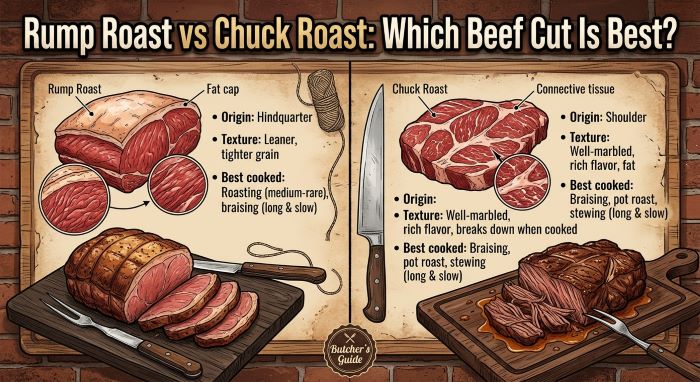
Rump Roast vs Chuck Roast at a Glance
| Feature | Rump Roast | Chuck Roast |
|---|---|---|
| Where it’s from | Hindquarter (round) | Shoulder (chuck) |
| Fat level | Lean | Well marbled |
| Connective tissue | Moderate | High |
| Flavor | Mild, beefy | Rich, deep beef flavor |
| Texture when done | Firm, sliceable | Tender, shreddable |
| Best method | Oven roast, slow braise | Braise, slow cooker, pressure cooker |
| Target temp | 130°F to 135°F for slicing | 195°F to 205°F for shredding |
| Price | Budget friendly | Budget friendly, sometimes slightly more |
| Best dishes | Roast beef, French dip, deli slices | Pot roast, shredded beef, stews |
What Is Chuck Roast?
So, what is chuck roast exactly? It’s a cut from the chuck, the cow’s shoulder area. The shoulder muscles work hard, so the meat is full of connective tissue (collagen) and fat marbling.
That might sound tough, but it’s the secret to great pot roast. When you cook chuck roast slowly with moisture, the collagen melts into gelatin. The result is juicy, tender beef that pulls apart with a fork.
Chuck roast goes by many names:
- Chuck eye roast
- Shoulder roast
- 7 bone roast
- Blade roast
- Pot roast (as a general label)
If you’ve ever asked “what is chuck roast good for,” the answer is anything slow cooked: pot roast, shredded beef tacos, beef stew, and barbacoa.
What Is Rump Roast?
Rump roast comes from the round, the back leg of the cow. Since this area is mostly lean muscle, rump roast has much less fat and connective tissue than chuck.
In the US, many stores label it as bottom round rump roast. It’s flavorful but can turn dry and chewy if overcooked. Rump roast is best when:
- Roasted to medium rare and sliced very thin against the grain
- Braised gently with plenty of liquid
- Cooked in a slow cooker for sliced, not shredded, beef
Arm Roast vs Chuck Roast
Another common question is arm roast vs chuck roast. Here’s the good news: an arm roast is a type of chuck roast. It’s cut from the lower part of the shoulder, near the arm.
| Feature | Arm Roast | Chuck Roast (Chuck Eye or Blade) |
|---|---|---|
| Location | Lower shoulder | Upper shoulder |
| Fat | Leaner | More marbled |
| Bone | Often has a round arm bone | Boneless or blade bone |
| Tenderness | Slightly firmer | Very tender when braised |
| Best use | Pot roast, slicing | Pot roast, shredding |
In the arm roast vs chuck roast choice, arm roast is a bit leaner and holds slices well, while chuck eye or blade roasts shred more easily. Both are excellent for braising.
How to Cook Chuck Roast
Chuck roast loves low, slow, moist heat.
Classic pot roast method:
- Season a 3 to 4 pound chuck roast with salt and pepper.
- Sear it on all sides in a hot Dutch oven.
- Add onions, carrots, garlic, and 2 cups of beef broth.
- Cover and cook at 300°F for 3 to 4 hours, until fork tender.
Slow cooker method: Sear the roast, then cook on low for 8 to 10 hours. For a step by step version, see our guide on How to Cook Melt in the Mouth Roast Beef in Slow Cooker.
Pressure cooker method: Cook on high pressure for about 60 to 75 minutes, then let it release naturally.
How to Cook Rump Roast
Rump roast needs a little more care to stay tender.
Oven roasting method:
- Season the roast and let it sit at room temperature for 30 minutes.
- Sear on all sides.
- Roast at 325°F until the center reaches 130°F to 135°F for medium rare.
- Rest for 15 minutes, then slice thin against the grain.
Braising method: Cook covered in broth at 300°F for about 3 hours, until tender enough to slice.
Avoid cooking rump roast to well done in dry heat. Without much fat, it can turn tough fast.
Which Roast Is Better?
In the rump roast vs chuck roast debate, it all depends on the dish.
| Dish | Best Choice |
|---|---|
| Classic pot roast | Chuck roast |
| Shredded beef tacos | Chuck roast |
| Beef stew | Chuck roast |
| Roast beef sandwiches | Rump roast |
| French dip | Rump roast |
| Sunday roast with gravy, sliced | Rump roast or arm roast |
| Slow cooker for beginners | Chuck roast (more forgiving) |
Chuck roast is more forgiving. Even if you cook it a little too long, it stays moist. Rump roast rewards careful cooking with lean, clean slices.
Nutrition Comparison
| Per 3 oz cooked (approximate) | Rump Roast | Chuck Roast |
|---|---|---|
| Calories | About 180 | About 250 |
| Protein | About 25g | About 23g |
| Fat | About 7g | About 16g |
Rump roast is the leaner choice. Chuck roast has more fat, which adds flavor and juiciness.
Roast Recipes From Around the World
Slow roasted meat is a favorite in many cultures. In Venezuela, asado negro is a sweet and savory beef roast cooked in a dark caramelized sauce. Learn more in our guide to Authentic Venezuelan Roast. If you prefer lamb, cordero asado is a Spanish and Latin American classic of slow roasted lamb. Find great spots in our Best Cordero Asado Near Me guide.
Buying Tips
- Look for marbling. For chuck roast, more white streaks mean more flavor.
- Choose even shapes. Even thickness helps the roast cook evenly.
- Plan portions. Figure about half a pound of raw meat per person.
- Ask your butcher. They can tie the roast or suggest the best cut for your recipe.
Rump Roast vs Chuck Roast: Cost and Yield
Both cuts are budget friendly, but yield matters. Chuck roast has more fat and connective tissue, so it shrinks more during long cooking. Rump roast is leaner, so less of it melts away.
| Factor | Rump Roast | Chuck Roast |
|---|---|---|
| Fat lost during cooking | Less | More |
| Leftovers | Slices well for sandwiches | Shreds well for tacos and soups |
| Forgiveness | Low; easy to overcook | High; hard to ruin |
| Best for meal prep | Sliced lunches | Shredded beef bowls |
In the rump roast vs chuck roast cost comparison, rump roast often gives you more usable meat per pound, while chuck roast gives you more flavor.
Leftover Ideas
Leftover chuck roast:
- Shredded beef tacos or burritos
- Beef and vegetable soup
- Pot roast grilled cheese
- Hash with potatoes and onions
Leftover rump roast:
- Cold roast beef sandwiches with horseradish
- French dip with warm broth
- Beef salad with greens and vinaigrette
- Quick stir fry with thin slices
Whichever side of the rump roast vs chuck roast debate you land on, leftovers are a big bonus. A single 3 pound roast can feed a family for two or three meals. That’s why the rump roast vs chuck roast question matters for anyone cooking on a budget.
Frequently Asked Questions
Can I use rump roast instead of chuck roast for pot roast? Yes, but it won’t be as tender or juicy. Add more liquid and cook gently.
Is chuck roast the same as pot roast? Pot roast is a dish, not a cut. Chuck roast is the most popular cut for making it.
Why is my roast tough? Chuck roast is often tough because it’s undercooked; it needs more time to break down. Rump roast is often tough because it’s overcooked.
Which is cheaper? Prices are similar and change by region, but both are budget friendly cuts.
Final Thoughts
The rump roast vs chuck roast choice is easy once you know your goal. Want a juicy, fall apart pot roast? Go with chuck. Want lean, thin slices for sandwiches or a classic Sunday roast? Pick rump. Cook each one the right way, and you’ll get a delicious roast every time.
Key Takeaways
- Rump roast vs chuck roast: rump comes from the lean back leg, while chuck comes from the marbled shoulder.
- What is chuck roast? A fatty, collagen rich shoulder cut that turns fork tender when cooked low and slow.
- Arm roast is a leaner type of chuck roast from the lower shoulder.
- Cook chuck roast to 195°F to 205°F for shredding; cook rump roast to 130°F to 135°F for slicing.
- Chuck roast is best for pot roast and shredded beef; rump roast is best for roast beef slices.
- Rump roast is leaner, while chuck roast has more fat and flavor.