
Moon Roof vs Sun Roof
When you shop for a new car, you’ll see options like “sunroof,” “moonroof,” and “panoramic roof.” Many people think they’re the same thing. Others believe a moonroof is just a fancy name. The truth is a bit of both.
This guide explains moon roof vs sun roof in simple terms, plus panoramic sunroofs, costs, and whether one is worth it.
The Short Answer
- A sunroof is traditionally a solid, opaque panel in the car’s roof that tilts or slides open to let in air and light. It’s usually painted the same color as the car.
- A moonroof is a tinted glass panel that lets light in even when it’s closed. It usually slides between the roof and the headliner and has an inside shade.
Today, most automakers use the words interchangeably, and most new cars have what is technically a moonroof.
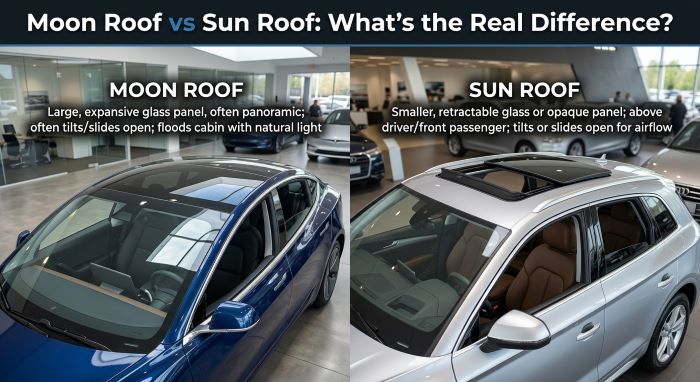
Moon Roof vs Sun Roof at a Glance
| Feature | Sunroof (Traditional) | Moonroof |
|---|---|---|
| Panel material | Metal, opaque | Tinted glass |
| Lets light in when closed | No | Yes |
| Opens | Tilts, slides, or pops out | Tilts or slides inside the roof |
| Interior shade | Not needed | Yes, sliding shade |
| Common today | Rare | Very common |
| Looks | Matches car paint | Dark glass panel |
| Term origin | Early 1900s cars | Ford, 1973 |
Where the Terms Came From
The idea of an opening roof goes back to the early days of cars, when many models had fabric or metal panels that could open. These became known as sunroofs.
The word moonroof came from Ford. In 1973, Ford marketing manager John Atkinson used the term for a new glass roof panel on the Lincoln Continental Mark IV. The idea was that you could gaze at the moon through the glass at night. The name stuck.
So the moon roof vs sun roof story is part engineering and part marketing.
Is There Still a Difference Today?
Not much. Car companies, dealers, and buyers now use “sunroof” as a catch all name. When a car ad lists a sunroof, it’s usually a glass moonroof. Some brands call it a “power moonroof,” while others call the same thing a “power sunroof.”
If you’re comparing moonroof vs sunroof on a spec sheet, check the details. Look for words like “glass,” “tilt and slide,” and “power shade.”
Types of Car Roofs
Here are the most common roof styles you’ll see:
| Type | How It Works | Found On |
|---|---|---|
| Pop up sunroof | Manual panel that tilts up; sometimes removable | Older and aftermarket cars |
| Spoiler sunroof | Tilts up and slides back over the roof | Smaller cars |
| Inbuilt moonroof | Glass panel slides between roof and headliner | Most sedans and SUVs |
| Panoramic sunroof | Large glass roof, often with multiple panels | SUVs, luxury cars, EVs |
| Fixed glass roof | Large glass panel that doesn’t open | Many EVs |
| Removable top panels | Panels lift out completely | Jeeps, some sports cars |
What Is a Panoramic Sunroof?
A panoramic sunroof is an extra large glass roof that covers much of the cabin, often stretching over both front and rear seats. Some have a front panel that opens and a rear panel that stays fixed. Others are one big fixed sheet of glass.
Pros:
- Bright, open cabin that feels bigger
- Great views for rear passengers
- Popular on luxury and electric cars
Cons:
- Adds weight high on the car
- Can let in heat on sunny days
- More expensive to repair or replace
- May reduce headroom slightly
Many electric vehicles, such as several Tesla and Hyundai models, now use large fixed glass roofs instead of a traditional opening roof.
Pros and Cons of Sunroofs and Moonroofs
Pros
- More light. The cabin feels open and less cramped.
- Fresh air. Venting the roof lets air in without wind noise from open windows.
- Resale value. Many buyers want one, which can help when you sell.
- Better driving feel. Many people simply enjoy the open sky.
Cons
- Cost. Often bundled in packages that add $1,000 or more to a new car.
- Leaks. Clogged drain tubes can let water into the cabin.
- Heat. Glass roofs can warm the cabin in summer.
- Reduced headroom. The mechanism takes up space in the roof.
- Repairs. Motors, tracks, and glass can be pricey to fix.
Maintenance Tips
Whether you have a classic sunroof or a modern moonroof, a little care goes a long way:
- Clean the tracks a few times a year to remove dirt and debris.
- Clear the drain tubes with compressed air to prevent leaks.
- Lubricate the seals with a silicone spray to keep them flexible.
- Close it before car washes and storms.
- Listen for grinding noises, which can signal a failing motor.
Sunroof vs Moonroof: Which Should You Choose?
When you weigh sunroof vs moonroof options for your next car, think about how you drive:
| You Want… | Best Choice |
|---|---|
| Light without opening the roof | Moonroof |
| The airiest cabin possible | Panoramic glass roof |
| Lowest cost and fewest repairs | No roof opening |
| Open air fun and off roading | Removable top panels |
| Maximum headroom | Solid roof or fixed glass roof |
For most drivers, a standard power moonroof offers the best mix of light, fresh air, and price.
Is a Sunroof Worth It?
A sunroof is worth it if you love natural light and open air drives. It also helps resale on many vehicles. But if you live somewhere very hot, park outside often, or want to avoid extra repair costs, you might skip it.
The open sky feeling is a big part of the appeal. It’s the same reason people love outdoor patios and rooftop spaces. If you enjoy that vibe after you park, check out our guide to the Best Rooftop Bars Near Me.
Aftermarket Installation
You can add a sunroof to a car that didn’t come with one, but most experts don’t recommend it. Cutting into the roof can weaken the structure, cause leaks, and void parts of your warranty. If you want a moonroof, it’s usually better to buy a car with a factory installed one.
Moon Roof vs Sun Roof: Cost to Repair
Repairs are a hidden part of the moon roof vs sun roof decision. Costs vary by car, but here’s a rough guide:
| Repair | Typical Range |
|---|---|
| Cleaning clogged drain tubes | Low cost, often DIY |
| Replacing seals | Low to moderate |
| Motor replacement | Moderate |
| Track or regulator repair | Moderate to high |
| Glass panel replacement | High, especially for panoramic roofs |
Large glass roofs cost the most to replace. Check your insurance policy, since some cover glass damage.
Moonroof vs Sunroof by Car Type
The moonroof vs sunroof options you’ll see depend on the type of vehicle:
- Compact cars: Usually a small power moonroof on mid or upper trims.
- Sedans: Standard or optional power moonroof.
- SUVs and crossovers: Often offer a large panoramic roof.
- Electric cars: Many use a fixed glass roof with no opening.
- Off road vehicles: Removable roof panels or soft tops.
When dealers talk about sunroof vs moonroof options, ask to see the roof open, closed, and with the shade drawn. That’s the easiest way to judge whether it’s right for you. The moonroof vs sunroof label matters far less than how the roof actually works on that model.
The moon roof vs sun roof question really comes down to light, air, and budget. Test drive cars with and without one to see how much you value that open feeling.
Do Roof Openings Affect Fuel Economy?
Opening the roof at high speeds adds a little wind drag, much like rolling down the windows. The extra weight of the glass and motor also has a small effect. For most drivers, the impact on fuel economy is minor. Tilting the panel to vent hot air before turning on the AC can actually help keep the cabin comfortable.
Frequently Asked Questions
Is a moonroof better than a sunroof? A moonroof is more common and lets light in even when closed, so most drivers prefer it. But the moon roof vs sun roof labels are mostly used the same way today.
Do sunroofs leak? They can, usually because of clogged drain tubes. Regular cleaning prevents most leaks.
Does a large glass roof make a car hotter? It can let in extra heat, but tinted glass and sliding shades help a lot.
Is a sunroof safe in a rollover? Cars with sunroofs must meet the same federal roof strength standards as cars without them.
Final Thoughts
The moon roof vs sun roof difference is mostly history. Traditionally, a sunroof was a solid panel and a moonroof was glass. Today, most “sunroofs” are actually moonroofs, and the terms are used interchangeably. Focus on the features, the size, and the price, not just the name.
Key Takeaways
- Moon roof vs sun roof: a traditional sunroof is an opaque metal panel, while a moonroof is a tinted glass panel.
- Ford coined the term moonroof in 1973 for the Lincoln Continental Mark IV.
- Today, most automakers use “sunroof” and “moonroof” interchangeably.
- A panoramic sunroof is a large glass roof that covers much of the cabin.
- Pros include light, fresh air, and resale value; cons include cost, leaks, heat, and less headroom.
- Clean the tracks and drain tubes regularly to prevent leaks.