Brown Sugar vs White Sugar
Open almost any baking recipe and you’ll see sugar on the list. Sometimes it’s white, sometimes it’s brown, and sometimes it’s both. But what’s really the difference? Is one healthier? And what happens if you run out of one?
This guide covers brown sugar vs white sugar in simple terms, including taste, texture, nutrition, and easy swaps for your kitchen.
What Is White Sugar?
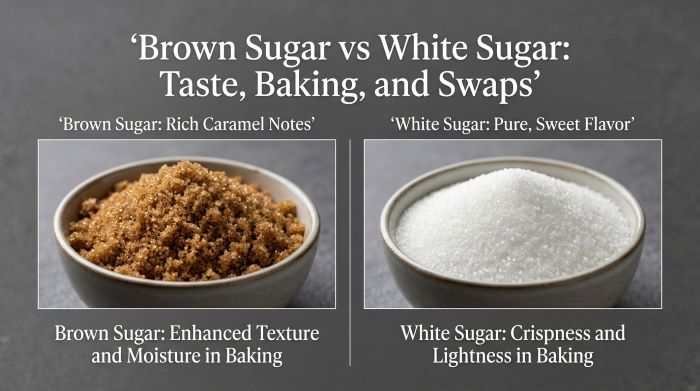
White sugar, also called granulated or table sugar, comes from sugarcane or sugar beets. The juice is boiled, crystallized, and refined until almost all of the natural molasses is removed. What’s left is pure sucrose: dry, white, and sweet with no other flavor.
What Is Brown Sugar?
Brown sugar is white sugar with molasses added back in. Molasses is the dark syrup removed during refining. It gives brown sugar its color, moist texture, and caramel taste.
Most brown sugar in stores is made by mixing refined white sugar with molasses. Some less refined types, like muscovado and turbinado, keep more of their natural molasses.
Brown Sugar vs White Sugar at a Glance
| Feature | White Sugar | Brown Sugar |
|---|---|---|
| Made from | Refined cane or beet sugar | White sugar plus molasses |
| Color | White | Light to dark brown |
| Texture | Dry, loose crystals | Soft, moist, clumps |
| Flavor | Clean, plain sweetness | Caramel, toffee notes |
| Calories per teaspoon | About 16 | About 15 |
| Moisture | Very low | Higher |
| Acidity | Neutral | Slightly acidic |
| Best for | Cakes, meringues, drinks | Cookies, sauces, glazes, BBQ rubs |
| Measuring | Scoop and level | Pack firmly into the cup |
Difference Between Dark and Light Brown Sugar
The difference between dark and light brown sugar is simply how much molasses each one has.
- Light brown sugar: About 3.5% molasses. It has a mild caramel taste and is the most common type in recipes.
- Dark brown sugar: About 6.5% molasses. It’s darker, moister, and has a deeper, almost smoky flavor.
| Type | Molasses Content | Flavor | Best Uses |
|---|---|---|---|
| Light brown sugar | About 3.5% | Mild caramel | Cookies, cakes, oatmeal |
| Dark brown sugar | About 6.5% | Rich, deep molasses | Gingerbread, BBQ sauce, baked beans, glazes |
Another difference between dark and light brown sugar is moisture. Dark brown sugar makes baked goods a bit softer and more moist. In most recipes, you can swap one for the other. Just expect a stronger flavor and a darker color with dark brown sugar.
How They Act in Baking
The biggest brown sugar vs white sugar difference shows up in the oven.
White sugar:
- Helps cookies spread and turn crisp
- Creates light, airy cakes when creamed with butter
- Makes stiff, glossy meringues
- Gives a clean flavor that lets vanilla or fruit shine
Brown sugar:
- Holds moisture, so cookies stay soft and chewy
- Adds caramel and toffee flavor
- Browns faster because of the molasses
- Reacts with baking soda, since molasses is slightly acidic
That’s why many chocolate chip cookie recipes use both. White sugar adds crisp edges, and brown sugar keeps the centers chewy. The same mix shows up in no bake treats too. Our Edible Cookie Dough Recipe uses brown sugar for that classic, rich cookie dough flavor.
Can You Substitute Brown Sugar for White Sugar?
Yes. Can you substitute brown sugar for white sugar? In most recipes, you can swap them one to one. Use the same amount of firmly packed brown sugar as white sugar.
Just know what will change:
- Texture: Baked goods will be softer, moister, and chewier.
- Color: Cakes and cookies will be darker.
- Flavor: You’ll taste more caramel.
- Rise: In recipes that use only baking powder, the extra acidity may slightly change the rise.
Can I Use Brown Sugar Instead of White Sugar in Every Recipe?
Not always. If you’re asking “can I use brown sugar instead of white sugar” for a specific dish, here’s a quick guide:
| Recipe | Swap Works? | Notes |
|---|---|---|
| Chocolate chip cookies | Yes | Chewier, softer cookies |
| Banana bread and muffins | Yes | More moist and flavorful |
| Coffee and tea | Yes | Adds a caramel note |
| Oatmeal | Yes | A classic pairing |
| Pound cake | Partly | Denser and darker |
| Sugar cookies | Not ideal | Lose their crisp texture and pale color |
| Meringue | No | Too moist to whip properly |
| Clear syrups and candy | No | Color and moisture cause problems |
So, can I use brown sugar instead of white sugar? Yes for most cookies, quick breads, and drinks. No for meringues, light cakes, and candy.
Can You Use White Sugar Instead of Brown Sugar?
Yes, but your treats will be crisper and less flavorful. To get closer to brown sugar, make your own.
Homemade brown sugar:
- Light brown sugar: 1 cup white sugar plus 1 tablespoon molasses
- Dark brown sugar: 1 cup white sugar plus 2 tablespoons molasses
Mix with a fork or stand mixer until even. It tastes just like store bought.
Is Brown Sugar Healthier?
Many people think brown sugar is healthier because it looks less processed. In reality, the brown sugar vs white sugar nutrition difference is tiny.
| Per 1 teaspoon (about 4g) | White Sugar | Brown Sugar |
|---|---|---|
| Calories | About 16 | About 15 |
| Carbs | 4g | 4g |
| Calcium, iron, potassium | None | Trace amounts |
Brown sugar contains small amounts of minerals from molasses, but you’d have to eat a lot of sugar to get any real benefit. Both count as added sugar. Health groups advise limiting added sugars, no matter the color.
Other Types of Sugar
- Turbinado: Large, golden crystals with light molasses flavor. Great for topping muffins.
- Demerara: Similar to turbinado, with a crunchy texture.
- Muscovado: Unrefined, very moist, and strongly flavored.
- Powdered sugar: White sugar ground fine with cornstarch, used for frosting.
- Coconut sugar: Made from coconut palm sap with a caramel taste.
How Sugar Shapes Global Desserts
Sugar plays a big role in desserts around the world. In Uruguay, for example, white sugar goes into soft cookies called alfajores, which are filled with dulce de leche, a caramel made by slowly cooking milk and sugar. Find these and other classics in our guide to Easy Uruguayan Recipes at Home.
Storage Tips
- White sugar: Store in an airtight container. It lasts almost forever.
- Brown sugar: Store airtight to keep moisture in. If it hardens, add a slice of bread or a damp paper towel to the container overnight, or microwave it briefly with a damp towel.
Same Cookie, Different Sugar
Want to see the brown sugar vs white sugar difference for yourself? Bake one batch of chocolate chip cookies three ways:
| Sugar Used | Result |
|---|---|
| All white sugar | Thin, crisp, golden cookies with a buttery flavor |
| Half white, half brown | Crisp edges with soft, chewy centers |
| All brown sugar | Thick, soft, chewy cookies with a deep caramel taste |
This simple test answers the question “can you substitute brown sugar for white sugar” better than any chart. You’ll taste and feel the change in every bite.
Brown Sugar vs White Sugar in Savory Cooking
Sugar isn’t just for dessert. In savory dishes, the brown sugar vs white sugar choice changes the flavor too.
- BBQ rubs and sauces: Brown sugar adds smoky sweetness and helps form a dark crust.
- Glazed ham and salmon: Brown sugar caramelizes into a sticky, flavorful glaze.
- Stir fry sauces: White sugar balances salt and acid without adding extra flavor.
- Pickles and brines: White sugar keeps the liquid clear.
- Tomato sauce: A pinch of either sugar cuts acidity. Brown sugar adds richness.
So can you substitute brown sugar for white sugar in savory cooking? Usually yes, as long as you’re happy with a slightly deeper flavor and darker color. For clear sauces and brines, stick with white sugar. Knowing the brown sugar vs white sugar difference helps you season smarter in every part of the kitchen.
Quick Swap Cheat Sheet
| You Have | You Need | What to Do |
|---|---|---|
| White sugar | Light brown sugar | Add 1 tablespoon molasses per cup |
| White sugar | Dark brown sugar | Add 2 tablespoons molasses per cup |
| Light brown sugar | Dark brown sugar | Add 1 tablespoon molasses per cup |
| Brown sugar | White sugar | Use the same amount, packed |
| Honey or maple syrup | Brown sugar | Use about 3/4 cup per cup and cut other liquid slightly |
Keep this chart on your fridge, and you’ll never need a last minute trip to the store.
Frequently Asked Questions
Does brown sugar make cookies chewier? Yes. Its moisture keeps cookies soft and chewy.
Is brown sugar just white sugar with molasses? Usually, yes. Most store bought brown sugar is refined white sugar mixed with molasses.
Can I mix brown and white sugar? Yes. Many recipes use both for the best mix of crisp edges and soft centers.
Which sugar is better for coffee? It’s personal taste. White sugar is neutral, while brown sugar adds a hint of caramel.
Final Thoughts
The brown sugar vs white sugar choice depends on what you’re making. White sugar gives a clean, crisp result. Brown sugar adds moisture, chew, and caramel flavor. They can often be swapped, but knowing how each behaves helps you bake exactly what you want.
Key Takeaways
- Brown sugar vs white sugar: brown sugar is white sugar with molasses added.
- The difference between dark and light brown sugar is molasses content, about 6.5% vs 3.5%.
- You can substitute brown sugar for white sugar one to one in most cookies, quick breads, and drinks.
- Avoid the swap in meringues, sugar cookies, and candy.
- Make brown sugar at home with 1 cup white sugar and 1 to 2 tablespoons molasses.
- Nutrition differences are tiny; both count as added sugar.