Pad See Ew vs Pad Thai
Open the menu at almost any Thai restaurant and you’ll find two noodle dishes at the top: pad thai and pad see ew. Both are stir fried, both are wildly popular, and both make a great meal. But they taste very different, and once you know why, choosing between them gets a lot easier.
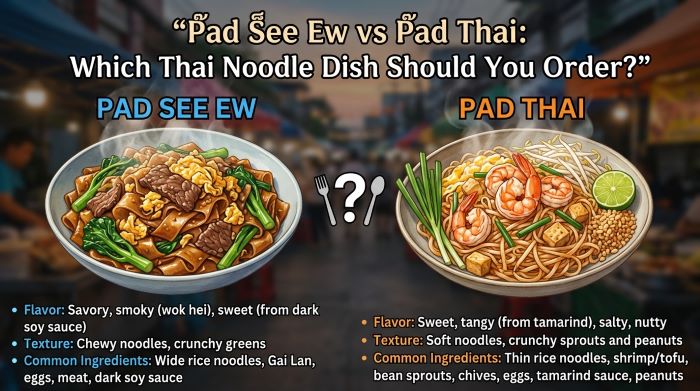
The short answer to pad see ew vs pad thai is this. Pad see ew uses wide, flat rice noodles in a savory, smoky soy sauce with Chinese broccoli. Pad thai uses thin rice noodles in a sweet, tangy tamarind sauce with peanuts, bean sprouts, and lime. One is savory and comforting. The other is bright, sweet, and tangy.
This guide breaks down the noodles, sauces, ingredients, flavors, nutrition, and history of each dish, plus how to make them at home.
Quick Comparison
| Pad See Ew | Pad Thai | |
|---|---|---|
| Meaning | “Stir fried with soy sauce” | “Thai style stir fry” |
| Noodles | Wide, flat fresh rice noodles | Thin, flat dried rice noodles |
| Main sauce | Dark and light soy sauce, oyster sauce | Tamarind, fish sauce, palm sugar |
| Flavor | Savory, smoky, slightly sweet | Sweet, sour, salty, nutty |
| Key vegetables | Chinese broccoli (gai lan) | Bean sprouts, garlic chives |
| Toppings | Usually none | Crushed peanuts, lime wedge, chili flakes |
| Egg | Yes | Yes |
| Spice level | Mild | Mild, with chili on the side |
| Texture | Chewy, charred noodles | Springy noodles with crunchy toppings |
What Is Pad See Ew?
Pad see ew (also spelled phat si io) means “stir fried with soy sauce” in Thai. It’s a simple, homey dish of wide rice noodles stir fried with dark soy sauce, egg, Chinese broccoli, and a protein such as chicken, pork, or beef.
The dish has Chinese roots, brought to Thailand by Chinese immigrants. It’s cooked over very high heat so the noodles get slightly charred and smoky. That flavor is often called “wok hei,” or the breath of the wok.
What Is Pad Thai?
Pad thai means “Thai style stir fry.” It’s made with thin rice noodles stir fried with tamarind paste, fish sauce, palm sugar, egg, tofu, shrimp or chicken, bean sprouts, and garlic chives. It’s usually served with crushed peanuts, a lime wedge, and chili flakes on the side.
Pad thai became popular in the mid 1900s, when the Thai government promoted it as a national dish during a time of rice shortages and nation building. Today it’s the most famous Thai dish in the world.
Pad See Ew vs Pad Thai: Key Differences
1. Noodles
The noodles are the most obvious difference in pad see ew vs pad thai. Pad see ew uses wide, flat fresh rice noodles, about an inch wide. They’re soft and chewy and soak up the sauce. Pad thai uses thinner dried rice noodles, about a quarter inch wide, which are soaked before cooking and have a springier bite.
2. Sauce
Pad see ew’s sauce is built on dark sweet soy sauce, light soy sauce, oyster sauce, and a little sugar. It’s savory, salty, and slightly caramelized.
Pad thai’s sauce combines tamarind paste for sourness, fish sauce for saltiness, and palm sugar for sweetness. The result is a bright, sweet and tangy balance.
3. Vegetables and Toppings
Pad see ew features Chinese broccoli, with crunchy stems and tender leaves. It’s usually served plain.
Pad thai includes bean sprouts and garlic chives, and it’s topped with crushed peanuts and lime. Those toppings add crunch and freshness.
4. Flavor
Pad see ew tastes savory, smoky, and rich. Pad thai tastes sweet, tangy, and nutty. If you like comfort food, try pad see ew. If you like bright, layered flavors, try pad thai.
5. Spice
Neither dish is very spicy by default. Most restaurants let you choose a spice level or add chili flakes and chili vinegar at the table.
Common Proteins
Both dishes work with many proteins:
| Protein | Pad See Ew | Pad Thai |
|---|---|---|
| Chicken | Very common | Very common |
| Beef | Common | Less common |
| Pork | Common in Thailand | Less common |
| Shrimp | Available | Classic choice |
| Tofu | Common vegetarian option | Traditional ingredient |
Nutrition
On the health front, pad see ew vs pad thai is close. Restaurant portions of both dishes are large and calorie dense. A typical takeout serving of either can range from about 700 to more than 1,000 calories, depending on portion size, oil, and protein.
| Pad See Ew | Pad Thai | |
|---|---|---|
| Typical calories (restaurant serving) | About 700 to 1,000+ | About 700 to 1,000+ |
| Sodium | Very high from soy and oyster sauce | High from fish sauce |
| Sugar | Moderate | Higher, from palm sugar |
| Fat | From oil | From oil and peanuts |
| Vegetables | Chinese broccoli | Bean sprouts and chives |
To make either dish lighter, ask for less oil, extra vegetables, and lean protein like chicken or shrimp. Splitting a portion also helps.
Allergy and Diet Notes
If you have food allergies, the pad see ew vs pad thai choice matters more than flavor.
- Peanuts: Pad thai usually contains peanuts. Ask for them on the side or left off if you have an allergy.
- Gluten: Rice noodles are gluten free, but soy sauce and oyster sauce often contain wheat. Pad see ew is usually not gluten free.
- Shellfish: Pad thai may contain shrimp and dried shrimp. Oyster sauce is in pad see ew.
- Vegetarian: Both can be made vegetarian with tofu, but fish sauce and oyster sauce must be swapped for vegetarian versions.
How to Make Pad See Ew at Home
- Prep the sauce. Mix 2 tablespoons dark soy sauce, 1 tablespoon light soy sauce, 1 tablespoon oyster sauce, and 1 teaspoon sugar.
- Separate the noodles. Gently pull apart fresh wide rice noodles.
- Heat the wok. Get it very hot and add oil.
- Cook garlic and protein. Stir fry until the meat is cooked.
- Add Chinese broccoli. Cook the stems first, then the leaves.
- Add egg. Push everything aside, scramble an egg, then mix it in.
- Add noodles and sauce. Toss and let the noodles sit briefly to char.
- Serve hot. Add chili vinegar if you like.
How to Make Pad Thai at Home
- Soak the noodles. Soak dried rice noodles in warm water until bendy but still firm.
- Make the sauce. Mix tamarind paste, fish sauce, and palm sugar until balanced.
- Cook protein. Stir fry shrimp, chicken, or tofu with garlic and shallots.
- Add noodles and sauce. Toss until the noodles soften and absorb the sauce.
- Add egg. Scramble an egg on the side of the wok and fold it in.
- Add vegetables. Toss in bean sprouts and garlic chives at the end.
- Top and serve. Add crushed peanuts, lime, and chili flakes.
Ordering Tips
Still stuck on pad see ew vs pad thai at the restaurant? Use these tips:
- First time at a Thai restaurant? Pad thai is the classic starting point.
- Want something savory and comforting? Pick pad see ew.
- Want more heat? Ask for it “Thai spicy,” but be ready.
- Sharing? Order one of each and compare.
- Want it less sweet? Ask for pad thai with less sugar, or add extra lime.
- Love crispy edges? Ask for your pad see ew extra charred.
Other Asian Noodle Dishes to Try
If you love pad see ew vs pad thai debates, there’s a whole world of Southeast Asian noodles to explore. Vietnamese pho is a fragrant beef or chicken noodle soup. Find a great bowl with our guide to Pho Near Me. Taiwanese and Chinese beef noodle soups are rich and hearty. See our list of the best spots for Beef Noodle Soup Near Me. For something smoky and fresh, Hanoi’s grilled pork with noodles is a must. Check out Bun Cha Near Me.
Frequently Asked Questions
What’s the difference between pad see ew and pad thai? Pad see ew uses wide noodles in a savory soy sauce with Chinese broccoli. Pad thai uses thin noodles in a sweet and tangy tamarind sauce with peanuts and bean sprouts.
Which is sweeter? Pad thai is usually sweeter because of palm sugar and tamarind.
Which is healthier? They’re similar. Pad thai often has more sugar, while pad see ew has more sodium. Both are high in calories at restaurants.
Is pad see ew spicy? Not usually. You can add chili flakes or chili vinegar.
Final Thoughts
The pad see ew vs pad thai choice really depends on your mood. Pick pad see ew when you want smoky, savory, chewy noodles that feel like comfort food. Pick pad thai when you want a bright mix of sweet, sour, salty, and nutty flavors with a little crunch. Better yet, order both and share.
Key Takeaways
- Pad see ew vs pad thai comes down to noodles and sauce: wide noodles with soy sauce versus thin noodles with tamarind sauce.
- Pad see ew tastes savory and smoky and features Chinese broccoli.
- Pad thai tastes sweet, tangy, and nutty and is topped with peanuts, bean sprouts, and lime.
- Both dishes are mild by default, with chili added to taste.
- Restaurant servings of both can top 700 calories, with high sodium and sugar.
- Pad thai usually contains peanuts, and pad see ew usually contains gluten from soy and oyster sauce.