
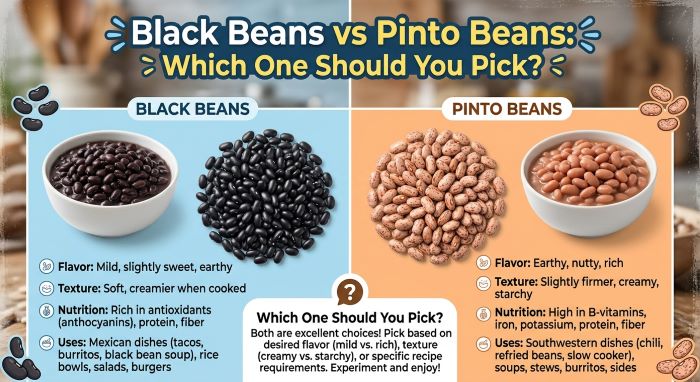
Black Beans vs Pinto Beans
Walk down the bean aisle and two choices almost always stand side by side: shiny black beans and speckled pinto beans. Both are cheap, filling, and packed with fiber and protein. Both show up in burritos, chili, and rice bowls. So which one should go in your cart?
The debate over black beans vs pinto beans comes down to small differences in nutrition and bigger differences in taste and texture. In short, they’re both excellent choices. Black beans hold their shape and have a rich, earthy flavor. Pinto beans turn creamy and soft, which makes them perfect for refried beans.
This guide breaks down the nutrition, flavor, cooking, cost, and best uses of each so you can pick the right bean for every meal.
Quick Comparison
| Black Beans | Pinto Beans | |
|---|---|---|
| Appearance | Small, shiny, jet black | Beige with reddish brown speckles |
| Flavor | Earthy, slightly sweet, rich | Mild, nutty, creamy |
| Texture when cooked | Firm, holds shape | Soft and creamy |
| Calories (1 cup cooked) | About 227 | About 245 |
| Protein (1 cup cooked) | About 15 g | About 15 g |
| Fiber (1 cup cooked) | About 15 g | About 15 g |
| Cook time (soaked) | About 1 to 1.5 hours | About 1.5 to 2 hours |
| Best for | Salads, soups, bowls, salsas | Refried beans, chili, stews |
| Popular in | Cuban, Brazilian, Mexican food | Mexican and Tex Mex food |
What Are Black Beans?
Black beans, also called turtle beans, are a type of common bean (Phaseolus vulgaris). They’re small and oval with a glossy black skin and a creamy white inside.
They’re a staple in Latin American cooking. Think Cuban black beans and rice, Brazilian feijoada, and Mexican black bean soup. Their dark color comes from plant compounds called anthocyanins, the same antioxidants found in blueberries.
What Are Pinto Beans?
Pinto beans are also a type of common bean. Their name comes from the Spanish word “pinto,” meaning painted, because of their speckled skin. When cooked, the speckles fade and the beans turn a light pinkish brown.
Pinto beans are the most popular dry bean in the United States. They’re the classic choice for refried beans, charro beans, and many chili recipes.
Black Beans vs Pinto Beans: Nutrition
Nutritionally, the two beans are close cousins. Here’s how one cup of cooked beans compares, based on USDA data for beans boiled without salt.
| Nutrient (1 cup cooked) | Black Beans | Pinto Beans |
|---|---|---|
| Calories | 227 | 245 |
| Protein | 15.2 g | 15.4 g |
| Carbohydrates | 40.8 g | 44.8 g |
| Fiber | 15.0 g | 15.4 g |
| Fat | 0.9 g | 1.1 g |
| Folate | 256 mcg | 294 mcg |
| Iron | 3.6 mg | 3.6 mg |
| Magnesium | 120 mg | 86 mg |
| Potassium | 611 mg | 746 mg |
What the Numbers Show
- Calories: Black beans have slightly fewer calories.
- Protein and fiber: Nearly identical, about 15 grams each per cup.
- Magnesium: Black beans win, with about 40% more.
- Potassium and folate: Pinto beans come out ahead.
- Iron: A tie.
The differences are small. Either bean helps you meet your daily fiber and protein needs.
Which Is Healthier?
When it comes to health, black beans vs pinto beans is close to a draw. Both are linked to benefits like:
- Better digestion: The high fiber supports regular bowel movements and gut health.
- Steady blood sugar: Beans are digested slowly, which helps prevent sugar spikes.
- Heart health: Fiber and potassium can support healthy cholesterol and blood pressure.
- Feeling full: Protein and fiber help keep you satisfied longer.
Black beans’ edge: Their dark skins contain more antioxidants, especially anthocyanins. They also offer more magnesium.
Pinto beans’ edge: They provide more potassium and folate. Folate is especially important during pregnancy.
The healthiest choice is the one you’ll eat often. Rotating both gives you a wider range of nutrients.
Taste and Texture
In the black beans vs pinto beans matchup, taste and texture are where the beans really differ.
Black beans have a deep, earthy flavor with a hint of sweetness. They stay firm after cooking, so they look great in salads, salsas, and grain bowls.
Pinto beans taste milder and nuttier. They break down into a creamy, almost buttery texture. That’s why they’re the go to bean for refried beans and thick chili.
Cooking Black Beans vs Pinto Beans
Both beans can be cooked from dry or bought canned.
Cooking From Dry
- Sort and rinse. Pick out any small stones or broken beans.
- Soak. Soak beans in water for 8 hours or overnight. For a quick soak, boil for 2 minutes, then let them sit covered for 1 hour.
- Simmer. Drain, add fresh water, and simmer.
- Black beans: about 1 to 1.5 hours
- Pinto beans: about 1.5 to 2 hours
- Season. Add salt near the end, along with garlic, onion, cumin, or bay leaves.
Pressure Cooker Times
| Bean | Soaked | Unsoaked |
|---|---|---|
| Black beans | About 8 to 10 minutes | About 20 to 25 minutes |
| Pinto beans | About 10 to 12 minutes | About 25 to 30 minutes |
Let the pressure release naturally for the best texture.
Canned Beans
Canned beans are fast and convenient. Rinse them to remove up to about 40% of the added sodium, or choose low sodium cans.
Best Uses for Each Bean
| Dish | Best Bean | Why |
|---|---|---|
| Refried beans | Pinto | Mashes into a creamy texture |
| Burritos | Either | Black for firmness, pinto for creaminess |
| Chili | Pinto or both | Pinto thickens, black adds color |
| Bean salad | Black | Holds its shape |
| Black bean soup | Black | Classic flavor and color |
| Veggie burgers | Black | Firm and rich |
| Charro beans | Pinto | Traditional choice |
| Rice and beans | Either | Cuban style uses black, Tex Mex often uses pinto |
| Brownies | Black | Dark color blends with chocolate |
Simple Recipe Ideas
Quick black bean bowl. Warm a can of rinsed black beans with cumin and garlic. Serve over rice with corn, salsa, avocado, and a squeeze of lime.
Easy refried pinto beans. Cook onion and garlic in a little oil. Add two cans of rinsed pinto beans and a splash of water or broth. Mash until creamy and season with salt and chili powder.
Two bean chili. Use one can of each bean with ground meat or extra vegetables, tomatoes, onion, and chili spices. The black beans add color and bite, while the pinto beans thicken the pot.
Black bean salsa. Mix black beans with diced tomato, red onion, corn, cilantro, lime juice, and a pinch of salt. Serve with chips or on tacos.
Beyond Black and Pinto Beans
If you love bean dishes, Spain has some great ones to try. Fabada asturiana is a rich stew made with large white beans called fabes, chorizo, and morcilla. Our guide to the Best Fabada Bean Stew Near Me shows where to find it. For a lighter bite to pair with beans at a tapas spread, try ensaladilla rusa, a creamy potato salad with tuna and mayonnaise. See our pick of the Best Tapas Ensaladilla Rusa.
Storage Tips
- Dry beans: Store in an airtight container in a cool, dark place. They keep for about a year, though older beans take longer to cook.
- Cooked beans: Keep in the fridge for 3 to 5 days.
- Freezing: Freeze cooked beans in their liquid for up to 6 months.
Black Beans vs Pinto Beans for Special Diets
Both beans are naturally gluten free, vegan, and low in fat. They fit well in vegetarian, Mediterranean, and high fiber diets. Because they’re high in carbs, people on strict low carb or keto diets usually limit both.
Cost and Availability
Both beans are among the cheapest sources of protein you can buy. Dry beans usually cost less per serving than canned. Pinto beans are often slightly cheaper and easier to find in bulk in the US, since they’re the most widely grown dry bean in the country.
Gas and Digestion
Both beans can cause gas because they contain fibers called oligosaccharides. To reduce it:
- Soak dry beans and discard the soaking water.
- Rinse canned beans well.
- Add beans to your diet slowly so your gut can adjust.
- Cook with spices like cumin or epazote, which many cooks use to ease digestion.
Can You Swap Them?
Yes. In most recipes, you can swap black beans and pinto beans one for one. Just keep texture in mind. If you use black beans in refried beans, they’ll be a little less creamy. If you use pinto beans in a salad, they may get mushy.
Frequently Asked Questions
Are black beans healthier than pinto beans? They’re very similar. Black beans have slightly fewer calories and more magnesium and antioxidants. Pinto beans have more potassium and folate.
Which bean has more protein? They’re almost the same, about 15 grams per cooked cup.
Which bean is better for weight loss? Both are great because of their fiber and protein. Black beans have slightly fewer calories.
Which bean is used in refried beans? Pinto beans are the traditional choice.
Final Thoughts
When it comes to black beans vs pinto beans, there’s no wrong answer. The black beans vs pinto beans choice really depends on the dish. Both are cheap, healthy, and versatile. Choose black beans when you want firm texture, rich flavor, and a pop of color. Choose pinto beans when you want creamy, comforting dishes like refried beans and chili. Better yet, keep both in your pantry.
Key Takeaways
- Black beans vs pinto beans is a close match nutritionally, with about 15 grams of protein and 15 grams of fiber per cooked cup.
- Black beans have slightly fewer calories, more magnesium, and more antioxidants from their dark skins.
- Pinto beans have more potassium and folate and a creamier texture.
- Black beans hold their shape, making them ideal for salads, soups, bowls, and veggie burgers.
- Pinto beans are the classic choice for refried beans, charro beans, and chili.
- You can usually swap one for the other, but expect differences in texture.