Why Buying Eyeglasses Online Isn’t as Simple as Picking a Frame
Buying glasses used to involve a trip to the optician, a chair in front of a mirror, and a slightly awkward process of trying on one frame after another. These days, you can do most of it from your phone. Browse a few pages, upload your prescription, try on some frames virtually, and place the order.
Sounds easy enough.
And honestly, the frame part usually is. The tricky part is everything that comes after you’ve decided which one looks good.
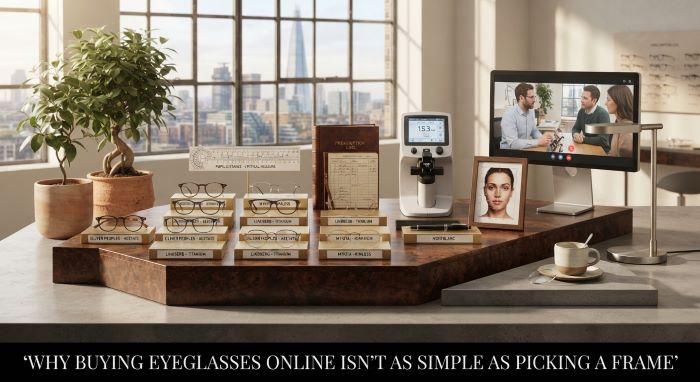
Glasses aren’t just another accessory you order online. The lenses have to match your prescription, the measurements need to be right, and the finished pair has to sit properly in front of your eyes. None of those things are particularly obvious from a product photo.
That’s why buying glasses online takes a little more attention than it might seem at first.
The Frame Is the Easy Part
Choosing the frame is probably the most enjoyable part of buying glasses. You get to look at different shapes, colors, sizes, and materials without having someone standing beside you asking which pair you want to try next.
Online retailers have made this even easier with filters and virtual try-on tools. You can narrow things down pretty quickly based on the look you’re after. If you’re browsing Oakley optical glasses online, for example, it’s easy to get caught up in the frame shape or color before thinking about whether the measurements will work for you.
And that’s really the catch. Finding a frame you like is only the first step. There’s still the question of whether it will fit, whether the lenses are right for you, and what the final price will be once you’ve added everything you need. Those details are much less exciting than choosing a frame, which is probably why they’re so easy to overlook.
Your Prescription Numbers Need to Be Exact
A glasses prescription isn’t just one number. Depending on what you need, it can include sphere, cylinder, axis, and add power for reading or other near-vision needs.
It’s easy to look at a prescription and assume that entering the numbers online is straightforward. Usually it is. But there isn’t much room for guessing. A small mistake, such as entering a plus value instead of a minus, can affect how well the finished lenses work.
In the US, the FTC’s Eyeglass Rule requires eye doctors to give patients a copy of their prescription after an exam. That means you can take the prescription elsewhere, including an online retailer, rather than being tied to the place where you had your eye exam.
Once you have it, though, take a minute to check what you’re entering. Some websites let you type everything in yourself, while others allow you to upload a photo of the prescription. Either way, it’s better to look at the actual prescription while placing the order instead of relying on what you remember from your last eye exam.
Pupillary Distance Is Easy to Forget
Then there’s pupillary distance, or PD.
It’s basically the measurement between your pupils, and it helps determine where the center of each lens should sit. It sounds like a tiny detail, but it matters because your prescription isn’t much use if the lenses aren’t positioned correctly in front of your eyes.
The American Optometric Association has pointed out that PD isn’t always included on prescriptions, which can leave people buying glasses online trying to figure out the measurement themselves.
Some people measure it at home with a ruler. Others use the measurement from an old pair of glasses or ask their optometrist for it.
It’s one of those things that’s easy to forget because it doesn’t have anything to do with how the frame looks. But if you’re ordering glasses online, it’s worth getting it right rather than treating it as an afterthought.
Lens Options Can Change the Price Quite a Bit
You’ve probably seen glasses advertised online at a price that looks almost too good to pass up. Then you start choosing lenses.
Suddenly, the number isn’t quite as low.
That’s because the initial frame price often doesn’t include every lens option. Anti-glare coatings, photochromic lenses, blue-light filtering, and thinner lens materials can all increase the final cost.
For people with stronger prescriptions, thinner lenses can be more than just a cosmetic choice. They can make the finished glasses lighter and less bulky, particularly around the edges.
There’s nothing unusual about these options costing extra. The important thing is to know what you’re actually paying for before you get to the final checkout screen. A pair that looks inexpensive at the beginning can end up costing considerably more once the lenses are configured.
Don’t Ignore the Return Policy
Here’s something that’s easy to forget when you’re focused on finding the right frame: you haven’t actually tried on the finished glasses yet.
You might have used a virtual try-on tool, compared measurements, and spent twenty minutes deciding between two colors. But none of that tells you exactly how the glasses will feel when they’re sitting on your face.
This is where the return policy becomes pretty important.
Some retailers give you a set amount of time to return or exchange glasses if the fit isn’t right. Others have stricter rules once prescription lenses have been made. Warranties can also differ when it comes to things such as frame damage, hinges, or lens coatings.
It’s not the most interesting thing to read before buying glasses, but it’s worth doing. Spending a few minutes on the returns page is much easier than discovering the policy after your new glasses arrive and don’t quite work for you.
Conclusion
There’s nothing particularly complicated about buying glasses online, but there are more moving parts than the product photos suggest.
Finding a frame you like is the fun part. After that, you need to make sure the prescription is entered correctly, your pupillary distance is accurate, the lens options make sense for your needs, and you know what happens if the glasses don’t fit the way you expected.
For many people, ordering online can be cheaper and more convenient than making another trip to an optical store. Just don’t let the convenience make you rush through the details.
The frame might be what convinces you to click “buy.” The prescription, lenses, and fit are what determine whether you’ll actually enjoy wearing the glasses once they arrive.