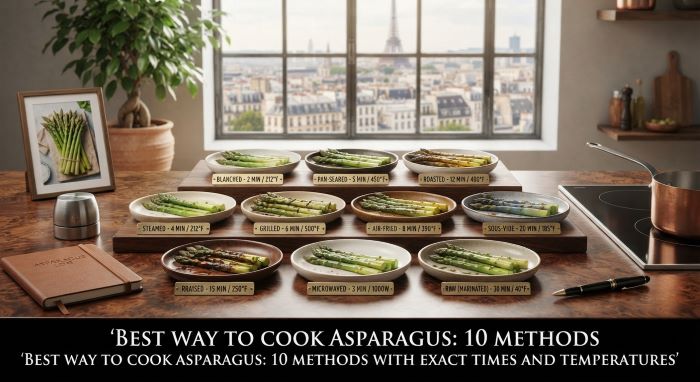
Best Way to Cook Asparagus: 10 Methods With Exact Times and Temperatures
Asparagus is one of those vegetables where the cooking method genuinely changes the final result more than almost any seasoning choice could. The best way to cook asparagus for a caramelized, slightly charred flavor is completely different from the best way to cook asparagus for a bright green, tender-crisp side dish. This guide breaks down every major cooking method with specific temperatures and times, so you can pick the right one for the meal you are actually making rather than defaulting to the same steamed spears every time.
Choosing and Prepping Your Asparagus First
Before any cooking method matters, start with asparagus that is actually fresh. Look for firm, straight stalks with tightly closed tips, and avoid bunches that look wrinkled or feel limp when you pick them up. Thickness is a matter of preference rather than quality, thinner spears cook faster and work well for quick methods like sautéing, while thicker spears hold up better to roasting and grilling without becoming mushy. Before cooking, trim the woody bottom ends, either by cutting about an inch and a half from the base or by simply bending each spear near the bottom until it snaps naturally at the point where the tough part ends.
1. Roasting (425°F, 12 to 15 minutes)
Roasting is widely considered the best way to cook asparagus for maximum flavor with minimal effort. Toss trimmed spears with olive oil, salt, and pepper, spread them in a single layer on a sheet pan, and roast at 425 degrees Fahrenheit for 12 to 15 minutes depending on thickness, until the tips are lightly browned and the stalks are tender with a slight bite. The high, dry heat concentrates the natural sweetness in a way that steaming simply cannot replicate.
2. Grilling (Medium-High Heat, 6 to 8 minutes)
For a smoky char, grilling is the best way to cook asparagus during warmer months. Toss spears in oil, lay them perpendicular across the grates so they do not fall through, and grill over medium-high heat for 6 to 8 minutes, turning once halfway through. The direct flame contact creates char marks and a slightly smoky flavor that pairs particularly well with grilled meats.
3. Sautéing (Medium-High Heat, 5 to 7 minutes)
Sautéing is the fastest stovetop method and a strong choice on a weeknight when a sheet pan and oven feel like too much effort. Heat oil or butter in a large skillet over medium-high heat, add trimmed spears in a single layer, and cook for 5 to 7 minutes, tossing frequently, until bright green and tender-crisp. Adding a splash of lemon juice or a minced garlic clove in the last minute rounds out the flavor without burning.
4. Steaming (4 to 6 minutes)
Steaming is the gentlest method and the best way to cook asparagus when you want to preserve the most nutrients and the brightest green color with minimal added fat. Place trimmed spears in a steamer basket over an inch of simmering water, cover, and steam for 4 to 6 minutes depending on thickness, checking with a fork for tenderness. Overcooking is the most common mistake here, since steamed asparagus turns dull and mushy quickly once it passes the tender-crisp point.
5. Blanching (2 to 3 minutes)
Blanching is less a finishing method and more a prep technique, ideal when asparagus will be added to a salad or served cold. Drop trimmed spears into boiling salted water for 2 to 3 minutes, then immediately transfer them to an ice bath to stop the cooking process. This locks in the bright green color and crisp texture, making it the best way to cook asparagus for pasta salads, grain bowls, or a crudité platter.
6. Air Frying (400°F, 7 to 9 minutes)
Air frying delivers results close to roasting with less preheating time and no need to heat a full oven. Toss spears with oil and seasoning, arrange them in a single layer in the basket, and air fry at 400 degrees Fahrenheit for 7 to 9 minutes, shaking the basket halfway through for even browning. It is an efficient best way to cook asparagus for a single serving or a small side dish without turning on a full sized oven.
7. Pan Searing (High Heat, 4 to 6 minutes)
Pan searing uses higher heat than sautéing to develop a deeper char in less time. Heat a heavy skillet, ideally cast iron, until it is very hot, add a small amount of high smoke point oil, and sear spears for 4 to 6 minutes, turning occasionally, until well browned in spots. This method works particularly well for thicker spears that can handle the intense, direct heat without overcooking in the center.
8. Boiling (3 to 5 minutes)
Boiling is the simplest, most old fashioned method, though it is also the easiest to overdo. Drop trimmed spears into boiling salted water for 3 to 5 minutes until just tender, then drain immediately. While not usually anyone’s first choice for the best way to cook asparagus, it works well when you need a quick, no frills side and do not want to dirty a sheet pan or skillet.
9. Foil Packet on the Grill (Medium Heat, 10 to 12 minutes)
Wrapping asparagus in a foil packet with a bit of butter, garlic, and lemon before placing it on the grill creates a steamed, flavor infused result without the risk of spears falling through the grates. Cook over medium heat for 10 to 12 minutes, and open carefully since steam will escape immediately. This method is a favorite for cookouts since the packet can be assembled ahead of time and thrown on the grill alongside the main course.
10. Stir-Frying (High Heat, 3 to 4 minutes)
For asparagus in an Asian inspired dish, stir-frying keeps the texture crisp while quickly picking up flavor from garlic, ginger, and soy sauce. Cut spears into shorter, bite sized pieces, heat oil in a wok or large skillet until very hot, and stir-fry for 3 to 4 minutes, tossing constantly, until bright green and just tender. This fast, high heat method is the best way to cook asparagus when it needs to hold its own alongside other quick cooking stir-fry ingredients.
Seasoning Ideas Beyond Salt and Pepper
Once you have settled on a cooking method, seasoning is where asparagus really shines. Lemon zest and juice brighten roasted or grilled spears without overwhelming their natural flavor. Parmesan cheese, shaved or grated over hot asparagus right after cooking, melts slightly and adds a savory, salty note. A drizzle of balsamic glaze after roasting adds sweetness that pairs particularly well with the caramelized edges high heat methods produce. For a bit of heat, a pinch of red pepper flakes added during sautéing or stir-frying works well without overpowering the vegetable itself.
Pairing Asparagus with Other Dishes
Asparagus pairs naturally with a wide range of cuisines, which is part of why it shows up on so many different types of menus. If you enjoy small plates and shareable dishes, it is worth exploring tapas style ensaladilla rusa near you, since asparagus frequently appears alongside similar Spanish tapas spreads, often grilled simply with olive oil and sea salt in the same tradition. Serving grilled or roasted asparagus as part of a tapas style spread, alongside other small dishes, is a simple way to bring more variety to a dinner without a single dominant main course.
Storing and Reheating Leftover Asparagus
Cooked asparagus keeps in the refrigerator for three to four days in an airtight container. Reheating gently in a skillet over medium heat for a few minutes works better than the microwave, which tends to make asparagus rubbery and unevenly heated. If you blanched extra asparagus for a salad, it holds up well cold for several days and can be tossed straight into grain bowls, pasta salads, or a simple vinaigrette dressed side without any additional cooking.
Common Mistakes to Avoid
Overcooking is the single most common mistake across every method, since asparagus moves from perfectly tender-crisp to mushy and dull colored in just a minute or two of extra cooking time. Skipping the trim step leaves a woody, fibrous end that is unpleasant to chew regardless of how well the rest of the spear is cooked. Overcrowding the pan, whether roasting, sautéing, or air frying, causes asparagus to steam rather than brown, which is why a single layer with some space between spears matters more than most people expect.
Choosing a Method Based on What Else You Are Cooking
The right cooking method often depends less on personal preference and more on what else is happening in your kitchen at the same time. If the oven is already occupied with a roast or casserole, a stovetop method like sautéing or a quick sear makes more sense than waiting for oven space to open up. If you are already firing up the grill for a main course, tossing asparagus on alongside it saves time and avoids heating up the kitchen further on a warm evening. Weeknight cooking tends to favor the fastest methods, sautéing, stir-frying, or air frying, while a more relaxed weekend dinner leaves room for the slightly longer roasting or grilling process that produces a deeper, more caramelized flavor.
Nutritional Differences Between Cooking Methods
While asparagus is nutritious regardless of preparation, the cooking method does affect how many nutrients ultimately end up on your plate. Boiling causes the most nutrient loss, since water soluble vitamins like vitamin C and several B vitamins leach into the cooking water and are typically discarded along with it. Steaming preserves considerably more of these nutrients since the asparagus never sits directly in water. Roasting and sautéing fall somewhere in between, with minimal nutrient loss since there is no water for vitamins to leach into, though very high heat over an extended time can degrade some heat sensitive compounds regardless of method. For anyone specifically prioritizing nutrient retention, steaming or a quick sauté generally comes out ahead of boiling or extended roasting.
Working With Different Thicknesses
Asparagus spears sold at most grocery stores range from pencil thin to noticeably thick, and adjusting your technique for the specific bunch you bought makes a real difference in the final result. Thin spears cook quickly and can go from perfectly tender to mushy within a minute, so they suit fast methods like sautéing or stir-frying where you can pull them off heat the moment they are ready. Thick spears hold up better to roasting or grilling, where the extended cooking time is actually necessary to cook through the denser stalk without the tips burning first. If a bunch contains a mix of thicknesses, sorting spears by size before cooking and adjusting timing for each batch produces far more consistent results than cooking everything together and hoping for the best.
Cooking Asparagus Ahead for Meal Prep
Asparagus holds up reasonably well to advance preparation, making it a practical vegetable for anyone planning meals ahead of time. Roasted or grilled asparagus can be portioned into meal prep containers alongside a protein and a grain, reheating gently without losing too much of its texture. For salads or grain bowls prepared several days in advance, blanched asparagus tends to hold its color and crisp texture noticeably better over multiple days in the refrigerator than asparagus cooked through a higher heat method, since it was never fully cooked through to begin with and simply needs a quick toss to incorporate into the final dish.
Pairing Asparagus with Proteins
Asparagus works as a side dish across an unusually wide range of main courses, in part because its slightly bitter, green flavor cuts through richer proteins effectively. Grilled asparagus pairs naturally with grilled steak or salmon, since both benefit from the same high heat cooking approach and complementary smoky flavor. Roasted asparagus works beautifully alongside roast chicken or pork, since both can go into the same oven and finish around the same time with minimal extra coordination. Sautéed or stir-fried asparagus fits naturally into quicker weeknight meals built around a protein like shrimp or tofu that cooks in a similarly short amount of time.
Selecting the Right Pan or Tool for Each Method
Using the right equipment makes each cooking method noticeably easier to execute well. A rimmed sheet pan, rather than a flat baking sheet, prevents oil and any released moisture from running off the edges during roasting. A well seasoned cast iron skillet holds and distributes heat more evenly than a thin nonstick pan, which matters especially for pan searing and high heat sautéing. A grill basket or simply skewering spears together crosswise prevents thinner asparagus from falling through wider grill grates, solving one of the most common frustrations people run into the first time they try grilling asparagus directly on the grates.
Using Asparagus Trimmings Instead of Tossing Them
The woody ends trimmed off before cooking do not need to go straight into the trash. Simmered in water for twenty to thirty minutes, they make a surprisingly flavorful base for vegetable stock, contributing a subtle green, slightly earthy note that works well in soups or risottos. Straining out the fibrous solids after simmering leaves a clean, usable liquid that can be frozen in small portions for later use, turning what would otherwise be kitchen waste into a genuinely useful ingredient for another meal down the line. It is a small habit that reduces food waste while adding real depth to soups and grain dishes you might otherwise build from plain water or store bought stock alone.
A Final Word on Experimenting
With so many workable methods, there is no single objectively correct technique, only the one that fits the meal, the season, and the equipment you already have going at the time. Trying a new method every few weeks, rather than defaulting to the same one every time, is a simple way to discover which texture and flavor profile you genuinely prefer, and it keeps a vegetable you might otherwise cook on autopilot feeling fresh and worth looking forward to.
Key Takeaways
- The best way to cook asparagus depends on the result you want: roasting and grilling for caramelized flavor, steaming and blanching for bright color and crisp texture.
- Roasting at 425 degrees Fahrenheit for 12 to 15 minutes delivers the most flavor for the least effort.
- Blanching is the right choice when asparagus is headed into a cold salad or grain bowl rather than served hot.
- Trimming the woody ends and avoiding overcrowding the pan matter as much as the cooking method itself.
- Overcooking is the most common mistake, since asparagus turns mushy quickly once it passes tender-crisp.
- Lemon, parmesan, and balsamic glaze are simple ways to elevate asparagus regardless of which method you choose.
- Leftover asparagus keeps three to four days and reheats best in a skillet rather than a microwave.