Best Marmitako Near Me: The Basque Tuna and Potato Stew
The potatoes in this stew are never cut cleanly. They are pushed into with a knife and snapped off, leaving a torn face rather than a smooth one, and that detail is not decorative. The ragged surfaces release starch into the broth and thicken it naturally, which is why a proper marmitako has body without a spoonful of flour anywhere near it. It is a fishermen’s dish, and the technique came from boats. Here is the guide.
What It Is
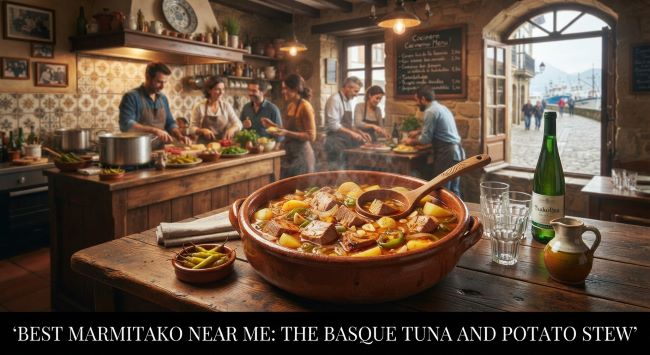
Marmitako is a Basque stew of tuna and potatoes. The name derives from marmita, the pot in which it was traditionally cooked aboard fishing boats.
The best marmitako near me is built from:
- Tuna, traditionally bonito del norte, albacore, cut into chunks.
- Potatoes, cracked rather than sliced.
- Choricero pepper pulp, the dried sweet red pepper central to Basque cooking.
- Onion, garlic, and green pepper, forming the base.
- Tomato, in some versions.
- Fish or vegetable stock, or simply water.
- Olive oil.
It is a stew rather than a soup, thick enough that the spoon meets resistance, with the tuna added at the very end.
The Cracked Potato Technique
This is the detail that most distinguishes the best marmitako near me from an ordinary fish stew.
Potatoes are cascadas, or cracked. The technique involves pushing a knife partway into the potato and then twisting or snapping to break the piece off, leaving a torn rather than cut surface.
That ragged face exposes more starch, which releases into the cooking liquid and thickens the stew naturally. Cleanly sliced potatoes release far less and produce a thinner result.
It is a small technique with a real effect, and it is the sort of thing that separates a cook who knows the dish from one following a generic recipe.
Choricero Peppers
The other element defining the best marmitako near me is the pepper.
Choricero peppers are dried sweet red peppers, soaked until soft, then scraped to extract the flesh from the skins. That pulp goes into the stew.
They contribute a deep red colour, mild sweetness, and a distinctive fruity depth without heat. They are not chilli peppers, and marmitako is not a spicy dish.
The same peppers define bacalao a la vizcaína and appear throughout Basque cooking, which is why a properly made marmitako tastes recognizably Basque rather than generically Mediterranean.
Versions substituting paprika or generic pepper produce something noticeably different.
The Tuna Timing
This is where most versions of the best marmitako near me fail, and it is worth understanding.
Tuna is added at the very end, off the heat or with the heat just turned down, and allowed to cook through in the residual warmth of the stew.
Bonito is lean and cooks fast. Boiling it in the stew for any length of time makes it dry, chalky, and tough, which is the single most common fault in a poor marmitako.
Properly done, the tuna is just cooked through, still moist, and flaking gently. It should not have the dense dryness of overcooked canned tuna.
Restaurants that add the fish to order rather than holding a finished stew produce noticeably better results.
Where to Find It
The best marmitako near me search runs through:
Basque restaurants, the ideal option, and Spanish restaurants with a northern focus rather than a generic tapas menu.
Seafood-focused establishments, particularly during bonito season from summer into early autumn.
Because it requires proper technique and good tuna, marmitako appears more often at restaurants taking Spanish regional cooking seriously than at casual tapas bars.
How to Judge Quality
Evaluating the best marmitako near me comes down to the tuna and the body:
| Element | Done right | Warning sign |
|---|---|---|
| Tuna | Moist, just cooked, flaking | Dry, chalky, or tough |
| Potato | Tender, holding shape | Disintegrated or hard |
| Broth | Thick, naturally bodied | Thin, watery, or floury |
| Colour | Deep red-orange from choricero | Pale or tomato-red only |
| Seasoning | Deep, savoury, not spicy | Flat or unexpectedly hot |
Tuna texture is the primary test, as covered above. Dry tuna means it was cooked too long.
Broth body should come from potato starch and reduction rather than from any thickener. A stew that tastes floury has been thickened artificially.
Colour is a reasonable visual indicator. Genuine choricero pulp produces a distinctive deep red-orange rather than the brighter red of tomato alone.
The Fishermen’s Origin
The best marmitako near me was originally cooked by Basque tuna fishermen aboard their boats during bonito season, using the catch alongside potatoes and preserved peppers carried on board. Everything in it either came from the sea that morning or kept well at sea, and the one-pot method suited a galley. It has since become a celebrated regional dish, though the fishermen’s association remains part of how it is understood.
Bonito Season
Bonito del norte, albacore, is fished in the Bay of Biscay from early summer into autumn, and the season is significant enough in the Basque Country to be marked. Marmitako made with fresh seasonal bonito is noticeably better than frozen versions, so asking is a fair question.
Part of the Basque Table
What makes marmitako worth seeking out is that it turns two humble ingredients and a preserved pepper into something a region celebrates, which reflects a broader confidence in simple combinations. That instinct appears across Latin and Spanish-influenced cooking wherever a few components are trusted to carry a dish. Something like Best Arepa Domino Near Me shows the Venezuelan version, where black beans and white cheese alone became one of the country’s most popular fillings, and both demonstrate that fewer ingredients handled correctly beat elaboration.
The bottom line on the best marmitako near me search is that this Basque stew combines tuna, traditionally bonito del norte, with potatoes cracked rather than sliced so their starch thickens the broth naturally, built on choricero pepper pulp with onion, garlic, and green pepper. The tuna is added at the very end and cooked in residual heat, since bonito is lean and turns dry and chalky if boiled. Look for Basque or northern-focused Spanish restaurants, particularly during the summer bonito season, and judge it on moist flaking tuna and a broth thickened by potato rather than flour.
Key Takeaways
- Marmitako is a Basque stew of tuna and potatoes, named after the marmita pot used on fishing boats.
- Bonito del norte, albacore, is the traditional tuna.
- Potatoes are cracked rather than sliced, leaving torn surfaces that release more starch.
- That released starch thickens the stew naturally without any added flour.
- Choricero peppers, dried sweet red peppers soaked and scraped, provide colour and fruity depth.
- Choriceros contribute no heat, so marmitako is not a spicy dish.
- Tuna is added at the very end and cooks in residual heat rather than boiling.
- Dry, chalky tuna is the most common fault and means it was cooked too long.
- Broth body should come from potato starch and reduction rather than thickeners.
- The dish originated with Basque fishermen cooking aboard boats during bonito season.
- Bonito season runs roughly early summer into autumn in the Bay of Biscay.
- Marmitako made with fresh seasonal bonito is noticeably better than frozen or preserved versions.