Best Sancocho Puerto Rican Near Me: The Island’s Comfort Stew
Sancocho exists across Latin America and the Caribbean, and every country insists theirs is the correct one. The Puerto Rican version is identified by two things: a sofrito base carrying culantro, and a bowl loaded with viandas, the starchy roots that anchor island cooking. If you are searching for the best sancocho puerto rican near me, here is what separates a real one from an approximation.
What Puerto Rican Sancocho Is
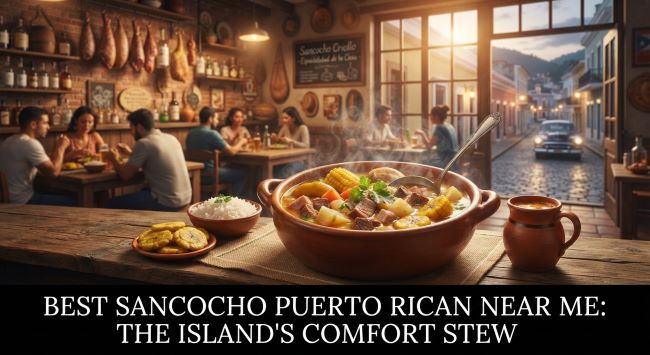
Sancocho is a thick, hearty stew of meat and root vegetables simmered slowly until everything softens and the broth turns rich. The best sancocho puerto rican near me typically contains:
- Beef, most often bone-in cuts like shank, which give the broth body. Chicken or pork appear in some versions.
- Sofrito, the aromatic base of Puerto Rican cooking.
- Viandas, the root vegetables that define the dish.
- Corn on the cob, in thick rounds.
- Green plantains, sometimes with ripe ones for sweetness.
- Seasonings including sazón, adobo, oregano, bay leaf, and often tomato.
The result is dense with vegetables, deeply savory, and substantial enough to be a complete meal.
The Viandas
Understanding viandas is essential to the best sancocho puerto rican near me search, since this is where the Puerto Rican version distinguishes itself. Viandas are the starchy tubers and roots central to island cooking, and a proper sancocho includes several rather than one:
- Yautía, also called malanga or taro, earthy with a creamy texture.
- Yuca, cassava, which becomes tender and slightly translucent.
- Ñame, a yam variety with a dense texture.
- Calabaza, West Indian pumpkin, which partially dissolves and thickens the broth.
- Green plantain, firm and starchy rather than sweet, plus potato in many versions.
The calabaza deserves particular attention, since it breaks down during the long simmer and thickens the stew from within, which is why a good sancocho has body without added flour or cornstarch. A version containing only potatoes and carrots has missed the point, since the variety of viandas is the dish.
Sofrito Is the Foundation
Every Puerto Rican savory dish starts here. Sofrito is a blended aromatic base, and the Puerto Rican version is distinguished by recao, also called culantro, a long-leafed herb related to cilantro but considerably more intense, alongside ají dulce peppers, onion, garlic, and bell pepper.
That culantro note is the clearest marker of authenticity, and its absence is noticeable to anyone who grew up with the dish.
How It Differs From Other Sancochos
This comparison matters in the best sancocho puerto rican near me search, since the name is shared widely:
| Version | Distinguishing features |
|---|---|
| Puerto Rican | Sofrito with culantro, heavy on viandas, usually beef |
| Dominican | Often sancocho de siete carnes, seven meats, for celebrations |
| Colombian | Frequently chicken or hen, cilantro-forward, served with rice and avocado |
| Venezuelan | Regional variations with local roots and often fish on the coast |
The Dominican seven-meat version is the most famous internationally and is genuinely different, built around variety of meats rather than roots. Puerto Rican sancocho inverts that: one or two meats, many viandas. If a restaurant advertises sancocho without specifying a tradition, asking is worthwhile.
Where to Find It
The best sancocho puerto rican near me search runs through:
Puerto Rican restaurants, particularly those serving traditional comida criolla, and Caribbean or Latin American restaurants with Puerto Rican offerings.
Restaurants with daily specials, since the long cooking time makes sancocho a rotating dish rather than a fixed menu item.
Cultural events and festivals, where large batches are common, and colder months, when availability improves.
Because it takes hours to make properly, unpretentious home-style establishments are frequently better bets than polished dining rooms.
How to Judge a Great Bowl
Evaluating the best sancocho puerto rican near me comes down to a few clear tests:
| Element | Done right | Warning sign |
|---|---|---|
| Viandas | Several varieties, tender | Only potato, or mushy |
| Broth | Rich, thick, well seasoned | Thin or watery |
| Meat | Falling apart, well cooked | Tough or dry |
| Sofrito | Clear culantro depth | Flat or generic |
| Corn | Present in rounds | Missing |
Broth body is the primary indicator, since a proper sancocho thickens naturally from starches released during the simmer. Thin broth means insufficient viandas or insufficient time.
Vianda variety is easiest to check visually, since you should identify several distinct roots in the bowl.
Meat tenderness requires slow cooking, and rushed bone-in beef is obvious.
How It Is Served
The best sancocho puerto rican near me typically arrives:
- With white rice on the side, which is standard rather than optional, often spooned over.
- With avocado, whose creaminess suits the rich broth.
- With bread, and piping hot in a substantial bowl.
The rice pairing is traditional, since Puerto Rican stews are generally served alongside rice rather than as standalone soups.
When It Is Eaten
Sancocho is associated with cold or rainy days, family gatherings, and occasions requiring a large pot that feeds everyone. It is also considered restorative in Puerto Rican households, made when someone is unwell or the weather turns, which explains why it appears more on winter menus and why portions are generous.
Part of the Caribbean Staple Tradition
What makes Puerto Rican sancocho distinctive is how completely it depends on regional starches, building a dish around roots and plantains rather than treating them as sides. That reliance on a local staple runs throughout Caribbean and Latin American cooking. A dish like Best Arepa Venezolana Near Me shows the same principle applied to corn rather than roots, where a single staple becomes the foundation of an entire everyday food culture, and setting the two beside each other clarifies how much these cuisines are shaped by what grows locally.
The bottom line on the best sancocho puerto rican near me search is that this hearty stew is identified by two things: a sofrito base carrying culantro, and a generous mix of viandas including yautía, yuca, ñame, calabaza, and green plantain alongside bone-in beef and corn. Look for Puerto Rican restaurants serving comida criolla, check daily specials since the long cooking time makes it a rotating dish, judge it on a naturally thickened broth and genuine vianda variety rather than potatoes alone, and eat it hot with white rice and avocado.
Key Takeaways
- Puerto Rican sancocho is a thick stew of meat and root vegetables simmered slowly until the broth turns rich.
- It usually uses bone-in beef such as shank, though chicken or pork appear in some versions.
- Viandas are the defining element, including yautía, yuca, ñame, calabaza, green plantain, and potato.
- Calabaza breaks down during cooking and naturally thickens the stew without added flour or starch.
- Sofrito is the aromatic base, and Puerto Rican sofrito is distinguished by recao, or culantro.
- The culantro note is the clearest marker separating it from generically Caribbean versions.
- Dominican sancocho is often the seven-meat celebratory version, emphasizing meats rather than roots.
- Find it at Puerto Rican restaurants serving comida criolla, often as a daily special rather than a fixed menu item.
- Judge quality by a naturally thick broth, several distinct viandas, and fall-apart tender meat.
- It is served hot with white rice on the side and often avocado, and is associated with cold days and family gatherings.