Where to Sell Baby Items: The Best Options Explained
Babies outgrow things at a pace that turns a spare room into a warehouse within eighteen months. The clothes were worn six times, the bouncer was used for a single stage, the stroller cost a fortune and now sits folded in a hallway. Most of it retains real value, and there is a reliable market for it, but the right venue depends heavily on what you are selling. Here is a guide to the options, plus the safety rules that genuinely matter.
Online Marketplaces
The broadest answer to where to sell baby items is the major online marketplaces, which offer the largest audiences:
Facebook Marketplace has become the dominant venue for larger items, since it is free, local, and buyers collect in person. Strollers, cots, high chairs, and furniture do particularly well because shipping them is impractical.
eBay suits items with wider appeal or higher value, especially branded goods buyers search for specifically. Shipping costs make it less suitable for bulky items but excellent for clothing lots.
Craigslist remains functional for local sales, and Nextdoor connects you to immediate neighbors, which is convenient for collection and feels lower-risk than dealing with strangers.
These general marketplaces are the default starting point when considering where to sell baby items, particularly for anything too large to post.
Specialist Resale Apps and Sites
When deciding where to sell baby items, several platforms focus specifically on children’s goods:
- Kidizen, built specifically around children’s clothing and gear resale.
- Poshmark, strong for branded and boutique children’s clothing.
- Vinted, popular for clothing with low seller fees.
- Mercari, a general resale app that handles baby items well.
- thredUP, which operates on a send-in bag model where they handle everything for a share of proceeds.
The specialist options often connect you to buyers actively looking for children’s items rather than browsing generally, which can produce faster sales for the right pieces.
Consignment Shops and Sales
A traditional answer to where to sell baby items is consignment, and it comes in two forms.
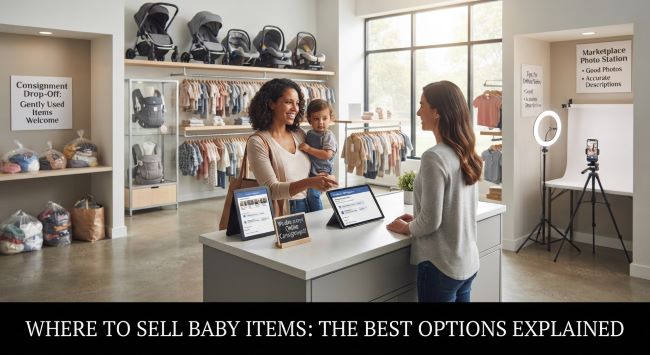
Consignment shops take your items, sell them, and give you a percentage. You receive less than selling directly, but the shop handles pricing, display, and the transaction. Many specialize in children’s goods with standards about condition and season.
Consignment sales events are large temporary sales, often seasonal, where many families sell simultaneously. You tag and price your own items, drop them off, and collect a percentage. Volume is the appeal.
Local Options
Several local approaches to where to sell baby items work well:
| Option | Best for |
|---|---|
| Local buy/sell Facebook groups | Quick local sales, no fees |
| Parenting and mum groups | Trusted audience, community pricing |
| Garage or yard sales | Clearing volume quickly, low prices |
| Community boards | Neighborhood reach |
| Word of mouth | Trusted transactions, fair prices |
Local parenting groups deserve particular mention. Buyers already know the value of what you are selling, transactions tend to be straightforward, and there is a built-in trust factor that makes the whole process less fraught than dealing with anonymous strangers.
The Safety Rules That Matter
This is the most important part of deciding where to sell baby items, because some genuinely should not be resold, for serious rather than bureaucratic reasons.
Check for recalls before selling anything. Product recalls happen regularly, and reselling a recalled item is both dangerous and, in many jurisdictions, illegal. Consumer product safety authorities maintain searchable recall databases, and checking takes a minute.
Car seats require particular care. Car seats have expiration dates, typically printed on the seat itself, and they must be replaced after any significant crash even without visible damage, since the structure may be compromised. Because a seller cannot prove a seat’s history and a buyer cannot verify it, safety organizations and many resale platforms strongly discourage or prohibit reselling car seats entirely. This is a genuine safety matter rather than excessive caution.
Crib safety standards have changed. Drop-side cribs are banned in the United States and must not be resold. Older cribs may not meet current safety standards for slat spacing and construction.
Check current standards for sleep products. Regulations around infant sleep products have changed substantially in recent years, and some products sold previously no longer meet current safety requirements.
Never sell damaged safety equipment, including anything with missing parts, broken buckles, or compromised structure.
Wash and inspect everything, disclosing any wear, stains, or defects honestly in your listing.
When in doubt about whether an item is safe to resell, checking the manufacturer’s guidance and current safety regulations is the responsible step, and disposing of an unsafe item is better than passing it on.
What Sells Best
Knowing where to sell baby items works better alongside knowing what actually moves. Higher-value gear sells most reliably: strollers, carriers, high chairs, and travel systems from recognized brands. Clothing sells better in bundles by size unless the pieces are premium. Nursery furniture holds value well, and toys and books sell steadily in lots.
Items that struggle include heavily worn or stained clothing, unbranded goods, and used feeding items like bottles, which buyers avoid for hygiene reasons.
Getting the Best Price
Clean everything thoroughly, since presentation drives price more than almost anything. Photograph clearly against a plain background, including flaws. Write accurate descriptions with brand, model, size, and condition. Research completed listings rather than asking prices. Include original boxes and accessories, and time selling sensibly, since seasonal clothing sells best just before its season.
The bottom line on where to sell baby items is that the venue should match the item. Use Facebook Marketplace and local groups for bulky gear like strollers, cots, and furniture where collection is easy. Use eBay, Poshmark, Vinted, Kidizen, or Mercari for clothing and smaller items that ship affordably. Use consignment shops or seasonal consignment sales when you want to clear volume without managing individual transactions. Above all, check recalls before listing anything, never resell car seats or drop-side cribs, verify that items meet current safety standards, and disclose condition honestly.
Key Takeaways
- Facebook Marketplace is the strongest option for bulky items like strollers, cots, and nursery furniture.
- eBay, Poshmark, Vinted, Kidizen, Mercari, and thredUP suit clothing and smaller items that ship affordably.
- Consignment shops handle everything for a percentage, while seasonal consignment sales let you clear volume at once.
- Local parenting groups offer knowledgeable buyers, straightforward transactions, and a built-in trust factor.
- Always check official recall databases before listing any baby item, since reselling recalled goods is dangerous and often illegal.
- Car seats have expiration dates and must be replaced after crashes, so reselling them is strongly discouraged or prohibited.
- Drop-side cribs are banned and must never be resold, and older cribs may not meet current standards.
- Never sell damaged safety equipment with missing parts, broken buckles, or compromised structure.
- Higher-value gear, nursery furniture, and clothing sold in size bundles move most reliably.
- Clean items thoroughly, photograph them well, disclose flaws honestly, and check completed listings for realistic pricing.