Best Places to Scuba Dive: World-Class Destinations Explained
Divers tend to keep a mental list of places they intend to reach eventually, and the list is remarkably consistent from one person to the next. A handful of destinations have earned genuine legendary status through some combination of visibility, marine density, dramatic topography, or the near-guaranteed presence of large animals. Choosing among them is less about which is objectively best and more about matching a place to your experience level and what you actually want to see. Here is a guide to the best places to scuba dive and how to pick.
The Red Sea, Egypt
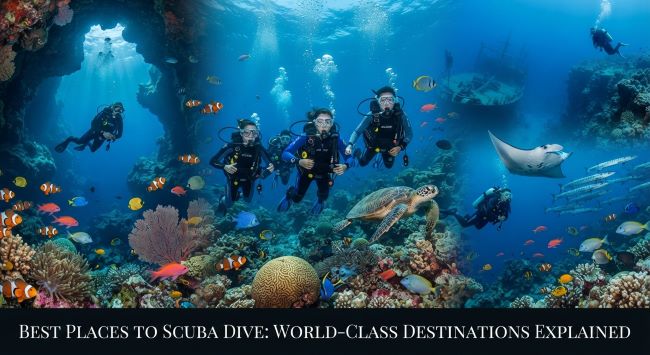
Consistently ranked among the best places to scuba dive, the Red Sea combines accessibility, affordability, and genuine quality. Sites around Sharm El Sheikh, Hurghada, and Marsa Alam deliver warm water, excellent visibility, vibrant reefs, and abundant fish. The region is also famous for wreck diving, most notably the SS Thistlegorm, a World War II cargo ship that remains one of the most celebrated wrecks anywhere. Year-round diving and short flights from Europe make it arguably the best value here.
Raja Ampat, Indonesia
For sheer biodiversity, Raja Ampat is frequently named the single best destination anywhere. Located in Indonesian Papua at the heart of the Coral Triangle, it records some of the highest concentrations of marine species on earth, with dense soft coral, enormous fish schools, manta rays, and extraordinary macro life. The trade-off is remoteness, since reaching it requires considerable travel and most diving is from liveaboards, raising costs substantially.
The Galapagos Islands, Ecuador
Among the best places to scuba dive for large marine life, the Galapagos is hard to match, known for hammerhead schools, whale sharks, sea lions, and marine iguanas in significant numbers. This is not beginner diving, since currents are strong and temperatures vary considerably, but few places compete for advanced divers wanting big animal encounters.
The Great Barrier Reef, Australia
One of the best places to scuba dive for accessibility, the most famous reef system in the world stretches over 2,300 kilometers along the Queensland coast, offering everything from shallow coral gardens suitable for beginners to demanding outer reef sites. Access from Cairns and Port Douglas is straightforward with excellent infrastructure. The reef has faced coral bleaching pressures recently, so choosing operators and sites carefully matters more than it once did.
Palau, Micronesia
Palau earns its place among the best places to scuba dive through dramatic sites like Blue Corner and German Channel, where strong currents attract sharks, barracuda, and pelagic species in abundance. It also offers exceptional World War II wrecks and the famous Jellyfish Lake, though the currents mean much of it suits experienced divers.
The Maldives
The Maldives combines luxury with genuinely excellent diving, appearing on most lists of the best places to scuba dive. The atolls offer manta rays, whale sharks, reef sharks, and healthy coral, with a distinctive style of diving around channels and formations known as thilas. Liveaboards and resort diving are both widely available, suiting a broad range of levels, though channel diving requires competence.
Belize
Home to the Great Blue Hole, one of the most photographed dive sites on earth, Belize suits anyone drawn to dramatic underwater topography, and it has the second-largest barrier reef system in the world. The Blue Hole is a deep dive for experienced divers, but the surrounding reef offers excellent diving at all levels, including Turneffe Atoll and Half Moon Caye.
Choosing the Right Destination
Deciding among the best places to scuba dive comes down to a few practical questions:
| Priority | Consider |
|---|---|
| Big animals | Galapagos, Palau, Maldives |
| Biodiversity | Raja Ampat, Indonesia broadly |
| Value and accessibility | Red Sea |
| Wrecks | Red Sea, Palau |
| Beginner-friendly | Great Barrier Reef, Red Sea, Caribbean |
| Dramatic topography | Belize, Palau |
Beyond the destination itself, consider your certification level and logged experience honestly, since several of these locations genuinely require advanced skills. Also check seasonality, as most destinations have distinct windows for visibility, water temperature, and particular species. And factor in whether you want resort-based diving or a liveaboard, which changes both the cost and the character of the trip considerably.
Diving Safely
Whichever destination you choose, dive within your certification and genuine experience rather than your ambitions. Choose reputable operators with good safety records and maintained equipment. Carry dive insurance, since treatment for diving injuries is expensive and often excluded from standard travel policies. Respect no-fly times before your return flight, and avoid contact with coral and marine life.
If You Are Not Certified Yet
Scuba certification opens all of these destinations, but plenty of the same marine life is accessible without it. Snorkeling reaches remarkable amounts of reef life in shallow water, and it is an excellent way to test whether you enjoy being in the water before committing to a course. Hawaii is a particularly good example, with accessible shallow reefs and abundant marine life close to shore. The guide to Best Places to Snorkel in Hawaii covers the standout spots there, which pairs naturally with this since many divers begin as snorkelers, and Hawaii offers some of the most rewarding shallow-water marine life anywhere for people not yet certified.
The bottom line on the best places to scuba dive is that the world’s top destinations each offer something distinct: the Red Sea for value, accessibility, and wrecks; Raja Ampat for unmatched biodiversity; the Galapagos and Palau for big animal encounters in demanding conditions; the Great Barrier Reef for variety and easy access; the Maldives for manta rays and comfort; and Belize for dramatic topography including the Great Blue Hole. Match the destination to your certification level, the season, and whether you want big animals, biodiversity, or wrecks, and dive with reputable operators and proper insurance.
Key Takeaways
- The Red Sea offers the best combination of value, accessibility, warm water, and world-class wreck diving.
- Raja Ampat in Indonesia sits in the Coral Triangle and offers the highest marine biodiversity anywhere.
- The Galapagos delivers hammerheads, whale sharks, and sea lions, but demands genuine experience due to strong currents.
- The Great Barrier Reef provides enormous variety and easy access, suiting beginners through advanced divers.
- Palau is known for Blue Corner, German Channel, and exceptional World War II wrecks, with strong currents throughout.
- The Maldives combines luxury with manta rays, whale sharks, and distinctive channel and thila diving.
- Belize is home to the Great Blue Hole and the second-largest barrier reef system in the world.
- Choose based on your certification level, seasonality, and whether you want big animals, biodiversity, or wrecks.
- Dive within your experience, choose reputable operators, carry dive insurance, and respect no-fly times.
- Snorkeling in places like Hawaii is an excellent way to experience reef life before getting certified.