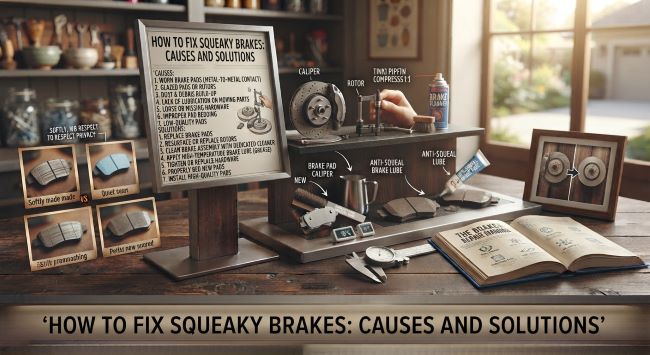
How to Fix Squeaky Brakes: Causes and Solutions
That squealing sound every time you press the brake pedal is more than just annoying, it can be your car trying to tell you something. Squeaky brakes are extremely common, and while sometimes the cause is harmless, other times it signals wear that needs attention. Because brakes are one of the most important safety systems in your vehicle, it is worth understanding what causes the noise and what to do about it. Here is a guide on how to fix squeaky brakes, including the important distinction between minor causes and warning signs that mean it is time to see a professional.
Why Brakes Squeak
Understanding the causes is the foundation of everything. Brakes can squeak for several reasons, ranging from harmless to serious:
- Worn brake pads, where many pads have a built-in wear indicator that squeals to warn you they need replacing. This is a common and important cause.
- Moisture and light rust, where overnight moisture causes a light surface rust that squeaks briefly until it wears off, which is harmless.
- Dust and debris, where dirt or small debris between the pad and rotor causes noise.
- Cheap or hard brake pads, where certain pad materials are simply noisier.
- Lack of lubrication on certain contact points of the brake hardware.
- Glazed pads or rotors, from overheating, which can cause squealing.
Identifying the cause is key to how to fix squeaky brakes, since the right fix, or the decision to see a mechanic, depends entirely on why they are squeaking.
When It’s Harmless vs. Serious
A crucial part of this is knowing when the noise is minor and when it is a warning:
| Situation | Likely Meaning |
|---|---|
| Brief squeak in morning or after rain | Usually harmless surface rust |
| Squeal that goes away after driving | Often minor |
| Persistent squealing | Possibly worn pads, needs checking |
| Grinding noise | Serious, likely worn out, see mechanic now |
A brief squeak that disappears after you start driving is usually harmless moisture-related rust. But persistent squealing, especially a consistent high-pitched squeal, often means the pad wear indicators are signaling that pads need replacing. And a grinding noise is a serious warning that pads may be worn through to metal, which is dangerous and requires immediate professional attention. Knowing this distinction is the most important part of how to fix squeaky brakes.
Simple Causes You Can Address
For minor causes, some aspects are manageable:
Surface rust and moisture: This often resolves itself as you drive and the light rust wears off the rotors. No action is usually needed beyond normal driving.
Dust and debris: Sometimes cleaning debris from the brake area helps, though brake work should be approached carefully.
Break-in period: New brakes sometimes squeak during a break-in period, which often settles.
For these minor situations, how to fix squeaky brakes may simply mean driving normally, keeping brakes clean, or waiting out a break-in period. However, anything beyond these simple causes involves the brake system directly.
Why Brake Work Is Best Left to Professionals
Here is the most important point about how to fix squeaky brakes: brakes are a safety-critical system, and most brake repairs are best handled by qualified mechanics. Replacing brake pads, resurfacing or replacing rotors, addressing worn components, and diagnosing the true cause of squealing all require proper knowledge, tools, and care. Mistakes with brake work can be dangerous, since your brakes are what stop your car.
While some experienced DIYers do their own brake work, and while minor causes like surface rust resolve on their own, the safest approach to how to fix squeaky brakes for most people is to have a professional inspect and service the brakes. This is especially true for any persistent squealing or grinding, which needs proper diagnosis.
Warning Signs to See a Mechanic Immediately
Part of understanding how to fix squeaky brakes is recognizing when to seek help right away:
- Grinding noises, which suggest pads worn through to metal.
- Persistent, consistent squealing, possibly wear-indicator warnings.
- Reduced braking performance, longer stopping distances, or a soft pedal.
- Vibration when braking, which can indicate rotor problems.
- A burning smell when braking.
- Warning lights related to brakes.
Any of these signs means you should have your brakes professionally inspected promptly, since brake problems affect your safety and that of others on the road. When in doubt, get them checked.
Getting the Parts and Help You Need
If your brakes need attention, whether you are having a professional do the work or you are an experienced DIYer, you will need quality parts and possibly advice. Auto parts stores can supply brake pads, hardware, and related components, and offer guidance. The information in Advance Auto Parts Near Me covers finding an auto parts store, which is relevant here since addressing squeaky brakes often means getting quality replacement pads or components, whether for a professional installation or experienced DIY work, and a good auto parts store is where you source what you need.
The bottom line on how to fix squeaky brakes is that the noise can range from harmless surface rust that wears off on its own to worn pads or serious wear that needs immediate attention. Learn to distinguish a brief morning squeak (usually fine) from persistent squealing (often worn pads) and grinding (a serious warning). Because brakes are safety-critical, most brake repairs are best left to qualified mechanics, and any grinding, persistent squealing, or performance issues warrant prompt professional inspection. When it comes to your brakes, safety always comes first.
Key Takeaways
- Squeaky brakes are common and range from harmless causes to serious wear that needs attention.
- Common causes include worn pads (often with a wear-indicator squeal), surface rust, debris, and pad material.
- A brief squeak in the morning or after rain is usually harmless surface rust that wears off as you drive.
- Persistent squealing often means the pad wear indicators are signaling that pads need replacing.
- Grinding is a serious warning that pads may be worn to metal, requiring immediate professional attention.
- Brakes are safety-critical, so most brake repairs are best handled by qualified mechanics.
- See a mechanic promptly for grinding, persistent squealing, reduced braking, vibration, burning smells, or warning lights.
- Quality replacement pads and components from an auto parts store are needed for professional or experienced DIY brake work.