How to Fix Squeaky Door: Quick and Easy Solutions
That high-pitched squeak every time a door opens or closes is one of the most annoying little household nuisances there is, waking sleeping babies, announcing your late-night snack runs, and generally grating on the nerves. The good news is that a squeaky door is almost always a quick, easy fix requiring just a few minutes and materials you likely already have. In most cases, the culprit is simple friction at the hinges, and a little lubrication solves it. Here is how to fix squeaky door with simple, effective solutions.
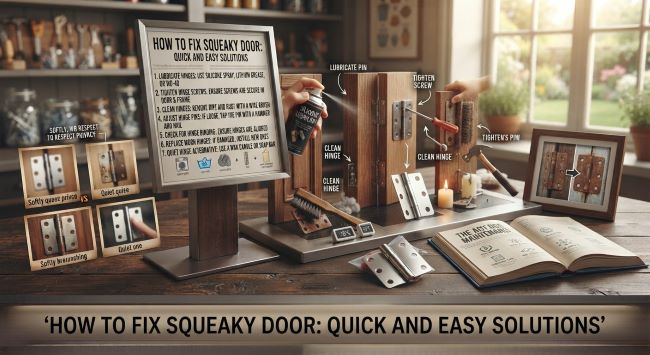
Why Doors Squeak
Understanding the cause helps a lot. Door squeaks almost always come from the hinges, where metal parts rub against each other. Over time, the lubrication in a hinge wears away, dirt and rust build up, or the hinge pin and knuckles grind together, creating that familiar squeak through friction.
Occasionally, a squeak or rubbing comes from other sources, like the door rubbing against the frame, but the hinges are the usual suspect. Knowing this, how to fix squeaky door usually comes down to addressing the hinges, most often with lubrication.
Method 1: Lubricate the Hinges
The most common and effective approach is lubricating the hinges. This solves the majority of squeaks:
- Choose a lubricant. Options include specialized products, silicone spray, white lithium grease, or common household oils. Each can work on hinges.
- Apply to the hinge. Spray or apply lubricant to the hinge, especially the pin area where the friction occurs.
- Work it in. Open and close the door several times to work the lubricant into the hinge.
- Wipe off excess to avoid drips and mess.
- Test. The squeak should be gone or greatly reduced. Reapply if needed.
This simple lubrication is the go-to fix for how to fix squeaky door and resolves most squeaks in minutes.
Method 2: Remove and Clean the Hinge Pin
For a more thorough approach, especially with older or dirty hinges, remove and clean the hinge pin:
- Tap out the hinge pin. Using a screwdriver and hammer, gently tap the pin up and out of the hinge (do one hinge at a time so the door stays in place).
- Clean the pin. Wipe away old grease, dirt, and any rust from the pin.
- Lubricate it. Apply fresh lubricant to the pin.
- Reinsert the pin, tapping it back into place.
- Repeat for other hinges if needed, and test the door.
This deeper clean addresses squeaks that simple surface lubrication does not fully solve, making it a reliable step in how to fix squeaky door with stubborn hinges.
Method 3: Tighten Loose Screws
Sometimes the fix involves loose hinge screws, which can cause the door to shift and the hinges to bind or squeak. Check the screws on both the door and frame side of each hinge, and tighten any that are loose with a screwdriver. If a screw hole is stripped and the screw will not tighten, that hole may need repair. Tightening loose screws can resolve squeaks and also fixes a door that has begun to sag or rub, so it is worth checking as part of how to fix squeaky door.
Method 4: Address a Rubbing Door
If the noise is more of a scrape than a hinge squeak, it may mean addressing the door rubbing against the frame. Look for shiny or worn spots where the door contacts the frame. Tightening hinge screws often lifts a sagging door enough to stop the rubbing. In some cases, minor sanding of the contact point resolves it. Identifying whether the noise is a hinge squeak or a rubbing door points you to the right fix.
What Lubricants to Use
Choosing a lubricant is part of how to fix squeaky door effectively:
| Lubricant | Notes |
|---|---|
| Silicone spray | Clean, long-lasting, good for hinges |
| White lithium grease | Durable, good for metal hinges |
| Specialized penetrating oil | Penetrates and lubricates |
| Household oil | Works in a pinch |
Silicone spray and white lithium grease are excellent, durable choices for hinges. Some prefer these over thinner oils, which can attract dust over time. Any of these can silence a squeak, so use what you have while knowing the dedicated products last longest.
When It’s More Than a Simple Squeak
While how to fix squeaky door is usually a quick DIY job, some door problems point to bigger issues. A door that is badly sagging, sticking severely, misaligned, or has damaged hinges or frame may need more attention. This is especially true for larger, heavier doors like garage doors, where problems can involve springs, tracks, and mechanisms that are complex and potentially dangerous to work on. For garage door problems specifically, the guidance in Emergency Garage Door Repair Near Me covers finding professional help, which is relevant here since while a squeaky interior door is a simple fix, a malfunctioning or noisy garage door often involves heavy components and high-tension springs best handled by professionals for safety.
The bottom line on how to fix squeaky door is that it is almost always a quick, easy fix: lubricate the hinges, and for stubborn squeaks, remove and clean the hinge pin, tighten any loose screws, and check whether the door is rubbing the frame. Use a good lubricant like silicone spray or white lithium grease, work it into the hinge, and the squeak disappears in minutes. For bigger door problems, especially heavy garage doors, call a professional. With these simple steps, you can silence that annoying squeak and enjoy a quiet, smoothly operating door.
Key Takeaways
- Door squeaks almost always come from the hinges, where worn lubrication and friction cause metal parts to grind.
- The most common fix is lubricating the hinges, especially the pin area, which resolves most squeaks in minutes.
- For stubborn squeaks, tap out the hinge pin, clean off old grease and rust, lubricate it, and reinsert it.
- Tighten any loose hinge screws, which can cause binding, squeaking, or a sagging, rubbing door.
- If the noise is a scrape, check whether the door is rubbing the frame and address it by tightening hinges or light sanding.
- Silicone spray and white lithium grease are durable, effective lubricant choices for hinges.
- Wipe off excess lubricant, and work the door open and closed to distribute it.
- For bigger problems, especially heavy garage doors with high-tension springs, call a professional for safety.