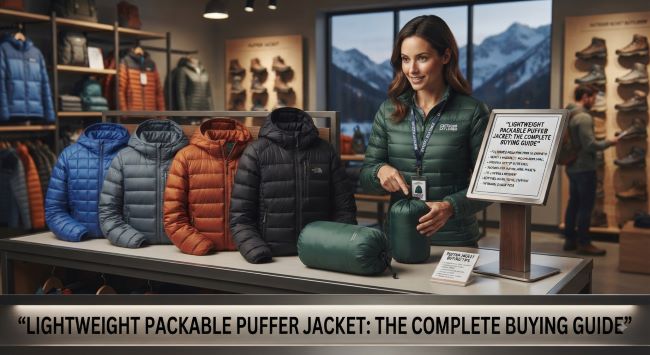
Lightweight Packable Puffer Jacket: The Complete Buying Guide
There is something almost magical about a jacket that keeps you genuinely warm yet crushes down small enough to stuff into its own pocket. The lightweight packable puffer jacket has become a travel and everyday essential precisely because it solves a common problem: staying warm without the bulk. Toss it in a bag for unpredictable weather, layer it under a shell in the cold, or wear it on its own on a crisp day. Versatile, warm, and endlessly convenient, it earns its place in almost any wardrobe. Here is the complete guide to choosing the right lightweight packable puffer jacket.
What Is a Lightweight Packable Puffer Jacket?
A lightweight packable puffer jacket is an insulated jacket designed to provide warmth while being light enough to wear comfortably and compressible enough to pack down small. The “puffer” refers to the quilted, insulation-filled construction that traps warm air, while “packable” means it compresses, often into its own pocket or an included pouch, for easy carrying.
The appeal of a lightweight packable puffer jacket comes down to a combination of qualities:
- Warmth without weight, providing insulation while staying light.
- Packability, compressing small for travel and storage.
- Versatility, working as outerwear or a layer.
- Convenience, easy to carry when not needed.
This blend of warmth, portability, and versatility is what makes it so popular for travel, commuting, and everyday wear.
Insulation: Down vs. Synthetic
The most important choice when picking one is the type of insulation, since it affects warmth, weight, packability, and performance:
Down insulation uses natural feathers and offers the best warmth-to-weight ratio, compressing incredibly small while providing excellent warmth. It is the gold standard for packability and warmth. Its main drawback is that it loses insulating ability when wet and takes longer to dry, though water-resistant treated down helps.
Synthetic insulation uses man-made fibers and offers a strong alternative, since it insulates even when wet and dries faster, plus it is often more affordable and suitable for those avoiding animal products. It is typically slightly heavier and less compressible than down for the same warmth.
For the ultimate in packability, down excels at warmth and compressibility, while synthetic is better for wet conditions and budget-conscious or animal-free preferences. Choosing between them depends on your climate and priorities.
Key Features to Look For
When shopping, several features distinguish a great one:
| Feature | Why It Matters |
|---|---|
| Fill power (down) | Higher fill power means warmer and more compressible |
| Packability | How small it packs and whether it stuffs into a pocket |
| Weight | Lighter is better for travel and layering |
| Water resistance | A DWR finish helps in light rain |
| Fit | Should allow layering underneath if desired |
| Pockets | Zippered pockets add security and convenience |
Fill power is worth understanding for down jackets, since higher fill power indicates better quality down that is warmer and packs smaller. Checking how small it packs, how much it weighs, and whether it has a water-resistant finish helps you find one that suits your needs.
How to Choose the Right One
To pick the perfect lightweight packable puffer jacket, consider these factors:
- Your climate and use. For cold, dry conditions, down excels; for wet or variable climates, synthetic may serve better.
- Warmth needs. Consider how much insulation you need, since jackets range from very light to substantially warm.
- Packability priority. If ultra-compact packing matters most, prioritize high-fill down.
- Layering plans. If you will layer it under a shell or over sweaters, choose a fit that accommodates that.
- Budget. Synthetic options and lower-fill down are typically more affordable, while high-fill down costs more.
- Ethical preferences. If you avoid animal products, synthetic or responsibly-sourced down matters.
Matching the jacket to how and where you will use it ensures you get one that genuinely serves you.
Caring for Your Puffer Jacket
Proper care keeps the jacket performing well. Follow the care label, since down and synthetic have different washing needs. Down jackets benefit from occasional washing with special down-safe detergent and drying with dryer balls to restore loft. Avoid storing the jacket compressed for long periods, since keeping insulation compressed can reduce its loft and warmth over time; store it loosely instead. Proper care preserves both the warmth and the packability that make the jacket worth owning.
Where to Buy One
These jackets are widely available across outdoor retailers, clothing stores, and online. Outdoor and sporting goods retailers are especially good places to find quality options with a range of insulation types and price points, and knowledgeable staff to help you choose. Retailers like the one covered in Academy Sports and Outdoors carry outdoor apparel including insulated jackets, which is a useful starting point since sporting goods and outdoor stores typically offer a solid selection of packable puffer jackets suited to travel and everyday warmth, letting you compare options and find the right fit and insulation for your needs.
The bottom line on choosing a lightweight packable puffer jacket is that this warm, versatile, compressible layer is a genuine wardrobe workhorse for travel and everyday wear. Decide between down (best warmth-to-weight and packability) and synthetic (better when wet and often more affordable), look for good fill power, packability, weight, and a water-resistant finish, and match the jacket to your climate and how you will use it. Care for it properly by storing it loosely, and you will have a warm, packable companion ready for whatever the weather brings.
Key Takeaways
- A lightweight packable puffer jacket provides warmth while being light to wear and compressible enough to pack small.
- Its appeal is warmth without bulk, packability, versatility as outerwear or a layer, and travel convenience.
- Down insulation offers the best warmth-to-weight ratio and packability but loses insulating power when wet.
- Synthetic insulation insulates even when wet, dries faster, is often more affordable, and suits animal-free preferences.
- Look for good fill power (in down), small pack size, low weight, a water-resistant finish, and a fit that allows layering.
- Choose based on your climate, warmth needs, packability priority, layering plans, budget, and ethical preferences.
- Care for it by following the label and storing it loosely rather than compressed, to preserve loft and warmth.
- Outdoor and sporting goods retailers are great places to compare options across insulation types and price points.