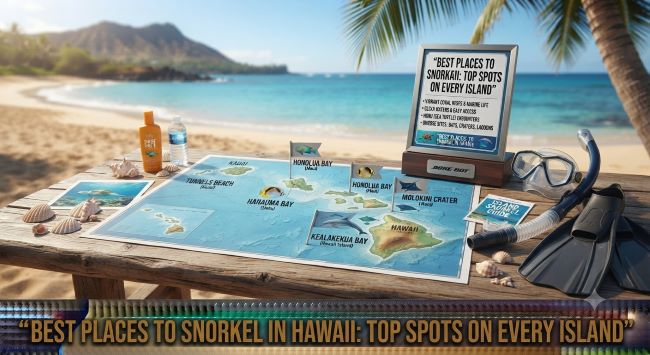
Best Places to Snorkel in Hawaii: Top Spots on Every Island
Hawaii is one of the great snorkeling destinations on earth, where warm, clear water meets vibrant coral reefs teeming with tropical fish, green sea turtles, and marine life you will not see anywhere else. You do not need to be an experienced diver, since some of the best snorkeling sits just steps off the beach in calm, shallow bays perfect for beginners. Each island has its own standout spots, and knowing where to go, and how to snorkel responsibly, turns a good trip into an unforgettable one. If you are planning a trip and researching the best places to snorkel in Hawaii, here is the guide to the top spots by island and how to enjoy them safely.
Oahu’s Best Snorkeling
Among the best places to snorkel in Hawaii, Oahu offers accessible, famous options:
Hanauma Bay. The most famous snorkeling spot in Hawaii, a protected marine preserve in a curved volcanic bay with calm, clear water and abundant fish. Beginner-friendly and stunning, though it requires reservations, has an entry fee, and limits daily visitors to protect the reef, so plan ahead.
Sharks Cove (North Shore). Excellent snorkeling among rocky tide pools and marine life in summer when the water is calm, though the North Shore’s big winter waves make it dangerous in winter.
Electric Beach, across from a power plant, where warm water outflow attracts abundant marine life.
Maui’s Best Snorkeling
Maui holds some of the best places to snorkel in Hawaii:
Molokini Crater. A world-famous crescent-shaped volcanic crater off Maui’s coast, accessible only by boat tour, with incredible visibility (often 100+ feet) and abundant marine life. A bucket-list snorkel.
Honolua Bay. A marine preserve with rich reefs and marine life, excellent in calm summer conditions.
Black Rock (Kaanapali). Easily accessible from the beach, with turtles and fish around a lava rock formation, great for beginners.
Turtle Town (near Maluaka Beach), famous, as the name suggests, for frequent green sea turtle sightings.
The Big Island’s Best Snorkeling
The Big Island offers some of the best places to snorkel in Hawaii for unique underwater experiences:
Kealakekua Bay. A marine reserve with pristine coral and abundant fish, some of the clearest water and best coral in Hawaii, accessible by kayak, boat, or a challenging hike.
Two Step (Honaunau Bay). A beloved easy-entry spot next to a historic park, with excellent coral and frequent dolphins and turtles.
Kahaluu Beach Park, a calm, protected bay ideal for beginners and reliable for turtle sightings.
Manta ray night snorkels, a Big Island specialty and one of the most extraordinary marine experiences anywhere, watching giant manta rays feed under lights.
Kauai’s Best Snorkeling
Kauai, the Garden Isle, offers some of the best places to snorkel in Hawaii, sometimes more advanced:
Tunnels Beach (Makua). A stunning reef system on the north shore with abundant marine life, excellent in calm summer conditions.
Poipu Beach, a family-friendly south shore spot with calm water, turtles, and even monk seal sightings.
Ke’e Beach, a protected reef lagoon good for calmer conditions.
Kauai’s north shore is best in summer, since winter brings dangerous surf, a pattern across much of Hawaii.
Snorkeling Safely and Responsibly
The best places to snorkel in Hawaii are also fragile ecosystems and can be dangerous if you are careless, so a few principles matter:
- Check ocean conditions, since Hawaii’s surf varies dramatically by season and location. North shores are calm in summer and dangerous in winter; south shores often reverse. Never enter rough water.
- Never turn your back on the ocean, and be aware of currents, which are the main danger.
- Use reef-safe sunscreen, which is required by law in Hawaii to protect the coral, and avoid the chemicals that damage reefs.
- Do not touch or stand on coral, which is living and easily killed, and do not touch or chase turtles and marine life, which is harmful and illegal for protected species.
- Keep a safe distance from wildlife, including the legally required distances from turtles and monk seals.
- Snorkel with a buddy, and consider a flotation device if you are not a strong swimmer.
- Go in the morning, when water is typically calmer and clearer.
Making the Most of Your Snorkeling Trip
A few final tips help you enjoy the best places to snorkel in Hawaii: bring or rent quality gear, since a well-fitting mask makes all the difference; consider a boat tour for spots like Molokini and Kealakekua that are hard to reach otherwise; and respect the reservation systems and protections at popular spots, which exist to keep these places beautiful.
Hawaii’s incredible marine life also connects to the islands’ broader ocean culture, from snorkeling to fishing to simply respecting the sea. Anyone drawn to Hawaii’s underwater world often enjoys other ways of connecting with the ocean, and just as snorkelers seek out the best reefs, those interested in the fuller ocean experience explore resources like Fishing Spots Near Me back home, since the same appreciation for marine environments that makes Hawaii’s reefs so special translates into a broader love of the water wherever you are.
The bottom line on the best places to snorkel in Hawaii is that each island offers world-class spots, from beginner-friendly beach entries to bucket-list boat snorkels, with marine life you will remember forever. Match the spot to your skill level, always check conditions and respect the reef, and Hawaii will deliver some of the best snorkeling on the planet.
Key Takeaways
- Hawaii offers world-class snorkeling with turtles, reefs, and tropical fish, much of it accessible right off the beach.
- On Oahu, Hanauma Bay is the famous beginner-friendly preserve (reservations required), plus Sharks Cove in summer.
- On Maui, Molokini Crater (by boat), Honolua Bay, and Black Rock lead, with Turtle Town for turtle sightings.
- On the Big Island, Kealakekua Bay, Two Step, and the extraordinary manta ray night snorkels stand out.
- On Kauai, Tunnels Beach and Poipu Beach shine, best in calm summer conditions.
- Always check ocean conditions, since north shores are calm in summer but dangerous in winter, and south shores often reverse.
- Use reef-safe sunscreen (required by law), never touch coral or wildlife, and keep legal distances from turtles and seals.
- Snorkel with a buddy in the morning, and take boat tours for hard-to-reach spots like Molokini.