Fishing Spots Near Me: How to Find Great Places to Cast a Line
Fishing is one of the few hobbies that costs almost nothing to start, works for all ages, and rewards you with quiet hours outdoors whether or not you catch anything. The hardest part for most beginners is not the technique, it is simply knowing where to go, since good fishing spots are not always obvious and the best local waters are often known mainly to the people who fish them. If you are searching fishing spots near me, whether you are a complete beginner or new to an area, here is the guide to finding great places to fish, handling the licensing, and actually catching something once you get there.
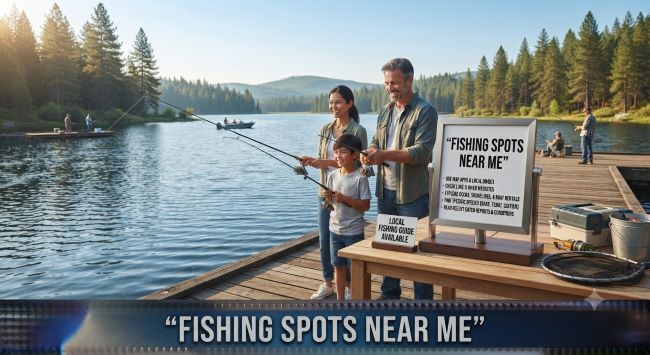
Types of Fishing Spots
Local fishing spots near me come in several types, each with its own character:
Public lakes and reservoirs. Often the most accessible and productive, stocked in many areas and offering shore access, boat ramps, and fishing piers. A great starting point.
Rivers and streams. Flowing water for trout, bass, catfish, and more, ranging from easy bank access to remote wading spots.
Ponds. Small, often overlooked, and frequently excellent for beginners, with panfish and bass in neighborhood and park ponds.
Public fishing piers. Structures built specifically for fishing, common on lakes, rivers, and coasts, offering easy access without a boat.
Coastal and surf fishing for those near the ocean, a different discipline with its own rewards.
Stocked community fishing areas, urban and suburban waters that agencies stock specifically to give people accessible fishing close to home. Ideal for beginners and families.
How to Find Local Fishing Spots
The fishing spots near me search runs through some genuinely useful resources:
- State fish and wildlife agency websites, the single best resource. They list public fishing waters, stocking schedules (which tell you exactly where fish were recently added), access points, and regulations. This is where serious local knowledge lives.
- Fishing apps like Fishbrain and others, which map spots, share catch data, and show what others are catching where.
- Google Maps satellite view, for spotting ponds, lake access points, and river bank access near you.
- Local bait and tackle shops, which are goldmines of current information about what is biting where; buying some bait and asking is the oldest and best method.
- Fishing forums and local Facebook groups, where anglers share (sometimes) their spots and current conditions.
- Public land maps, since state parks, national forests, and wildlife management areas often contain excellent, lesser-known waters.
The state agency site plus a local tackle shop conversation is the highest-value combination for finding productive fishing spots near me.
Licenses and Regulations
Before hitting the fishing spots near me, the legal basics matter and are easy to handle:
- Get a fishing license. Nearly all states require one for adults, purchasable online, at tackle shops, and at many retailers, usually inexpensively. Fishing without one risks fines.
- Know the exceptions, since children under a certain age, seniors, and free fishing days (when states waive license requirements) may not require a license.
- Learn the regulations for your waters: catch limits, size limits, seasons, and which species are protected. State agency sites and the regulations booklet cover these.
- Note special-regulation waters, since some spots are catch-and-release only or fly-fishing only.
Licenses fund conservation and stocking, so buying one directly supports the fishing you enjoy.
Getting the Gear
You do not need much to start, and getting equipped is affordable. A basic rod-and-reel combo, some hooks, sinkers, bobbers, and bait cover the essentials, and a beginner can be fully outfitted for a modest cost. A trip to a sporting goods retailer like Academy Sports and Outdoors covers everything a beginner needs in one stop, from the rod and tackle to a license in many locations, and the staff can point newcomers toward the right starter setup for the local waters and species, which removes most of the guesswork from getting started.
The Best Times to Fish
Timing at the fishing spots near me dramatically affects success, and a few principles help:
- Early morning and evening are generally the most productive, when fish feed actively and light is low.
- Overcast days often fish better than bright sun.
- Seasonal patterns matter, with spring and fall typically excellent, summer requiring early or late timing, and winter slower for many species.
- Watch the weather, since fish often feed actively before a storm front moves in.
- Water temperature drives behavior, which is why fish move to different depths and areas through the seasons.
For beginners, the simplest advice is to fish early morning at a stocked pond or lake, which maximizes the chance of action and builds confidence.
Tips for Beginners
A few habits set up success at any fishing spots near me:
- Start with panfish, since bluegill and sunfish are abundant, easy to catch, and perfect for learning.
- Keep it simple, with a basic hook, bobber, and worm setup that catches more beginner fish than complicated rigs.
- Fish where fish are, near structure like docks, fallen trees, weed edges, and drop-offs where fish congregate.
- Be patient and quiet, since fishing rewards calm persistence.
- Practice catch and release properly if not keeping fish, handling them gently and returning them quickly.
- Bring the basics, including sun protection, water, and a way to handle fish and remove hooks.
Enjoying the Water
The real value of the fishing spots near me search is that it unlocks an activity that is as much about being outdoors as catching fish. A few final thoughts: respect the waters by taking your trash and following regulations, which keeps spots open and healthy; consider bringing kids, since fishing is one of the best patient-outdoor activities for families; and do not measure a trip only by the catch, since the quiet hours by the water are the real reward. Whether you land a trophy bass or simply enjoy a peaceful morning casting into a local pond, finding good fishing spots near you opens the door to one of the most accessible and rewarding outdoor pastimes there is.
Key Takeaways
- Local fishing spots include public lakes, rivers, ponds, piers, coastal waters, and agency-stocked community fishing areas ideal for beginners.
- State fish and wildlife agency websites are the best resource, listing public waters, stocking schedules, access, and regulations.
- Local bait and tackle shops offer the best current information on what is biting where.
- Nearly all adults need a fishing license, which is inexpensive, easy to buy, and funds conservation and stocking.
- Know local catch limits, size limits, seasons, and special-regulation waters before fishing.
- A basic rod-and-reel combo with simple tackle affordably covers everything a beginner needs.
- Fish early morning or evening, on overcast days, and in spring and fall for the best results.
- Start with panfish using a simple hook-bobber-worm setup, fish near structure, and be patient.