Electric Scooter With Seat: Buying Guide for Comfortable Rides
Standing on an electric scooter is fine for ten minutes. At thirty, your knees have opinions. At forty-five, the commute becomes an endurance event. That reality is driving one of the fastest-growing segments in personal electric vehicles: the electric scooter with seat, which turns a balance exercise into something closer to riding a small, silent moped. If your rides are long or your knees are cranky, here is everything to weigh.
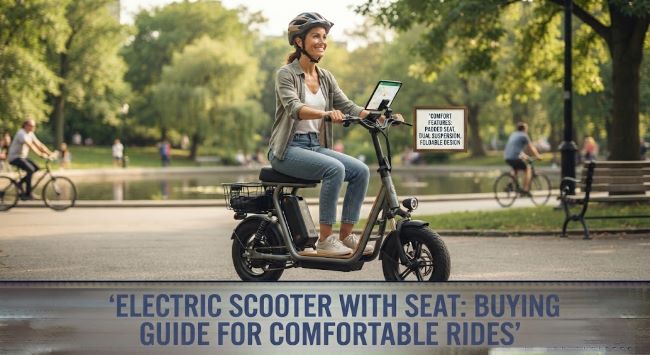
The Two Types: Add-On Seats vs. Purpose-Built Seated Scooters
The market splits cleanly in two, and the difference matters more than any spec sheet.
Stand-up scooters with add-on seats. Many scooters offer a bolt-on saddle kit: a padded seat on a post that mounts to the deck. Cheap (50 to 150 dollars) and reversible, but the geometry compromises. These scooters were designed for standing, so sitting puts you low with knees bent sharply. Add-on seats suit riders who mostly stand but want a break option.
Purpose-built seated scooters. Designed around the seat from the start: longer wheelbase, moped-like posture, wider decks, larger wheels, and suspension tuned for a seated rider. Some resemble beefy scooters with saddles; others blur into small electric mopeds. If you plan to sit for most of every ride, a purpose-built electric scooter with seat is worth the extra cost, because bolt-on kits never escape their stand-up geometry.
The Specs That Actually Matter
Marketing pages bury you in numbers. These are the ones that determine whether you will love the thing in month six:
Range (real, not claimed). Manufacturers test at low speed with light riders on flat ground, so real-world range runs 60 to 70 percent of the claim. A 10-mile commute wants an electric scooter with seat claiming 30-plus miles.
Motor power. For flat city riding, 350 to 500 watts is adequate. Hills, heavier riders, or two-up-rated models want 500 to 1,000-plus watts. Underpowered motors on hills do not just go slow; they drain the battery disproportionately.
Wheel size and tires. This is the most underrated spec. Ten-inch or larger pneumatic (air-filled) tires transform ride quality over cracks and potholes. Small solid tires transmit every road flaw directly into the seat you just paid extra for.
Suspension. A seated rider cannot use their legs as shock absorbers the way a standing rider does, which makes suspension far more important on an electric scooter with seat than on a stand-up model. Front and rear suspension is the target for any pavement that is less than perfect.
Weight capacity and scooter weight. Check rated capacity against your weight plus cargo. Seated models commonly weigh 50 to 100-plus pounds, a real issue if storage involves stairs.
Brakes. Disc brakes front and rear are the standard worth insisting on at commuter speeds. Regenerative braking is a nice bonus that recovers a little range.
Price Tiers and What They Buy
| Tier | Price Range | What You Get |
|---|---|---|
| Budget | $400-$800 | Add-on seat kits on basic scooters, modest range, small wheels |
| Mid-range | $800-$1,600 | Purpose-built seated designs, real suspension, 25-40 mile claimed range |
| Premium | $1,600-$3,500+ | Moped-class comfort, dual suspension, big batteries, 40-70 mile claims |
The mid-range is where the category makes sense for daily riders. Budget seated setups work for short, flat, occasional trips. Premium models compete with electric mopeds and e-bikes, at which point it is worth cross-shopping those categories too, since an e-bike gains you bike lane access in more jurisdictions.
The Legal Part People Skip
Here is the trap: adding a seat can change what your vehicle is, legally. In many US states, a stand-up scooter enjoys light regulation, but a seated vehicle above certain power or speed thresholds gets classified as a moped, triggering registration, license, insurance, or helmet requirements. Rules vary by state and city.
Before buying any electric scooter with seat, spend ten minutes checking your state’s rules on seated scooters, power limits (750 watts is a common US threshold), and speed caps (20 mph is the common line). Also check where you can ride, since sidewalk, road, and bike lane rules differ by city. It belongs in the decision before checkout, not after a ticket.
Helmets: legally required for these vehicles in many places, and a good idea in all of them. Seated riders travel at the same speeds with less ability to jump clear.
Who a Seated Scooter Suits Best
The electric scooter with seat is the right tool for a specific set of riders:
- Commuters with rides over 20 minutes, where standing fatigue changes the experience.
- Riders with knee, hip, back, or balance limitations that make prolonged standing uncomfortable or risky.
- Older riders who want the independence of an e-vehicle with more stability than a stand-up deck.
- Errand runners, since an electric scooter with seat usually accepts baskets and racks, and seated cargo beats a backpack on a standing deck.
The wrong fit: riders hauling up stairs daily (weight), transit mixers (folded seated scooters are bulky), and short-hop riders for whom the seat is dead weight.
Smart Buying and Ownership Tips
A few field-tested notes to close the decision:
- Test the geometry if possible. Five minutes of sitting reveals knee angle, bar reach, and padding quality no spec sheet shows.
- Prioritize a removable battery if you park in a garage or outside, so you can charge indoors. Batteries also dislike freezing temperatures, and indoor charging solves that too.
- Buy from brands with parts availability. Seats, posts, and suspension components wear. A scooter you cannot get parts for becomes recycling in two years.
- Budget for accessories: a quality lock (these are theft magnets), lights beyond the stock ones, and fenders if your area sees rain.
- Maintain monthly: tire pressure, brake check, and bolt tightness on the seat post, which loosens faster than any other bolt on the vehicle.
Handled this way, a good electric scooter with seat runs for years, replaces a surprising share of car trips, and costs pennies per mile in electricity, all while your knees stay quiet the whole ride.
Key Takeaways
- Add-on seat kits ($50-$150) suit occasional sitting; purpose-built seated scooters have geometry, suspension, and decks designed for full-time sitting.
- Real-world range is 60-70 percent of claimed range, so buy at least double your round-trip commute in claimed miles.
- Suspension and 10-inch-plus pneumatic tires matter more on seated scooters, since your legs no longer absorb the road.
- Aim for 350-500 watts on flat routes and 500-1,000+ for hills or heavier loads, with disc brakes front and rear.
- Seated scooters commonly weigh 50-100+ pounds, which rules them out for anyone hauling up stairs daily.
- Adding a seat can reclassify the vehicle as a moped in some jurisdictions; check state power (often 750W) and speed (often 20 mph) thresholds before buying.
- The $800-$1,600 mid-range is the sweet spot; above that, cross-shop e-bikes and electric mopeds.
- Choose removable batteries, brands with spare parts, and retighten the seat post bolt monthly.