Water Heater Replacement: A Complete Guide to What to Expect
A failing water heater rarely announces itself politely — it’s the kind of home system most people don’t think about until cold showers or a puddle on the basement floor force the issue. Understanding the warning signs ahead of time, knowing your replacement options, and having a realistic sense of cost helps you make this decision proactively rather than scrambling through an emergency replacement at the worst possible moment.
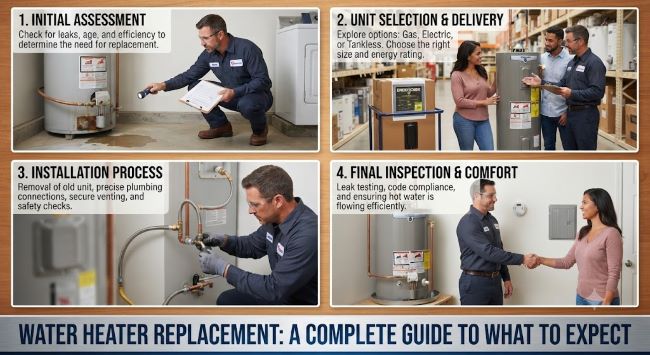
Signs You Need a Water Heater Replacement
Age. Traditional tank water heaters typically last 8-12 years, while tankless units can last 15-20 years with proper maintenance. If your unit is approaching or past its expected lifespan, even without obvious symptoms yet, proactive replacement planning is worth beginning rather than waiting for a sudden failure.
Inconsistent or insufficient hot water. A noticeable decline in how much hot water your system reliably provides, or water that doesn’t get as hot as it used to, often indicates declining tank efficiency or sediment buildup that’s reducing effective capacity, sometimes signaling that the unit is nearing the end of its useful life.
Rust-colored water or rust on the tank itself. Rusty water specifically from your hot water tap (rather than throughout your whole water system) suggests internal tank corrosion, which generally indicates the tank is failing internally and replacement, rather than repair, is the appropriate response.
Unusual noises. Rumbling, popping, or banging sounds from the tank often indicate sediment buildup hardening at the bottom of the tank, which both reduces efficiency and can accelerate tank wear over time.
Visible leaking or moisture around the unit. Any visible water pooling around your water heater warrants immediate attention, since this typically indicates a developing tank failure rather than a minor fixable issue, and tank failures can escalate from a slow leak to a more significant water release without much warning.
Rising energy bills without other explanation. An aging water heater losing efficiency often shows up first as gradually increasing energy costs before more obvious symptoms develop, making your utility bills a useful early indicator worth monitoring if your unit is approaching typical replacement age.
Tank vs. Tankless: Choosing Your Replacement Type
Traditional tank water heaters store and continuously heat a set volume of water (typically 40-80 gallons for residential use), ready for immediate use but with a finite hot water supply that can run out during high-demand periods (back-to-back showers, simultaneous laundry and dishwashing). They’re generally less expensive to purchase and install than tankless alternatives, making them the more budget-accessible replacement option for most households.
Tankless (on-demand) water heaters heat water directly as it flows through the unit, providing theoretically unlimited hot water without the storage tank’s capacity limitation, while also generally offering better long-term energy efficiency since they’re not continuously heating and reheating a stored volume of water around the clock. The trade-off is a meaningfully higher upfront purchase and installation cost, and tankless units sometimes require electrical or gas line upgrades to support their higher instantaneous power draw, adding to the total installation cost beyond just the unit itself.
Hybrid heat pump water heaters represent a newer category combining elements of both approaches, using heat pump technology to move heat rather than generate it directly, offering meaningfully better energy efficiency than traditional tank units while still maintaining a storage tank format, generally at a price point between standard tank units and full tankless systems.
What Water Heater Replacement Costs
Standard tank water heater (40-50 gallon, gas): $1,000-$2,500 including unit and standard installation.
Standard tank water heater (electric): $900-$2,200 including unit and standard installation.
Tankless water heater: $2,500-$5,500+ including unit and installation, with the higher end of this range often reflecting situations requiring gas line or electrical upgrades to support the unit.
Hybrid heat pump water heater: $2,000-$4,000 including unit and installation.
Additional costs to anticipate: removal and disposal of your old unit (sometimes included in quoted installation pricing, sometimes a separate line item), any necessary code-compliance updates if your existing setup doesn’t meet current building codes (this becomes relevant particularly in older homes), and permit fees, which vary by municipality but are a standard part of legitimate water heater replacement work.
How to Choose a Reliable Installer
Verify licensing and insurance. Water heater installation, particularly for gas units, involves genuine safety considerations, and confirming your installer holds appropriate plumbing licensing for your state or municipality is an important verification step before any work begins.
Get multiple quotes. Pricing for what seems like a similar job can vary meaningfully between contractors, and comparing at least two to three detailed quotes helps you both understand the actual market rate in your area and evaluate whether a specific quote includes everything you’d expect (removal of the old unit, any necessary code updates, permit fees) or whether these are separate additional costs not initially disclosed.
Ask about warranty coverage on both the unit itself (manufacturer warranties typically range from 6-12 years depending on the specific model and tier) and the installation labor (reputable installers typically offer at least a 1-year labor warranty separate from the manufacturer’s product warranty).
Confirm they’ll handle permits appropriately, since water heater replacement in most municipalities legally requires a permit and inspection, and a contractor who suggests skipping this step to save time or cost is cutting a corner that could create real problems for you later, particularly around insurance claims or future home sale inspections if the work wasn’t properly permitted and inspected.
For more detailed local guidance on this exact process, including finding qualified installers in your specific area, water heater replacement near me covers location-specific search strategies and additional considerations worth reviewing alongside this general overview of the replacement process and decision points.
Key Takeaways
- Watch for warning signs including age approaching 8-12 years for tank units, inconsistent hot water, rust-colored water, unusual noises, visible leaking, and rising energy bills as indicators that replacement planning should begin
- Traditional tank water heaters offer lower upfront cost but limited hot water capacity during high-demand periods; tankless units provide theoretically unlimited hot water and better long-term efficiency at a meaningfully higher upfront cost
- Hybrid heat pump water heaters offer a middle option, combining better efficiency than standard tanks with a more familiar storage tank format at a moderate price point
- Standard tank replacement typically costs $900-$2,500 including installation, while tankless systems run $2,500-$5,500+, often higher if electrical or gas line upgrades are needed
- Verify your installer’s licensing and insurance, get multiple detailed quotes, and confirm warranty coverage on both the unit and the installation labor before committing to a specific contractor
- Permits and inspections are a legally required part of proper water heater replacement in most municipalities: be wary of any contractor suggesting you skip this step
- Proactive replacement planning based on age and early warning signs, rather than waiting for sudden failure, generally produces a smoother process and more time to research your options thoroughly