Best Baby Strollers 2025: A Complete Buying Guide
Choosing a stroller is one of the more research-intensive baby gear decisions new parents face, partly because the right choice depends so heavily on your specific lifestyle, living situation, and how you’ll actually use it day to day, rather than there being one universally “best” option across every category. This guide breaks down the strongest options by use case for 2025 and the key features that actually matter when comparing your options.
Full-Size Strollers: Best for Everyday Use and Long-Term Value
UPPAbaby Vista V2. Consistently regarded as one of the best full-size strollers available, the Vista offers a genuinely smooth ride, excellent storage capacity, and a modular system that expands to accommodate a second child via add-on seats as your family grows. The higher price point reflects build quality and longevity that many parents find justifies the investment, particularly if you plan to use it as your primary stroller for several years across multiple children.
Nuna Demi Grow. A strong full-size option known for its adjustable handlebar height (genuinely useful for households where caregivers of different heights regularly push the stroller) and a reversible seat that lets your child face you or face forward as preferred. The compact fold for a full-size stroller is a notable practical advantage for storage and car trunk space.
Baby Jogger City Sights. Offers excellent value within the full-size category, with strong all-terrain wheel performance and a particularly large storage basket underneath, appealing to parents who prioritize practical everyday carrying capacity alongside core stroller performance.
Travel Systems: Best for New Parents Wanting an All-in-One Solution
Chicco Bravo Trio Travel System. Pairs a stroller with the KeyFit 35 infant car seat (one of the most consistently top-rated infant car seats independently), making it a strong choice specifically for parents who want a single coordinated purchase covering both the stroller and infant car seat needs from day one rather than researching and buying each component separately.
Graco Modes Travel System. A versatile, more budget-friendly travel system option offering multiple seating configurations and solid overall performance, appealing to parents wanting strong functionality without the premium price point of higher-end brands.
Doona Infant Car Seat & Stroller. A genuinely unique hybrid product that converts directly from a car seat into a compact stroller without needing a separate stroller frame at all, particularly appealing for urban parents who frequently move between car and foot travel (rideshare trips, public transit) and want to minimize the gear they’re juggling during transitions.
Lightweight and Umbrella Strollers: Best for Travel and On-the-Go Convenience
GB Pockit+ All-Terrain. One of the most compact-folding strollers available, folding down small enough to fit in many backpacks or small overhead bins, making it a favorite specifically for air travel and situations where storage space is at an absolute premium.
Summer Infant 3Dlite Convenience Stroller. A reliable, genuinely affordable lightweight option that performs well for its price point, popular as a secondary “grab and go” stroller for families who already own a full-size primary stroller but want something lighter for quick errands or travel.
Cybex Libelle. Offers a smoother, more substantial ride than many ultra-lightweight competitors while still folding down impressively compact, appealing to parents who find some budget umbrella strollers feel too flimsy or uncomfortable for regular daily use rather than just occasional travel.
Jogging Strollers: Best for Active Parents
Thule Urban Glide 2. Widely regarded as one of the best jogging strollers available, with excellent suspension, a smooth ride even at running speeds, and reliable all-terrain wheel performance that holds up well across pavement, trails, and varied surfaces.
BOB Gear Revolution Flex 3.0. A longtime favorite among running parents specifically, known for its swivel front wheel that locks for genuine running stability while still allowing maneuverability for everyday walking use when not actively jogging.
Baby Jogger Summit X3. Offers strong all-terrain capability and a notably smooth ride across rougher trail surfaces specifically, appealing to parents who run or hike on terrain beyond just paved paths and sidewalks.
Double Strollers: Best for Twins or Siblings Close in Age
UPPAbaby Vista V2 with RumbleSeat. As mentioned in the full-size category, the Vista’s modular expansion system makes it a genuinely strong double-stroller solution for siblings, particularly if you already own the single Vista and are adding the expansion components for a second child.
Baby Jogger City Mini Double. A side-by-side double stroller option known for fitting through standard doorways more easily than many double strollers, addressing a genuinely common practical complaint about double strollers being too wide for everyday indoor and tight-space navigation.
Joovy Scooter X2. A tandem (front-to-back rather than side-by-side) double stroller option, generally narrower than side-by-side configurations and therefore easier to maneuver through narrow spaces, while still accommodating two children with individual reclining seats.
Key Features to Prioritize When Choosing
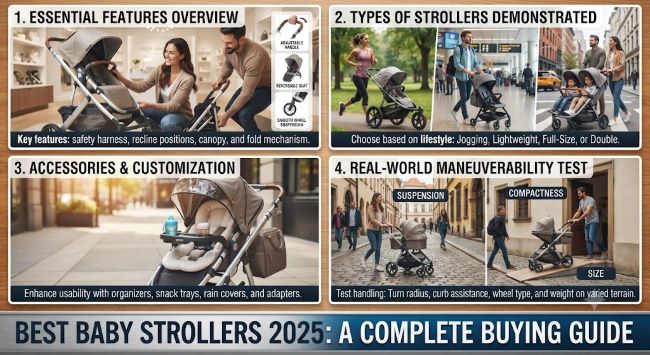
Fold mechanism and size. Consider how and where you’ll be storing the stroller regularly — a one-handed fold is a meaningful convenience if you’re frequently folding and unfolding while also holding your child, and compact fold size matters significantly for smaller car trunks or limited storage space at home.
Weight. Heavier strollers generally offer a smoother ride and more storage capacity, while lighter strollers prioritize portability and ease of lifting in and out of cars — there’s a genuine trade-off here rather than a universally “better” choice, depending on your specific priorities.
Wheel type and suspension. Larger wheels with good suspension generally handle varied terrain (gravel, grass, uneven sidewalks) better than smaller, harder wheels designed primarily for smooth indoor or paved surfaces, an important consideration based on your typical walking environment.
Compatibility with infant car seats. If you want to use your stroller from birth with a newborn before they’re ready for the stroller’s own seat, confirming compatibility with your specific infant car seat brand (either through a built-in adapter or a separately purchased one) is worth checking before purchase.
Storage basket size and accessibility. A genuinely practical, easily accessible storage basket underneath the seat makes a meaningful daily difference for carrying diaper bags, groceries, or other essentials, and this varies more between models than many first-time buyers expect.
Reversible vs. forward-facing seat. Reversible seats that let your child face you are often preferred for younger infants and toddlers who benefit from face-to-face interaction, while forward-facing seats are generally preferred as children get older and more interested in seeing the world around them.
Budget Considerations
Strollers range enormously in price, from budget umbrella strollers under $50 to premium full-size systems exceeding $1,000. Setting a realistic budget based on your actual use case — a primary everyday stroller you’ll use for years justifies a different investment level than a secondary travel stroller you’ll use occasionally — helps narrow your options meaningfully before you start comparing specific models in detail.
Many parents find that investing more heavily in either a primary full-size stroller or a primary travel system, while choosing a more budget-friendly secondary lightweight stroller for travel and quick errands, provides the best overall value across their actual range of stroller needs rather than trying to find one single stroller that perfectly handles every situation.
For other practical newborn and baby gear setup considerations worth thinking through alongside your stroller purchase, where to place a baby monitor covers another common new-parent gear and setup question worth addressing as you prepare your home and routines for your baby’s arrival.
Key Takeaways
- The “best” stroller depends heavily on your specific use case: full-size strollers like the UPPAbaby Vista V2 excel for everyday long-term use, while lightweight options like the GB Pockit+ prioritize travel convenience
- Travel systems (stroller plus matching infant car seat) like the Chicco Bravo Trio offer a coordinated all-in-one solution appealing to new parents wanting to minimize separate purchase decisions
- Jogging strollers like the Thule Urban Glide 2 and BOB Revolution Flex offer genuine running stability through features like locking swivel wheels, distinct from standard strollers marketed as “all-terrain”
- Double stroller configuration matters: side-by-side options like the Baby Jogger City Mini Double prioritize easier individual child interaction, while tandem options like the Joovy Scooter X2 prioritize narrower width for tight spaces
- Key features to compare include fold mechanism and size, overall weight, wheel type and suspension quality, infant car seat compatibility, storage basket practicality, and reversible versus forward-facing seating
- Many parents find the best overall value comes from investing more in one primary stroller suited to daily use while choosing a more budget-friendly secondary stroller for travel and occasional use
- Setting your budget based on actual expected use frequency and duration, rather than just comparing headline prices across categories, leads to a more satisfying long-term purchase decision