2026 Winter Olympics Alpine Skiing: Results, Stars, and Highlights From Milano Cortina
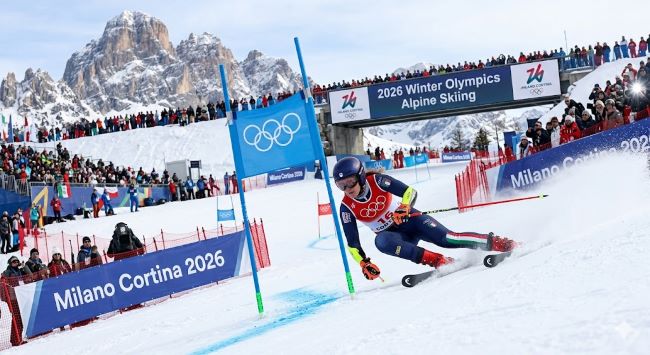
Few sports capture the drama of the Winter Games like racing down an icy mountain at terrifying speed, and the 2026 Winter Olympics alpine skiing program delivered triumph, heartbreak, and history in equal measure. Held in February across the legendary slopes of Cortina d’Ampezzo and Bormio, the racing crowned new champions, saw a home favorite defy injury, and produced a first-ever medal for a nation that had never reached a Winter podium. This recap covers it all.
From Mikaela Shiffrin’s redemption to Federica Brignone’s stunning double gold and a historic giant slalom victory for Brazil, alpine skiing Milano Cortina 2026 gave fans moments they will remember for years. Here is everything that happened on the mountain, plus how the discipline fit into the larger story of the Games.
The Milano Cortina Winter Games at a Glance
Before diving into the racing, it helps to set the scene. The 2026 Winter Olympics ran from February 6 to 22, spread across northern Italy in a Games that shared hosting duties between the fashion capital of Milan and the mountain resort of Cortina d’Ampezzo, with events also staged in Bormio, Livigno, Val di Fiemme, and beyond.
It was a sprawling, scenic edition of the Winter Olympics 2026, with ice sports clustered around Milan and snow sports spread through the surrounding Alps. The opening ceremony lit up Milan’s San Siro stadium, while the closing ceremony took place in Verona’s ancient Roman arena. Across the seventeen days, athletes from dozens of nations competed for medals in everything from figure skating to bobsled.
The Games also introduced several new events. Ski mountaineering made its Olympic debut, while the program added women’s doubles luge, a women’s large hill in ski jumping, a mixed team skeleton event, dual moguls in freestyle skiing, and a team combined event in alpine skiing. For anyone tracking the action, the official winter olympics schedule and results pages became the go-to reference, updating live as each final concluded. Checking those winter olympics schedule and results listings was the easiest way to follow medals in real time.
Finding the Schedule and Results
With so many sports happening at once, knowing where to look mattered. The organizers and major broadcasters published a detailed 2026 winter olympics schedule and results hub that listed every session, start time, and podium as it happened.
If you wanted to follow a single sport, the 2026 winter olympics schedule and results tools let you filter by discipline, so alpine fans could jump straight to the races without wading through every event. Fans of specific teams could also pull up dedicated overviews, such as a united states at the winter olympics schedule and results page tracking every American competitor and medal. That united states at the winter olympics schedule and results view became especially popular as Team USA racked up medals on the slopes and the ice.
For team sports, similar pages existed, including an ice hockey at the olympic games schedule and results section that mapped out the group stage, knockout rounds, and medal games. Bookmarking that listing was the simplest way to follow the tournament toward its dramatic finish. Whatever your interest, these schedule and results hubs turned a massive, multi-venue event into something easy to navigate.
Alpine Skiing at Milano Cortina: The Setup
Now to the main event. The 2026 Winter Olympics alpine skiing competition was split across two storied venues, with the women racing at the Olympia delle Tofane course in Cortina d’Ampezzo and the men tackling the fearsome Stelvio in Bormio, one of the most technically demanding tracks in the sport.
The program featured the classic disciplines: the speed events of downhill and super-G, the technical events of slalom and giant slalom, and a mixed team combined event making its Olympic debut. That gave the 2026 Winter Olympics alpine skiing schedule a full slate of races across both speed and finesse, rewarding very different skills on very different courses. The Stelvio punished any hesitation with its steep pitches and long, fast lines, while the Tofane course tested precision and nerve.
Spread over the middle of the Games, alpine skiing Milano Cortina 2026 produced some of the most-watched moments of the entire event. The combination of fast Italian courses, a passionate home crowd, and a deep field of world-class racers set the stage for the upsets and breakthroughs that followed. Few editions of 2026 Winter Olympics alpine skiing history will be remembered as fondly by Italian fans.
The Men’s Alpine Races
The men opened the entire Games in spectacular style. Switzerland’s Franjo von Allmen captured the very first gold medal of Milano Cortina 2026 in the men’s downhill, blazing down the Stelvio in 1:51.61 to master a course considered one of the toughest in the world. The home crowd still had plenty to cheer, as Italy’s Giovanni Franzoni took silver and veteran Dominik Paris claimed bronze, delivering Italy’s first two medals of the Games.
The most historic men’s result came in the giant slalom, where Lucas Pinheiro Braathen won gold for Brazil. It was the first Winter Olympic medal of any color in Brazilian history, a landmark moment for a nation far from the traditional ski powers. Switzerland continued its strong showing in the slalom, where Loic Meillard skied to gold to cap a standout Games that earned him multiple medals.
The speed and technical events together showcased the depth of men’s racing, with the Swiss team in particular breaking records and stacking podiums. From von Allmen’s opening statement to Braathen’s barrier-breaking run, the men’s side of 2026 Winter Olympics alpine skiing blended established champions with first-time history-makers, exactly the mix that makes Olympic racing so compelling.
The Women’s Alpine Races
If the men set the tone, the women provided the defining storylines. None loomed larger than Italy’s own Federica Brignone, who thrilled the home crowd with a remarkable double. She first won super-G gold on the Tofane course, becoming the oldest gold medalist in Olympic alpine skiing history at 35, then returned 72 hours later to take the giant slalom as well, securing her second gold of the Games and her fifth career Olympic medal.
What made Brignone’s double so astonishing was that she pulled it off while still recovering from a severe leg injury and torn ACL suffered the previous year. In the super-G, France’s Romane Miradoli took silver and Austria’s Cornelia Hütter earned bronze. In the giant slalom, Sweden’s Sara Hector and Norway’s Thea Louise Stjernesund shared silver, with no bronze awarded after a tie for second.
The other towering story was Mikaela Shiffrin. After a heartbreaking 2022 in Beijing where she failed to finish three races, the American returned to win slalom gold, her first Olympic medal since 2018 and the fourth of her career. The victory made her the only American in alpine skiing history to hold three Olympic gold medals. Team USA had more to celebrate when Breezy Johnson won the women’s downhill in 1:36.10, edging Germany’s Emma Aicher by just four hundredths of a second, with Italy’s Sofia Goggia taking bronze. American great Lindsey Vonn, racing in a much-discussed comeback, was unable to add to her medal collection.
The New Team Combined Event
Among the fresh additions to the program, the team combined drew plenty of attention as it made its Olympic debut. The event paired a speed run with a technical run, blending the two halves of the sport into a single contest decided by razor-thin margins.
The format reshaped the medal picture and gave more nations a shot at the podium, since success required both a strong speed skier and a strong technical skier working as a unit. For the United States, the new event paid off with a bronze in the women’s competition, where Jacqueline Wiles and Paula Moltzan combined for a podium finish. Germany’s Emma Aicher added a silver in the team combined to the silver she won in the downhill, confirming her breakout Games. The debut proved popular enough that it looks set to become a fixture of future alpine programs.
Team USA on the Slopes and Beyond
American fans had a lot to follow, and a quick look at any united states at the winter olympics schedule and results tracker showed a strong alpine campaign. Between Shiffrin’s slalom gold, Johnson’s downhill gold, and the team combined bronze, the United States matched its combined alpine medal total from the previous two Olympics, a result fueled by both veteran resolve and breakthrough performances.
The American success was not limited to the mountain. Across the Games, Team USA finished near the top of the overall standings, second only to Norway, with strong showings in freestyle skiing, snowboarding, and on the ice. The final gold of the entire Games went to the United States as well, in a finish no American fan will forget.
Freestyle Skiing Steals the Spotlight
While alpine racing carried the headlines, the 2026 winter olympics freestyle skiing program produced its own share of unforgettable moments. The discipline featured a large slate of events at the Livigno venues, from moguls and aerials to halfpipe, slopestyle, and big air, plus the debut of dual moguls.
China’s Eileen Gu was the standout, defending her halfpipe title and adding silvers in slopestyle and big air to finish as the most decorated freestyle skier, man or woman, in Olympic history with six career medals. The 2026 winter olympics freestyle skiing events also delivered for Team USA, as Liz Lemley and Jaelin Kauf recorded the first-ever American one-two finish in a women’s freestyle event in the moguls, then both medaled again in the new dual moguls. On the men’s side, Alex Ferreira finally claimed the halfpipe gold that had eluded him at two previous Games.
There were upsets too. Australia’s Jakara Anthony absorbed a shock defeat in moguls but roared back to win the debut dual moguls title, while Canada’s Mikael Kingsbury answered a rare loss in moguls by winning dual moguls gold. Norway’s Birk Ruud led a strong Norwegian showing in the men’s park events. Anyone scanning the freestyle results found a discipline brimming with star power and surprise.
Ice Hockey’s Dramatic Finish
No story capped the Games better than the men’s ice hockey tournament. Following the bracket on any ice hockey at the olympic games schedule and results page, fans watched the competition build toward a gold medal game between fierce rivals Canada and the United States in Milan on the final day.
The game lived up to every expectation. The United States beat Canada 2-1 in sudden-death overtime, with Jack Hughes scoring the winning goal and goaltender Connor Hellebuyck starring between the pipes. It was the first United States men’s Olympic hockey gold since the famous 1980 team at Lake Placid, and it served as the final gold medal awarded at the entire Games, a fittingly dramatic close. The ice hockey at the olympic games schedule and results bracket had pointed toward a blockbuster final, and the players delivered one of the most memorable finishes in recent Olympic memory.
The Overall Medal Table
Stepping back from individual sports, the broader medal picture told its own story. Norway once again topped the overall standings, leading all nations with 18 gold medals and around 40 medals in total, continuing its long tradition of Winter Olympic dominance.
The United States finished second on the table with roughly a dozen golds, buoyed by that last-gasp hockey title and strong results across skiing and sliding sports. Host nation Italy enjoyed a banner Games on home snow, powered in part by Brignone’s alpine double and strong showings in the sliding events, while the Netherlands, Germany, and France also featured prominently. With 29 different national teams winning at least one medal, the Games reflected a steadily broadening base of winter sport, even as the traditional powers stayed near the top.
New Events and Record Moments
Beyond the medal table, Milano Cortina will be remembered for its firsts. Brazil and Georgia both won their first-ever Winter Olympic medals, Braathen’s alpine gold for Brazil and a figure skating pairs silver for Georgia. Several nations sent athletes to the Winter Games for the very first time, a number of them competing in alpine skiing.
The debut of ski mountaineering, dual moguls, and team combined added fresh flavor to the program, while veteran champions like Gu, Shiffrin, and Kingsbury added to their legacies. Brignone’s status as the oldest alpine gold medalist in history and Shiffrin’s place as the only American with three Olympic alpine golds were among the records that will define how these Games are remembered. Taken together, the achievements captured the blend of tradition and progress that has come to define the modern Winter Olympics.
Reliving the Games
For fans who missed the live action, the Winter Olympics 2026 left behind a rich trail of highlights, replays, and recaps. Major broadcasters posted full race replays and condensed event summaries, so it is easy to relive Brignone’s double gold, Shiffrin’s slalom run, or von Allmen’s record-setting downhill whenever you like.
The mountain venues themselves became part of the story. Cortina d’Ampezzo, which had hosted the Winter Games once before decades earlier, returned to the Olympic stage with its picturesque Tofane backdrop, while Bormio’s Stelvio reaffirmed its reputation as one of racing’s ultimate tests. Together they gave the Winter Olympics 2026 a setting as memorable as the results.
Beyond the headline races, smaller moments stuck with viewers: first-time Olympians from nations new to winter sport, emotional comebacks from injured athletes, and the roar of an Italian crowd celebrating home heroes. Those human stories, as much as the medals, are what made the Games worth following from start to finish.
Frequently Asked Questions
When were the 2026 Winter Olympics held? The Games ran from February 6 to 22, 2026, hosted jointly by Milan and Cortina d’Ampezzo in northern Italy, with events spread across several mountain venues.
Who won the first gold of the Games? Switzerland’s Franjo von Allmen took the very first gold in the men’s alpine downhill on the Stelvio course in Bormio.
What was the biggest alpine skiing story? Two stood out: Federica Brignone’s double gold for host Italy in super-G and giant slalom, and Mikaela Shiffrin’s slalom gold that made her the only American with three Olympic alpine golds.
Did any nation win its first-ever Winter medal? Yes. Lucas Pinheiro Braathen won the men’s giant slalom for Brazil, the country’s first Winter Olympic medal ever, and Georgia also won a first medal in figure skating.
Who won the men’s ice hockey gold? The United States beat Canada 2-1 in overtime, their first men’s Olympic hockey gold since 1980, and the final gold of the Games.
Where can I find full results? The official 2026 winter olympics schedule and results hub, along with major broadcasters, listed every event and medal, filterable by sport and by country.
Which country topped the medal table? Norway led overall with 18 golds, while the United States finished second.
Key Takeaways
- The 2026 Winter Olympics alpine skiing program at Milano Cortina ran in February, with women racing at Cortina d’Ampezzo and men on the Stelvio in Bormio.
- Switzerland’s Franjo von Allmen won the men’s downhill to claim the very first gold of the Games, with Italy’s Franzoni and Paris completing the podium.
- Lucas Pinheiro Braathen won the men’s giant slalom for Brazil, the nation’s first-ever Winter Olympic medal, while Loic Meillard took slalom gold for Switzerland.
- Italy’s Federica Brignone thrilled home fans with double gold in super-G and giant slalom, becoming the oldest alpine gold medalist in Olympic history.
- Mikaela Shiffrin won slalom gold to become the only American in alpine skiing history with three Olympic golds, and Breezy Johnson won the women’s downhill.
- The new team combined event debuted across alpine skiing Milano Cortina 2026, with the United States taking a women’s bronze through Wiles and Moltzan.
- In 2026 winter olympics freestyle skiing, Eileen Gu became the most decorated freestyle skier ever, while Team USA scored a historic one-two in women’s moguls.
- The United States won men’s ice hockey gold over Canada in overtime, their first since 1980 and the final gold of the Games.
- Norway topped the overall medal table with 18 golds, the United States finished second, and host Italy enjoyed a standout Games.
- Fans tracked it all through the winter olympics schedule and results hubs, including a dedicated Team USA results view and a full hockey bracket.