
Scallops: What They Are, How to Buy Them, and How to Cook Them Perfectly
Few foods feel as fancy and cook as fast. A good plate of scallops looks like something off a restaurant menu, yet the whole thing comes together in under ten minutes once you know the technique. The catch is that they are unforgiving. Cook them a minute too long and they turn rubbery, skip one key step and they steam instead of browning. This guide walks through everything you need, from understanding what you are buying to getting that golden crust that makes the dish worth the price.
Whether you have never cooked them before or you are tired of getting a gray, chewy result, the path to a perfect plate is shorter than you think. Here is how to choose them, prep them, and cook them so they come out sweet, tender, and beautifully browned every time.
What Are Scallops?
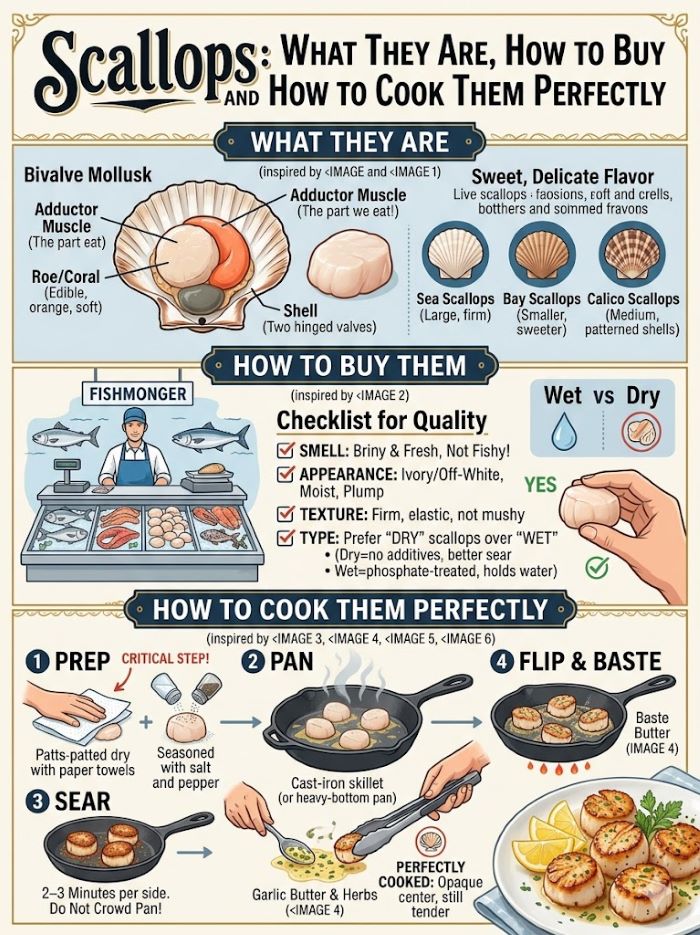
Let us start with the basics. What are scallops, exactly? They are a type of bivalve mollusk, a shellfish related to clams, oysters, and mussels. They live inside two hinged shells, the fan-shaped ones you have probably seen used as decoration. So if you have ever wondered what is a scallop in simple terms, it is a saltwater shellfish prized for the round muscle inside its shell.
That round muscle is the part you eat. A scallop spends its life opening and closing its shell to move and feed, and the muscle that powers that motion is the tender, sweet medallion that ends up on your plate. The rest of the creature is usually removed before sale, so what you buy is almost always just that muscle, sometimes with the orange roe attached in certain markets.
Now that you know the basics, it helps to understand that not all of them are the same. The two main kinds you will find differ a lot in size, price, and cooking method, so knowing which is which matters before you shop.
Sea Versus Bay
The two types you will encounter most differ mostly in size.
Sea scallops are the large ones, often an inch and a half to two inches across. They are the kind you get when a restaurant serves a few impressive medallions seared to a golden crust. Because of their size, they are ideal for searing, since they hold up to high heat and develop a beautiful brown exterior while staying tender inside. When a recipe calls for an elegant, browned presentation, the large variety is what you want.
The bay type is much smaller, about half an inch, and sweeter. These cook in seconds, which makes them better suited to quick dishes like pastas, stews, and ceviche rather than searing. They are also usually cheaper. If you try to brown them the way you would the larger kind, they overcook before they color, so match the type to the method.
For most of the impressive dishes people picture, the large variety is the right choice. They are the focus of most searing recipes, and the rest of this guide centers on them, since getting a great sear is the skill most home cooks want to learn.
Dry Versus Wet: The Most Important Buying Tip
Here is the single most important thing to know before you buy. They come in two forms at the market, dry and wet, and the difference makes or breaks your dish.
Wet ones have been treated with a phosphate solution that helps them retain water and extends shelf life. The problem is that all that absorbed water leaks out the moment they hit a hot pan, so the scallops steam instead of browning and never develop a crust. They also often have a slightly soapy taste from the treatment.
Dry ones are untreated. They have not been soaked in any solution, so they brown beautifully and taste cleaner and sweeter. They look slightly tan or ivory rather than bright white, and they are not sitting in a pool of liquid. They cost a little more, but for any browned dish they are worth it. When you shop, ask the fishmonger specifically for the dry kind, and if the package says nothing, check for the words “dry packed” or “chemical free.” Choosing dry over wet is the difference between a golden crust and a sad gray result, no matter how good your technique is.
How to Cook Scallops: The Basics
Once you have the right ones, the cooking itself is fast. Knowing how to cook scallops well comes down to a few principles that apply across nearly every method.
The first rule is dryness. Surface moisture is the enemy of browning, so the scallops must be patted completely dry before they touch the heat. The second rule is high heat. You want the pan very hot so the exterior browns quickly before the inside overcooks. The third rule is restraint. Once they are in the pan, you leave them alone to let the crust form, and you pull them off the moment they are done, which happens fast.
There are several methods, including searing, grilling, broiling, and adding them to pastas or soups. But searing is the classic, and it is the method that delivers that restaurant-quality result. Learning to sear teaches you the core skills that carry over to every other method, so it is the place to start. The next question, how to avoid overdoing them, comes down to watching the clock, since they need only minutes.
Perfect Pan Seared Scallops
The technique for pan seared scallops is simple, but every step matters. Skip one and you lose the crust. Here is the method that works every time.
Start by patting the pieces completely dry with paper towels. Press gently and really get all the surface moisture off, then let them sit on a fresh paper towel for a few minutes while the pan heats. Season them with salt and pepper just before cooking, not earlier, since salt draws out moisture you just removed.
Heat a heavy skillet, preferably stainless steel or cast iron, over medium-high to high heat until it is very hot. Add a high-smoke-point oil like grapeseed or avocado oil, and wait until it shimmers. The pan must be hot enough that they sizzle the instant they land. Place the scallops in the pan one at a time, leaving space between each scallop so they brown rather than steam, and make sure not to crowd the pan. This spacing is what separates a good sear from a steamed, pale batch.
Now the hardest part: do not touch them. Let the scallops cook undisturbed for about two to three minutes until a deep golden crust forms on the bottom. When they release easily from the pan and have a brown crust, flip them once. Cook the second side for about one to two minutes. A pat of butter added in the last minute, spooned over the top, adds richness and flavor.
The whole process for seared scallops takes only four to five minutes total, which is why having everything ready before you start matters so much. Overcooking is the most common mistake, so err on the side of pulling them early, since they continue cooking from residual heat after they leave the pan. Perfect seared scallops are tender with a just-opaque center, never tight and rubbery, and properly browned ones have a golden crust on both sides.
A Simple Scallops Recipe
Here is an easy scallops recipe that puts the technique to work and tastes like something from a nice restaurant. It serves two as a main or four as an appetizer.
You will need one pound of dry sea scallops, salt and black pepper, two tablespoons of high-smoke-point oil, two tablespoons of butter, two cloves of garlic minced, the juice of half a lemon, and a handful of chopped fresh parsley.
To make this dish, first pat the pieces thoroughly dry and season with salt and pepper. Heat the oil in a heavy skillet over medium-high heat until shimmering. Add the scallops in a single layer without crowding, and sear undisturbed for two to three minutes until golden. Flip and cook another one to two minutes. In the last minute, add the butter and garlic, and spoon the melted butter over the top as it foams. Remove them from the pan, then stir the lemon juice into the pan butter and pour it over the top. Finish with parsley and serve right away.
This dish pairs well with risotto, pasta, crusty bread, or a simple green salad. The browned butter and lemon sauce is rich without overwhelming the natural sweetness of the shellfish. Once you are comfortable with this basic recipe, you can build on it with different sauces and sides.
More Scallop Recipes and Serving Ideas
Searing is just the start. Once you can cook them well, a world of options opens up. Here are a few directions to take them.
Toss browned scallops through a creamy or garlic-butter pasta for an elegant weeknight dinner. Add them to a seafood risotto, placing them on top just before serving. Build a light summer dish by serving them over a fresh corn or pea purée. For a no-cook option, the smaller bay variety works beautifully in a citrus ceviche. And for a crowd, skewer and grill them with a brush of olive oil and lemon.
The best scallop recipes treat the shellfish as the star and keep the supporting flavors simple. Bright acidity from lemon, richness from butter, and a little garlic or fresh herbs all complement the natural sweetness without burying it. Because they cook so fast, they are ideal for impressive meals that come together quickly, which makes them a smart choice when you want to cook something special without spending hours in the kitchen.
Common Mistakes to Avoid
A few errors account for almost every disappointing result, and avoiding them is most of the battle.
The biggest mistake is not drying them enough, which leads to steaming instead of browning and no crust. Pat them dry, then pat again. The second is buying wet, treated ones, which will not brown no matter how hot your pan is, so always choose dry. The third is a pan that is not hot enough, which means the exterior never colors before the inside overcooks. Get the pan properly hot first.
Crowding the pan is another frequent error, since packed scallops release steam that prevents browning, so cook in batches if needed. Moving them too soon tears the forming crust, so leave them alone until they release easily. And overcooking is the most common of all, turning tender medallions tough and rubbery. They need only a few minutes total, so watch them closely and pull them early. Get these few things right and a great result follows almost automatically.
Are They Good for You?
Beyond tasting great, this shellfish is a genuinely healthy protein. It is low in fat and calories while being high in lean protein, which makes it filling without being heavy. A serving delivers a meaningful amount of protein for relatively few calories.
It also provides useful nutrients, including vitamin B12, magnesium, potassium, and selenium, along with some omega-3 fatty acids. As a lean seafood, it fits well into most balanced eating patterns. The main thing to watch is how you cook it, since drowning the pieces in heavy cream or excessive butter adds calories that the shellfish itself does not have. Cooked simply with a little oil, butter, and lemon, it is a light, nutrient-dense option. As with any shellfish, anyone with a shellfish allergy should avoid it entirely.
Frequently Asked Questions
How do I know when they are done? They are done when the center turns just opaque and they have a golden crust, usually after about three to four minutes total. They should feel slightly firm but still tender, not hard.
Why are mine rubbery? Almost always from overcooking. They need only a few minutes, and they keep cooking from residual heat after leaving the pan, so pull them early.
What is the difference between dry and wet? Wet ones are treated with a phosphate solution that makes them retain water and resist browning, while dry ones are untreated, brown better, and taste sweeter.
Can I cook them from frozen? Yes, but thaw them fully in the refrigerator first and pat them very dry, since frozen ones hold extra moisture that prevents a good sear.
Do I need to remove anything before cooking? Check for the small tough side muscle on each scallop that is sometimes still attached, and peel it off if present, since it can be chewy. Otherwise the muscle is ready to cook.
What pan is best? A heavy stainless steel or cast iron skillet holds and distributes high heat well, which is exactly what you need for a good crust. Avoid nonstick, which does not brown as effectively.
What should I serve with them? Risotto, pasta, crusty bread, a green salad, or a light vegetable purée all work, since they let the shellfish stay the star of the plate.
Key Takeaways
- The answer to what is a scallop is simple: it is a bivalve mollusk, and the part you eat is the sweet, tender round muscle inside the shell.
- The broader answer to what are scallops depends on type, since sea scallops are large and ideal for searing while the smaller bay kind cooks in seconds and suits pastas and ceviche.
- The most important buying tip is to choose dry rather than wet, since untreated dry pieces brown and taste far better than water-treated wet ones.
- Knowing how to cook scallops comes down to three rules: pat them completely dry, use high heat, and avoid overcooking.
- For pan seared scallops, dry them well, season just before cooking, sear undisturbed in a very hot pan for two to three minutes per side, and finish with butter.
- Perfect seared scallops have a golden crust on both sides and a just-opaque center, and they take only four to five minutes total, so pull them early.
- A simple scallops recipe of browned medallions with garlic, butter, lemon, and parsley tastes restaurant-quality and comes together in minutes.
- Beyond searing, scallop recipes include creamy pastas, seafood risotto, grilled skewers, and citrus ceviche with the smaller bay variety.
- Common mistakes include skipping the drying step, buying wet ones, using a cool pan, crowding, and overcooking, and avoiding these is most of the battle.
- This shellfish is a lean, nutrient-dense protein rich in B12, magnesium, and selenium, healthiest when cooked simply rather than drowned in heavy sauces.