TPT
Ask a group of teachers where they find worksheets, lesson plans, or classroom decor, and many will give the same three letters: TPT. Short for Teachers Pay Teachers, it’s an online marketplace where educators buy and sell resources they’ve made themselves. A third grade teacher in Ohio can sell a phonics unit to a teacher in Texas, and both benefit.
This guide covers how the marketplace works, what’s changed in 2026, what sellers earn, and how teachers can get the most out of it.
Quick Facts
| Detail | Information |
|---|---|
| Full name | Teachers Pay Teachers |
| Founded | 2006 |
| Founder | Paul Edelman, a New York City public school teacher |
| Owner | IXL Learning (acquired in 2023) |
| Resources | More than 7 million free and paid |
| Users | More than 7 million educators |
| Reach | Used by about 85% of US PK-12 teachers (company figure, 2023) |
| Downloads | More than 1 billion |
| School product | School Access subscriptions with Easel |
What Is TPT?
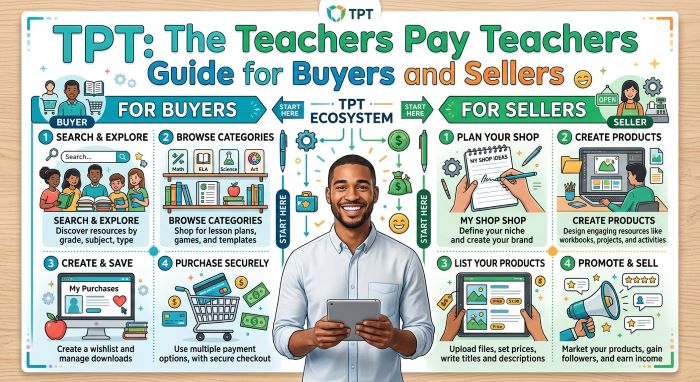
TPT is a website where teachers, called Teacher-Authors, create and sell educational materials. Buyers are mostly classroom teachers, homeschool parents, tutors, and schools. Products range from single worksheets that cost a dollar to full year curriculum bundles.
You’ll find:
- Lesson plans and unit plans
- Printable worksheets and task cards
- Digital activities for Google Slides and other tools
- Assessments and exit tickets
- Classroom decor and bulletin board sets
- Games, centers, and hands on activities
- Special education and English learner materials
- Free resources
The big idea is simple. Teachers know what works in real classrooms, so their materials are often practical and ready to use.
A Short History
A Teacher’s Idea
Paul Edelman taught in New York City public schools. He noticed teachers spent hours creating materials and often shared them informally. In 2006, he launched Teachers Pay Teachers so educators could sell their work and earn money for it.
Rapid Growth
The site grew fast as more teachers joined. Some top sellers earned six figures or more, which drew media attention and encouraged others to start selling. Over time, the platform added digital tools, school subscriptions, and better search.
Joining IXL Learning
In March 2023, IXL Learning, the company behind the IXL practice platform, announced it had acquired Teachers Pay Teachers. At the time, the marketplace said it offered more than 7 million resources and served more than 7 million educators.
Timeline
| Year | Milestone |
|---|---|
| 2006 | Launched by Paul Edelman |
| 2010s | Grew into the largest teacher resource marketplace |
| 2020 | Pandemic boosted demand for digital resources |
| 2021 | Launched Easel for interactive digital activities |
| 2023 | Acquired by IXL Learning |
| October 2026 | Restructured seller tiers and closed Premium to new sign ups |
How Buying Works
Creating an Account
Buying is free to join. You create an account, search for what you need, and either download free items or pay for paid ones.
Searching for Resources
You can filter by grade, subject, price, resource type, and format. Reading reviews and looking at previews helps you judge quality before you buy.
Downloading and Using
Most products download as PDFs, slides, or other files. Some digital products work through Easel, the platform’s tool for interactive activities that students can complete online.
Earning Credits
Buyers can earn credits by leaving feedback on paid purchases. Those credits can then be used toward future purchases. It’s a small perk, but it adds up for teachers who buy often.
License Rules
Most purchases come with a single classroom license. That means you can use the resource with your own students, but you shouldn’t share it with other teachers. Many sellers offer discounted extra licenses for colleagues.
School Access Subscriptions
Schools and districts can buy School Access subscriptions. These let teachers download resources without paying out of pocket, and they include Easel. For teachers who already spend their own money on classroom supplies, this can be a big help.
If your school doesn’t have a subscription, it may be worth asking your principal about it.
How Selling Works
Who Can Sell?
Anyone can create materials, but most sellers are current or former teachers. Some are school counselors, speech therapists, or homeschool parents.
The 2026 Seller Tier Changes
On October 1, 2026, Teachers Pay Teachers restructured its seller tiers. The old Premium membership closed to new sign ups, and existing Premium sellers were asked to choose a new option. Here’s how the tiers looked as of October 2026:
| Tier | Cost | Seller Payout | Other Fees | Key Rule |
|---|---|---|---|---|
| Basic | One time $29 fee | 55% of each sale | $0.30 per resource sold | None |
| Exclusive | $59.95 per year | 80% for a limited time, then 77.5% from January 1, 2027 | $0.15 on orders under $3 | Digital resources must be sold only on this marketplace |
| Premium | Closed to new sellers | Being phased out | N/A | Existing sellers must switch |
What a $5 Sale Earns
| Tier | Seller Gets |
|---|---|
| Basic | About $2.45 |
| Exclusive (2026) | About $4.00 |
| Exclusive (from 2027) | About $3.88 |
According to an October 2026 comparison by EduBracket, an Exclusive seller needs about 39 sales a year at 80% to cover the annual fee, or about 43 sales at 77.5%.
Seller Reaction
The change upset some longtime sellers. A Change.org petition created on October 1, 2026, asked the company to keep Premium membership. Petitioners argued that the Basic payout is too low for established sellers and that the exclusivity rule limits where they can sell their work.
Sellers now face a choice. Exclusive pays more per sale but means giving up other marketplaces and their own websites for digital products. Basic allows selling anywhere but keeps far less of each sale.
Which Seller Tier Is Right for You?
| If You… | Consider |
|---|---|
| Are just starting with few products | Basic |
| Sell steady volume and only use this marketplace | Exclusive |
| Sell on your own website or other platforms | Basic, or rethink your strategy |
| Make more than about 40 sales a year | Exclusive likely pays off |
Run your own numbers before deciding. Look at last year’s sales, average price, and where else you sell.
How Much Do Sellers Earn?
Earnings vary widely. Many sellers earn a little extra money each month. A smaller group earns thousands per month, and a few top sellers have reported six figure incomes over the years. Success usually depends on:
- Product quality: Clear, well designed, classroom tested materials
- Niche: Focused topics, such as kindergarten phonics or high school chemistry labs
- Volume: Many products that link to each other in bundles
- Marketing: Pinterest, Instagram, email lists, and blogs
- Reviews: Strong ratings help products rank higher in search
Tips for Sellers
- Start with what you use. Your best products are often the ones you already made for your class.
- Make great previews. Buyers want to see inside a product before paying.
- Write clear titles. Use the words teachers actually search for, such as grade level and topic.
- Bundle smartly. Bundles raise your average sale and give buyers a deal.
- Offer a few free items. Freebies build trust and followers.
- Respond to questions. Good customer service leads to better reviews.
- Update old products. Refresh designs and fix errors to keep sales strong.
- Respect copyright. Use licensed clip art and fonts, and never copy other sellers’ work.
Tips for Buyers
- Read the reviews. Look for comments about accuracy and ease of use.
- Check the preview. Make sure it matches your grade level and standards.
- Start with free items. Test a seller’s style before buying a bundle.
- Watch for sales. Sitewide sales often happen around back to school and holidays.
- Use your credits. Leave feedback to earn credits for later.
- Ask about School Access. Your school may already pay for it.
- Respect the license. Buy extra licenses when sharing with colleagues.
TPT for Homeschool Parents
Classroom teachers aren’t the only buyers. Many homeschool families use TPT to find ready made units, reading guides, and math practice. The grade level filters make it easy to match materials to a child’s needs, and single classroom licenses usually cover use at home.
Homeschool parents should look for resources labeled for small groups or individual students, since some classroom activities are designed for 25 kids. Reading reviews from other homeschoolers can help, too.
TPT and Classroom Technology
Digital products have grown fast since 2020. Many sellers now offer versions for Google Slides, Google Forms, and Easel, so students can work on laptops or tablets. On TPT, you’ll often see listings that include both a printable and a digital version in one purchase. That flexibility is useful for schools with one to one devices or for students learning from home.
Pros and Cons
| Pros | Cons |
|---|---|
| Huge library of teacher made materials | Quality varies from seller to seller |
| Saves teachers planning time | Costs can add up for teachers paying out of pocket |
| Lets teachers earn extra income | New seller tiers reduce flexibility |
| Many free resources | Some products may not match local standards |
| Digital tools like Easel | Search results can be crowded |
Common Criticisms
Quality Control
Because anyone can sell, quality isn’t always consistent. Some resources have errors or don’t match standards. Reviews and previews help, but buyers still need to check carefully.
Teachers Paying Out of Pocket
Many teachers already spend their own money on classroom supplies. Critics say marketplaces like this add to that burden. School subscriptions are one answer, but not every district offers them.
Curriculum Concerns
Some education experts worry that teachers piece together lessons from many sources instead of using a planned curriculum. Supporters argue that teachers know their students best and need flexible materials.
Alternatives
Teachers looking for other options might consider:
| Platform | What It Offers |
|---|---|
| Etsy | Some printable teaching resources |
| Boom Learning | Self checking digital task cards |
| Twinkl | Subscription library of teaching materials |
| Payhip or a personal website | Selling directly to buyers |
| Free sites | Resources from museums, PBS, and nonprofits |
Sellers who choose the Exclusive tier should remember that its exclusivity rule may limit selling digital resources on other platforms.
How to Get Started as a Seller
- Create a free account. Sign up as a buyer first to explore.
- Pick a tier. Compare Basic and Exclusive based on your plans.
- Prepare your files. Make a cover image, preview, and clear instructions.
- Upload your first product. Write a strong title and description.
- Price it fairly. Look at similar products to set your price.
- Promote it. Share on social media and with teacher groups.
- Keep creating. More products usually mean more sales.
Frequently Asked Questions
What does TPT stand for? It stands for Teachers Pay Teachers, a marketplace for teacher made resources.
Is Teachers Pay Teachers free to use? Joining as a buyer is free. Many resources are free, and others are paid.
Who owns Teachers Pay Teachers? IXL Learning acquired it in 2023.
What did the marketplace change in 2026? On October 1, 2026, it restructured seller tiers. Premium closed to new sellers, and sellers now choose between Basic and Exclusive.
How much does a Basic seller keep? As of October 2026, Basic sellers keep 55% of each sale, minus a $0.30 per resource fee.
Final Thoughts
TPT has changed how teachers plan lessons and how many earn extra income. For buyers, it’s a giant library of practical, classroom tested resources. For sellers, it’s a business opportunity, though the 2026 tier changes mean it’s worth running the numbers carefully. Whether you’re buying, selling, or both, knowing how the platform works helps you get the most value from it.
Key Takeaways
- TPT stands for Teachers Pay Teachers, a marketplace where educators buy and sell resources.
- It was founded in 2006 by New York City teacher Paul Edelman and acquired by IXL Learning in 2023.
- It offers more than 7 million resources used by more than 7 million educators.
- On October 1, 2026, it restructured seller tiers and closed Premium to new sign ups.
- Basic sellers pay a $29 one time fee and keep 55% of sales, minus $0.30 per resource.
- Exclusive sellers pay $59.95 a year and keep 80% for now, dropping to 77.5% in 2027, but must sell digital resources only on the platform.
- Buyers can save money with free resources, sales, credits, and School Access subscriptions.