Best Books for Financial Literacy: 10 Reads That Will Change How You Handle Money
Most of us leave school knowing how to solve for x but not how to build a budget, pay off a credit card, or invest for retirement. That gap costs people dearly, in debt, missed opportunities, and years of money stress that did not have to happen. The encouraging part is that financial literacy is a learnable skill, and a handful of well-chosen books can teach you more than years of trial and error. This guide covers the best books for financial literacy, what each one actually teaches, and how to put the lessons to work in your own life.
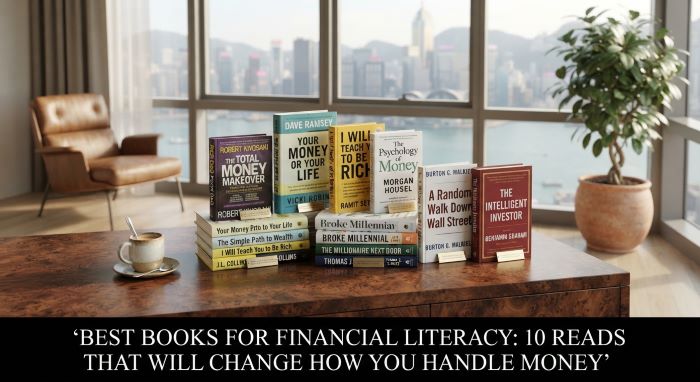
What financial literacy really covers
Financial literacy is more than knowing what a stock is. It is a set of practical skills that work together:
- Budgeting: Knowing where your money goes and directing it on purpose.
- Debt management: Understanding interest and paying down what you owe efficiently.
- Saving: Building an emergency fund and saving for goals.
- Investing: Growing wealth over time through the stock market, retirement accounts, and more.
- Mindset: Understanding the emotions and habits that drive money decisions.
The books below each tackle one or more of these areas. Some are practical how-to guides, others focus on psychology and behavior, and a few are classics that have shaped how millions of people think about money.
The 10 best books for financial literacy
1. The Psychology of Money by Morgan Housel
If you read only one book on this list, make it this one. Morgan Housel, a former columnist for The Motley Fool and The Wall Street Journal, argues that doing well with money has less to do with intelligence and more to do with behavior. Through 19 short, story-driven chapters, he explores why smart people make bad money decisions, why luck and risk matter so much, and why “enough” is the most important financial concept most people never define.
The writing is clear, engaging, and free of jargon, which makes it a perfect entry point. It does not tell you which funds to buy. Instead, it changes how you think about money, which makes every other book easier to apply.
Best for: Anyone who wants to understand the behavior behind wealth.
2. The Total Money Makeover by Dave Ramsey
Dave Ramsey’s book is a step-by-step plan for getting out of debt and building wealth, organized into seven “Baby Steps.” You start by saving a small emergency fund, then pay off all non-mortgage debt using the debt snowball method, where you knock out the smallest balances first to build momentum. From there, you build a full emergency fund, invest for retirement, save for kids’ college, and pay off your home early.
Ramsey’s approach is strict. He is firmly against credit cards and most debt, and some of his investing advice is debated by other experts. But for people drowning in debt, his clear, motivating plan has helped millions take control.
Best for: People who need a structured, no-nonsense plan to get out of debt.
3. I Will Teach You to Be Rich by Ramit Sethi
Ramit Sethi takes a different approach from Ramsey. His six-week program focuses on automating your finances so good habits happen without willpower. He covers optimizing credit cards, opening the right bank accounts, setting up automatic savings and investing, and spending extravagantly on the things you love while cutting costs mercilessly on the things you do not.
His message that you can enjoy life and still build wealth resonates with younger readers. The updated edition includes current advice on accounts, investing, and negotiating.
Best for: Young professionals who want a practical system that runs on autopilot.
4. Rich Dad Poor Dad by Robert Kiyosaki
One of the best-selling personal finance books of all time, Rich Dad Poor Dad contrasts the money lessons Kiyosaki learned from his highly educated but financially struggling father with those from his best friend’s entrepreneurial father. Its core lesson is the difference between assets, which put money in your pocket, and liabilities, which take money out.
The book is better at shifting mindset than giving specific advice, and some of its claims have drawn criticism. Still, it has inspired countless readers to think about building income-producing assets rather than just earning a paycheck.
Best for: Readers who want a mindset shift toward building assets and passive income.
5. The Simple Path to Wealth by JL Collins
JL Collins originally wrote this as a series of letters to his daughter about money and investing. The result is one of the clearest explanations of index fund investing ever written. Collins explains why debt is dangerous, how the stock market works, why low-cost broad market index funds beat most active strategies, and how to reach financial independence.
His calm, plain-spoken style makes investing feel approachable even if you have never bought a single share. Many readers credit this book as the one that finally got them investing.
Best for: Beginners who want a simple, proven approach to long-term investing.
6. Your Money or Your Life by Vicki Robin and Joe Dominguez
This classic reframes money as life energy. Every dollar you spend represents hours of your life you traded to earn it. Through a nine-step program, the authors help you track every cent, calculate your real hourly wage after work-related costs, and decide whether each purchase is worth the life energy it costs.
It is a foundational text for the financial independence movement and pairs well with more technical investing books. Readers often say it changed not just their spending but their relationship with work.
Best for: Anyone who wants to align spending with values and pursue financial independence.
7. The Millionaire Next Door by Thomas J. Stanley and William D. Danko
Based on years of research into how wealthy Americans actually live, this book shatters the stereotype of the flashy millionaire. The authors found that most millionaires live below their means, drive older cars, budget carefully, and build wealth slowly through saving and investing rather than high salaries or inheritance.
The research-driven insights make a powerful case that wealth comes from discipline, not income. It is eye-opening for anyone who assumes you need a big paycheck to get rich.
Best for: Readers who want evidence that steady habits build real wealth.
8. The Little Book of Common Sense Investing by John C. Bogle
John Bogle founded Vanguard and created the first index fund available to everyday investors. In this short, accessible book, he makes the case for owning the entire market through low-cost index funds and holding for the long term. He explains how fees and trading costs quietly eat away at returns and why most actively managed funds fail to beat the market over time.
It is compact, practical, and written by one of the most respected figures in investing history.
Best for: Anyone who wants to understand why low-cost index investing works.
9. The Intelligent Investor by Benjamin Graham
Warren Buffett has called this the best book about investing ever written. Benjamin Graham, the father of value investing, teaches principles like margin of safety, the difference between investing and speculating, and how to use market mood swings to your advantage through his famous “Mr. Market” metaphor.
It is denser and more demanding than the other picks, so it suits readers who already have the basics down. The revised edition with commentary by Jason Zweig updates the examples for modern readers.
Best for: Readers ready for a deeper, more serious look at investing principles.
10. The Richest Man in Babylon by George S. Clason
Written in 1926, this short book teaches timeless money lessons through parables set in ancient Babylon. Its core rules are simple: save at least 10 percent of what you earn, control your spending, make your money work for you, protect it from loss, and invest in your own ability to earn.
The storytelling format makes the lessons memorable, and the principles hold up remarkably well nearly a century later.
Best for: Beginners and younger readers who learn best through stories.
Quick comparison table
| Book | Author | Main focus | Level |
|---|---|---|---|
| The Psychology of Money | Morgan Housel | Behavior and mindset | Beginner |
| The Total Money Makeover | Dave Ramsey | Getting out of debt | Beginner |
| I Will Teach You to Be Rich | Ramit Sethi | Automating finances | Beginner |
| Rich Dad Poor Dad | Robert Kiyosaki | Assets and mindset | Beginner |
| The Simple Path to Wealth | JL Collins | Index fund investing | Beginner to intermediate |
| Your Money or Your Life | Robin and Dominguez | Values and independence | Beginner |
| The Millionaire Next Door | Stanley and Danko | Wealth-building habits | Beginner |
| The Little Book of Common Sense Investing | John C. Bogle | Low-cost index funds | Beginner to intermediate |
| The Intelligent Investor | Benjamin Graham | Value investing | Advanced |
| The Richest Man in Babylon | George S. Clason | Timeless money rules | Beginner |
Where to start based on your situation
The best books for financial literacy help most when they match where you are right now. Here is a simple guide:
- Buried in debt: Start with The Total Money Makeover.
- Just starting your career: Go with I Will Teach You to Be Rich.
- Ready to invest but nervous: Read The Simple Path to Wealth, then Bogle’s Little Book.
- Want to change your mindset: Begin with The Psychology of Money or Rich Dad Poor Dad.
- Rethinking work and spending: Pick up Your Money or Your Life.
- Already comfortable with basics: Tackle The Intelligent Investor.
You do not need to read all ten at once. One or two well-chosen books, applied consistently, will do more than a shelf full of unread titles.
Common money lessons these books share
Read enough of the best books for financial literacy and you notice the same ideas coming up again and again, even from authors who disagree on details. Those repeated lessons are worth paying attention to, since they have held up across decades and very different writers.
- Spend less than you earn. Every book agrees that a gap between income and spending is the foundation of wealth.
- Pay yourself first. Save and invest before you spend, not with whatever is left over.
- Avoid high-interest debt. Credit card balances quietly drain wealth faster than most investments can build it.
- Time in the market matters. Starting early and staying invested lets compound growth do the heavy lifting.
- Keep costs low. Fees on funds and accounts compound against you just as returns compound for you.
- Behavior beats brilliance. Patience and discipline matter more than picking the perfect stock.
When the best books for financial literacy agree this strongly, you can treat these principles as your foundation, then use individual books to fine-tune the details.
Reading on a budget
You do not have to spend much to learn. Most of these titles are available at public libraries in print, ebook, and audiobook formats through apps like Libby. Used copies are cheap, and many of the classics cost only a few dollars. Borrowing first also lets you find which authors click with you before you buy a copy to mark up and keep.
How to turn reading into real financial change
Reading the best books for financial literacy is the first step, but action is what changes your bank balance. Here is how to make the lessons stick:
- Track your spending for a month. Almost every book recommends it, and the results are often surprising.
- Build a starter emergency fund. Even a small cushion prevents new debt when something goes wrong.
- Automate savings and investing. Set up automatic transfers so progress happens without willpower.
- Tackle high-interest debt first or use the snowball method. Pick an approach and stick with it.
- Open a retirement account. Take advantage of any employer match, which is essentially free money.
- Revisit your plan every few months. Adjust as your income and goals change.
Money and career growth go together
Financial literacy works best alongside growing your income. Saving and investing are powerful, but raising what you earn gives you more to work with. Building new skills and credentials is one of the most reliable ways to do that, and this guide to the Best Certifications to Get for Career Growth covers options that can lead to real raises.
Money habits are also deeply tied to how you think and feel. Many of the best books for financial literacy overlap with broader self-improvement, since discipline, patience, and long-term thinking matter everywhere. If you enjoy these, the Best Books for Personal Growth make a natural next step. And since fear, envy, and impulse drive so many money mistakes, understanding your emotions pays off financially too. The Best Books for Emotional Intelligence can help you recognize the feelings behind your spending decisions.
A word of caution
Books are a great education, but they are not personalized advice. Authors disagree on important topics like whether to pay off a mortgage early, how to use credit cards, and how much to invest versus save. Read widely, notice where experts agree and disagree, and apply what fits your situation. For major decisions like retirement planning, taxes, or large investments, a fee-only financial advisor can help you build a plan tailored to you. This article is general information, not financial advice.
The bottom line
Financial literacy can change the direction of your life, and you do not need a finance degree to get it. The best books for financial literacy cover every stage of the journey: The Psychology of Money for mindset, The Total Money Makeover for debt, I Will Teach You to Be Rich for automation, The Simple Path to Wealth and Bogle’s Little Book for investing, and classics like The Millionaire Next Door and The Richest Man in Babylon for timeless habits. Pick the book that matches your biggest challenge today, read it with a pen in hand, and put one lesson into action this week. Small, steady steps compound, just like the money they help you build.
Key Takeaways
- Financial literacy covers budgeting, debt management, saving, investing, and the mindset behind money decisions, and it can be learned from the right books.
- The Psychology of Money by Morgan Housel is the best starting point, explaining why behavior matters more than intelligence with money.
- The Total Money Makeover offers a strict plan for escaping debt, while I Will Teach You to Be Rich focuses on automating your finances.
- The Simple Path to Wealth and The Little Book of Common Sense Investing make low-cost index fund investing easy to understand.
- Rich Dad Poor Dad, Your Money or Your Life, and The Millionaire Next Door reshape how you think about assets, spending, and wealth-building habits.
- The Intelligent Investor suits advanced readers, and The Richest Man in Babylon teaches timeless rules through simple stories.
- Turn reading into action by tracking spending, building an emergency fund, automating savings, and consulting a professional for major decisions.