How Designers Can Create Better Visual Content Without Starting From Scratch
Every Great Design Starts With an Idea, Not an Empty Canvas
Every creative project begins with an idea. Whether the goal is designing a website, creating marketing materials, building a presentation, or developing a digital product, every designer eventually faces the same challenge: where should the creative process begin?
For years, professionals were expected to create every visual element manually. While custom artwork remains essential for branding and unique campaigns, modern design projects move much faster than they once did. Clients expect shorter deadlines, businesses launch products more frequently, and creative teams are asked to produce content for websites, social media, advertising, presentations, and print at the same time.
The most successful designers are no longer those who draw every single asset from scratch. They are the professionals who know where their creativity creates the greatest value. Instead of spending hours recreating common visual elements, they focus on communication, storytelling, usability, and memorable visual experiences.
Why Starting From Scratch Isn’t Always the Smartest Decision
Originality comes from ideas rather than repetitive production. A modern website may require dozens of illustrations, icons, interface components, banners, diagrams, and supporting graphics. Creating every one of these assets manually consumes valuable time that could instead be invested in refining layouts, improving typography, or strengthening a brand’s visual identity.
Professional resource libraries allow designers to eliminate repetitive tasks while maintaining high quality throughout an entire project.
The Hidden Cost of Building Everything Yourself
Recreating common graphics increases production costs, extends deadlines, and often leads to inconsistent visual styles across multiple projects. Freelancers lose billable hours producing assets that already exist, while agencies struggle to maintain consistency across larger teams. Reusable resources help solve these problems by providing reliable building blocks that remain visually coherent throughout the design process.
Working Smarter Doesn’t Mean Being Less Creative
Using ready-made assets does not replace creativity—it redirects creative energy toward solving real design challenges. Professional designers create value through composition, branding, typography, color, and user experience rather than repeatedly drawing standard objects.
Why Visual Consistency Matters
Consistency is one of the strongest indicators of professional design quality. Many creative teams choose curated collections of vector illustrations because they make it easier to maintain a unified visual language across websites, presentations, marketing campaigns, and digital products.
Choosing the Right Resources
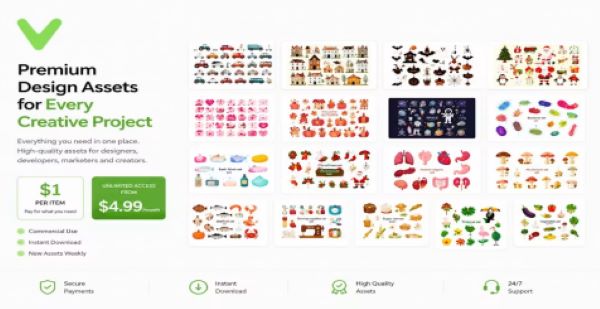
The best design libraries provide editable formats, commercial licensing, organized categories, and reliable search. Combining premium resources with carefully selected free vector graphics offers flexibility during brainstorming, rapid prototyping, and early concept development.
Final Thoughts
Design is about solving problems, not repeating the same production work. By using high-quality visual resources wisely, designers can spend more time developing ideas, improving user experiences, and creating memorable projects while maintaining efficiency and consistency.