Sterile Processing Technician Jobs: What the Role Is and How to Get Into It
Sterile processing technician is one of the less-visible but genuinely critical roles in healthcare. Every surgical instrument, scope, and medical device that goes near a patient has to be cleaned, inspected, packaged, sterilized, and tracked through a defined process before use. Sterile processing technicians (also called central service technicians or SPDs) are the people who make that happen. The field offers stable employment, meaningful work, and a clear path from entry-level to specialized and supervisory positions. This guide covers what the job involves, how to get in, and what the career looks like over time.
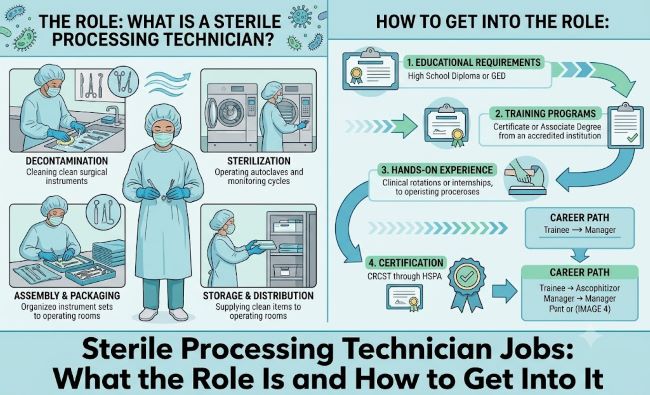
What a Sterile Processing Technician Does
The job title varies by facility: sterile processing technician, central service technician, central sterile supply technician, or SPD tech. The work is the same regardless of the name.
At its core, the job involves decontaminating and sterilizing surgical instruments and medical devices. The workflow follows a defined cycle:
Decontamination: Used instruments return from the operating room or clinical areas to the decontamination area, where they’re scrubbed, rinsed, and run through automated washers that remove blood, tissue, and other biological material.
Inspection and assembly: After washing, instruments are inspected for damage, missing pieces, or malfunction. Instrument sets are assembled according to count sheets that specify exactly which instruments belong in each surgical tray or kit.
Packaging: Assembled sets are wrapped or placed in pouches using sterile barrier packaging that maintains sterility until the point of use.
Sterilization: Packaged sets go through sterilization processes, most commonly steam sterilization (autoclaving) or, for heat-sensitive items, low-temperature sterilization (hydrogen peroxide gas plasma or ethylene oxide).
Storage and distribution: Sterile packages are stored and tracked using inventory systems, then distributed to operating rooms, procedure areas, or other departments as needed.
Sterile processing technicians work in hospitals, surgical centers, outpatient clinics, dental offices, and any facility that uses reusable medical instruments. Hospital positions are the most common.
The work environment is primarily indoors, in a temperature-controlled department that operates on shifts covering 24 hours (since surgical schedules don’t follow a 9-to-5 pattern). Many facilities run evening and overnight shifts that offer shift differentials.
Certifications for Sterile Processing Technician Jobs
Most sterile processing technician jobs at hospitals and surgical centers require or strongly prefer certification. Two main certifying bodies issue credentials:
CRCST (Certified Registered Central Service Technician) from the International Association of Healthcare Central Service Materiel Management (IAHCSMM). This is the most widely recognized credential. Requirements: employment in central service for a minimum period (varies by state: most require 400-600 hours of work experience or completion of an approved training program), passing a written exam covering decontamination, sterilization, inventory management, and instrument care.
CBSPD (Certified Basic-Level Sterile Processing and Distribution) from the Certification Board for Sterile Processing and Distribution. Similar scope to CRCST, recognized at many facilities.
Some states (including New York, New Jersey, and others) now require certification or mandate that uncertified technicians work toward it within a specific timeframe. The certification requirement trend is expanding nationally.
How to prepare for certification:
- Complete a formal sterile processing training program (offered at community colleges and vocational schools, typically 6-12 months)
- Complete on-the-job training at a hiring facility and then sit for certification
- Use self-study materials from IAHCSMM (textbook, practice exams)
Many hospitals hire uncertified candidates and support them through the certification process with tuition assistance or paid study time. Starting entry-level and working toward certification while employed is a common entry path.
What Sterile Processing Technician Jobs Pay
Salary for sterile processing technician jobs varies by region, facility type, and experience level.
Entry level (uncertified or newly certified): $18-$24 per hour in most US markets. Higher in high-cost cities (New York, San Francisco, Seattle: $24-$30+).
Certified and experienced: $22-$32 per hour nationally, with hospital shift differentials (evening, overnight, weekend) adding $1-$5 per hour to base pay.
Lead technician or supervisor: $30-$45 per hour at most facilities.
Travel sterile processing technicians: contracted travelers fill temporary assignments at hospitals nationwide and earn significantly more than permanent staff: $35-$60 per hour with housing stipends, though without the benefits and stability of a permanent position.
The Bureau of Labor Statistics tracks this role under “Medical Equipment Preparers” and projects job growth around 8-10% over the next decade, driven by aging population, surgical volume growth, and the expanding outpatient surgical market.
Where to Find Sterile Processing Technician Job Openings
Hospital career pages. Most large hospital systems post SPD positions on their own career pages (search “[hospital system name] careers sterile processing”). This is often the most direct path and sometimes lists openings before they appear on aggregators.
Indeed, LinkedIn, and ZipRecruiter. Standard job search platforms list sterile processing technician jobs regularly. Searching “sterile processing technician” or “central service technician” in your target location produces current openings.
Staffing agencies specializing in healthcare. Medical staffing agencies including AMN Healthcare, Aya Healthcare, and local healthcare-specific staffing firms often recruit for sterile processing positions, both permanent and temporary travel roles.
IAHCSMM career resources. The certifying organization IAHCSMM maintains a job board on their website specifically for central service professionals.
Career Advancement in Sterile Processing
Sterile processing offers a defined advancement ladder:
Technician → Lead Technician: leads provide mentorship to new staff, run quality checks, and handle more complex instrument sets.
Lead → Supervisor → Manager: supervisory and management positions oversee scheduling, quality assurance, compliance, and team management.
Specialization: some technicians specialize in specific instrument types (orthopedic instruments, flexible endoscopes) or in quality and compliance auditing.
Education pathways: sterile processing supervisors and managers increasingly hold associate or bachelor’s degrees in healthcare administration or a related field.
For those interested in healthcare careers with clear entry paths, sterile processing technician jobs offer one of the more accessible starting points in the clinical support infrastructure. For other career-adjacent research topics, deep cleaning house cost covers a completely different cleaning and sanitation professional service, but the sterile processing field shares the same foundational respect for contamination control and cleaning protocol that separates amateur from professional sanitation work.
Key Takeaways
- Sterile processing technician jobs involve decontaminating, inspecting, assembling, packaging, sterilizing, and distributing surgical instruments and medical devices in hospitals and surgical centers
- The most widely recognized certification is the CRCST from IAHCSMM: many hospitals hire uncertified candidates and support them through the certification process
- Entry-level pay ranges from $18-$24 per hour in most markets, with certified and experienced technicians earning $22-$32 per hour and shift differentials adding meaningfully to base pay
- The field projects 8-10% job growth over the next decade driven by surgical volume growth and an aging population
- Job openings are found on hospital career pages, Indeed and LinkedIn, healthcare staffing agencies, and the IAHCSMM job board
- Advancement paths lead from technician to lead to supervisor to manager, with specialization options in endoscope reprocessing, orthopedic instruments, and quality compliance
- Travel sterile processing technician positions pay significantly higher rates with housing stipends at the cost of stability and permanent benefits