What to Do When Check Engine Light Comes On: Complete Guide
You’re driving along. Your check engine light appears on your dashboard. Your heart rate increases. Is something catastrophically wrong with your car? Do you need to pull over immediately? Is your car about to break down?
What to do when check engine light comes on isn’t always obvious. The light could mean something minor or something serious. You need to know the difference and understand what your next steps should be.
Let’s talk about what the check engine light actually means, why it comes on, and how to respond.
Understanding the Check Engine Light
The check engine light is part of your vehicle’s onboard diagnostic system. When the system detects a problem, the light illuminates.
The light appears on your dashboard as an engine symbol or the words “Check Engine” or “Service Engine.” Different vehicles display it differently.
The light is connected to your car’s computer. The computer monitors various systems: emissions, fuel injection, ignition, transmission, and others. When the computer detects a problem, it stores an error code and turns on the light.
The light being on doesn’t mean your car is about to explode. It means the computer detected something that doesn’t match expected parameters.
Is It Safe to Drive?
One of the first questions people ask: Can I drive safely with the check engine light on?
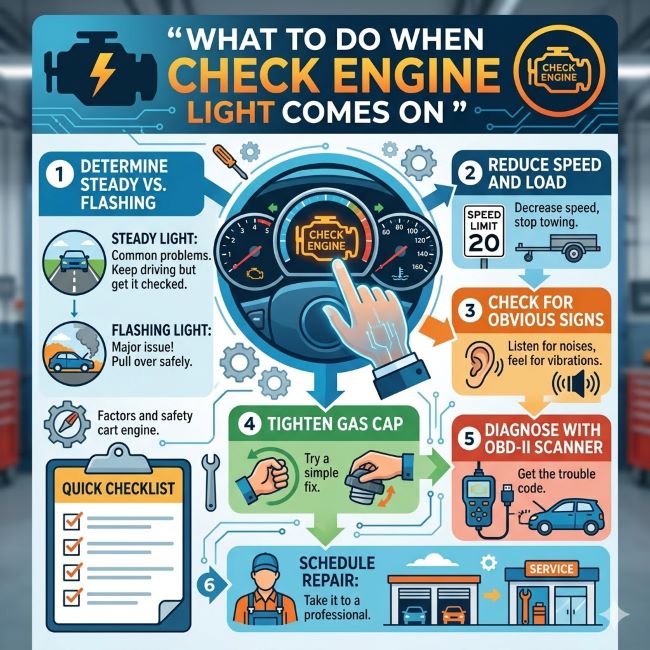
Usually yes. Most check engine light conditions allow you to drive safely. You can drive to a mechanic to get it diagnosed.
Sometimes no. If the light is blinking or flashing, something is seriously wrong. Check engine light blinking or engine light flashing means stop driving. Pull over safely and have the car towed.
Why is my engine light on but the car runs fine? This is common. The problem might be something the computer detected that doesn’t affect drivability. An emissions sensor failure, for example, doesn’t prevent your car from running.
Check engine light on but car runs fine is a frustrating situation. The car seems fine. The light says something is wrong. This is when you need diagnostics to identify the actual problem.
Common Reasons for Check Engine Light
Several issues trigger the check engine light. Understanding common causes helps you know what might be wrong.
Loose or faulty gas cap. This is one of the most common causes. A loose gas cap allows fuel vapor to escape. The computer detects this and triggers the light. Solution: Tighten the cap. The light might go off within a few driving cycles.
Oxygen sensor failure. Oxygen sensors monitor exhaust composition. When they fail, the light comes on. This is more serious than a gas cap. Solution: Replace the sensor.
Catalytic converter problems. The catalytic converter treats exhaust emissions. Converter failures trigger the light. This is expensive to repair but serious enough to address quickly.
Mass airflow sensor malfunction. This sensor measures air entering the engine. Failures affect fuel efficiency and performance. Solution: Cleaning or replacing the sensor.
Transmission problems. Transmission issues show as check engine lights on some vehicles. The light might mean gear selection problems or internal transmission issues.
Engine misfires. Worn spark plugs, bad coils, or fuel injector issues cause misfires. The computer detects misfires and triggers the light.
These are common causes. The actual reason requires diagnostic equipment to determine.
What the Light Color Means
The color of the light sometimes indicates severity.
Yellow or amber lights usually mean get service soon, but it’s not urgent. You can drive to a mechanic.
Red lights usually mean something serious. Stop driving and seek service immediately.
Some cars use orange instead of yellow. The principle is similar.
If your light is red or you see why is my check engine light flashing, treat it as urgent.
Getting a Diagnostic
To find out what’s actually wrong, you need a diagnostic scan.
The scan tool reads the error code stored in your car’s computer. The code tells you what the computer detected.
Check engine light near me requires finding a mechanic or auto parts store that offers diagnostics.
Many auto parts stores offer free diagnostic scans. You drive there, they plug in a scanner, and the code is read.
Independent mechanics and dealerships also perform diagnostics. Dealerships charge more but provide manufacturer-specific expertise. Independent shops are usually cheaper.
The diagnostic report gives you the error code and description. From there, you know what needs fixing.
Manufacturer-Specific Issues
Different manufacturers have different check engine light triggers. Your specific car might have unique characteristics.
Honda check engine light problems are similar to other vehicles. Common Honda issues include oxygen sensors and catalytic converter problems.
Toyota check engine light issues also include sensors and converters. Toyota vehicles are generally reliable, so check engine lights are less common than other brands.
Dodge check engine light problems might relate to transmission issues more than other brands.
The underlying issues are similar across brands. The specific error codes and solutions might differ slightly.
Should You Reset the Check Engine Light?
How to reset check engine light is a common search. But should you?
You can reset the light by disconnecting the car’s battery for a few minutes. This clears the error code and turns off the light.
But resetting the light without fixing the problem is a bad idea. The light will come back once the problem is detected again.
The light exists to alert you to problems. Ignoring it creates safety and emissions issues.
If you reset the light without fixing the problem, you’re just hiding the symptom, not solving the problem.
Fix the problem. Then the light goes off permanently.
Check Emission System Problems
Some cars display “Check Emission System” instead of “Check Engine.” This is essentially the same thing.
Check emission system lights indicate emissions-related problems. The catalytic converter, oxygen sensors, or other emissions components have issues.
These are important to address. Emissions problems affect air quality and your vehicle’s efficiency.
The solutions are the same as check engine light problems. Diagnostics determine the specific issue.
Serious vs Minor Issues
Understanding the severity helps you respond appropriately.
Minor issues that can wait:
- Loose gas cap
- Non-critical sensor failures that don’t affect drivability
- Slow oxygen sensor degradation
- Minor transmission shift flaws
Serious issues needing immediate attention:
- Engine light flashing or blinking
- Catalytic converter failure
- Misfire conditions
- Transmission problems affecting functionality
- Serious sensor failures
If you’re unsure about severity, erring on the side of caution is wise. Getting it checked doesn’t hurt.
What Happens If You Ignore It
Ignoring a check engine light has consequences.
The problem causing the light gets worse. What started as a minor issue becomes major and expensive.
Ignoring emission problems affects air quality. You’re contributing to pollution.
Ignoring certain problems can damage your engine. Persistent misfires wear out internal components.
The cost to fix problems increases the longer you ignore them. Addressing them quickly saves money long-term.
Diagnostic Error Codes
After diagnostics, you’ll get an error code like P0420 or P0101. These codes identify specific problems.
Common codes include:
- P0420: Catalytic converter efficiency problem
- P0101: Mass airflow sensor range
- P0300: Random cylinder misfire
- P0335: Crankshaft position sensor malfunction
- P0440: Evaporative emission system leak
You can look up codes online to understand what they mean. The diagnostic report explains what to do.
Maintenance to Prevent Check Engine Lights
Preventing the light is better than dealing with it.
Regular oil changes keep your engine running smoothly. Dirty oil affects engine sensors.
Replace spark plugs on schedule. Worn plugs cause misfires.
Use quality fuel. Poor fuel quality affects sensors.
Keep your gas cap tight. Loose caps trigger lights.
Address small issues before they become big problems.
Regular maintenance prevents many check engine light issues.
When to See a Mechanic vs Dealership
Both can help, but there are differences.
Independent mechanics are usually cheaper. They handle most issues well. They might not be familiar with every specific model nuance.
Dealerships understand your specific vehicle. They have factory diagnostic tools. They know exactly what your model requires. They cost more.
For most check engine light issues, a good independent mechanic works fine. For complex or model-specific problems, dealerships are worth the extra cost.
Get quotes from both before committing.
Long-Term Considerations
After fixing the check engine light issue, consider long-term implications.
Some fixes are permanent (replacing a sensor). The problem goes away.
Some indicate larger issues developing. A catalytic converter failure might mean engine problems brewing.
After any repair, discuss with your mechanic whether other issues might develop. Sometimes fixing one problem reveals another waiting.
Stay on top of maintenance to prevent new check engine lights.
Special Situations
Service engine light is sometimes different from check engine light. Some vehicles have separate service lights. Service lights indicate scheduled maintenance is needed. Check engine lights indicate problems.
Blinking engine light or engine light flashing is serious. Stop driving. Have the car towed. This indicates severe misfires or other critical problems.
Key Takeaways
- What to do when check engine light comes on is first determine if it’s blinking (serious) or solid (usually not urgent).
- Check engine light near me requires finding a mechanic or auto parts store for diagnostics.
- Honda check engine light and other manufacturer lights indicate problems with various systems that require diagnostics to identify.
- Toyota check engine light and other brand lights follow similar principles and require diagnostic scans.
- Check emission system lights indicate emissions component problems that need attention.
- How to reset check engine light is possible by disconnecting the battery, but addressing the underlying problem is necessary.
- Check engine light blinking or engine light flashing is serious. Stop driving and seek immediate service.
- Why is my check engine light flashing means something critical is wrong. Don’t drive the vehicle.
- Why is my engine light on requires diagnostics to answer accurately.
- Check engine light on but car runs fine is common. Many problems don’t affect drivability but still need fixing.
- Blinking engine light means stop driving. This isn’t a “continue to the mechanic” situation.
- Engine light flashing indicates engine misfires or other critical issues. Have the car towed.
- Service engine light might be different from check engine light on your vehicle. Check your manual.
- Dodge check engine light follows the same general principles as other vehicles.
- Error codes from diagnostics tell you exactly what needs fixing.
- Most check engine light problems don’t mean your car will immediately break down.
- Ignoring the light makes problems worse and more expensive.
- Regular maintenance prevents many check engine light issues.
- If your check engine light is solid, you can usually drive safely to a mechanic or auto parts store for diagnostics.
- If you see a blinking or flashing check engine light, stop driving and have the vehicle towed for service.