For two decades, SEO was the game. Build links. Target keywords. Earn a spot on page one of Google. Entire industries were built around that single algorithm. Then, almost overnight, the rules changed.
Large language models — ChatGPT, Claude, Gemini, Perplexity — are now answering millions of questions that used to flow through traditional search engines. Users are skipping the results page entirely and asking AI directly: “What’s the best project management tool for a remote team?” or “Explain the difference between a Roth IRA and a traditional IRA.” The AI answers. No click required.
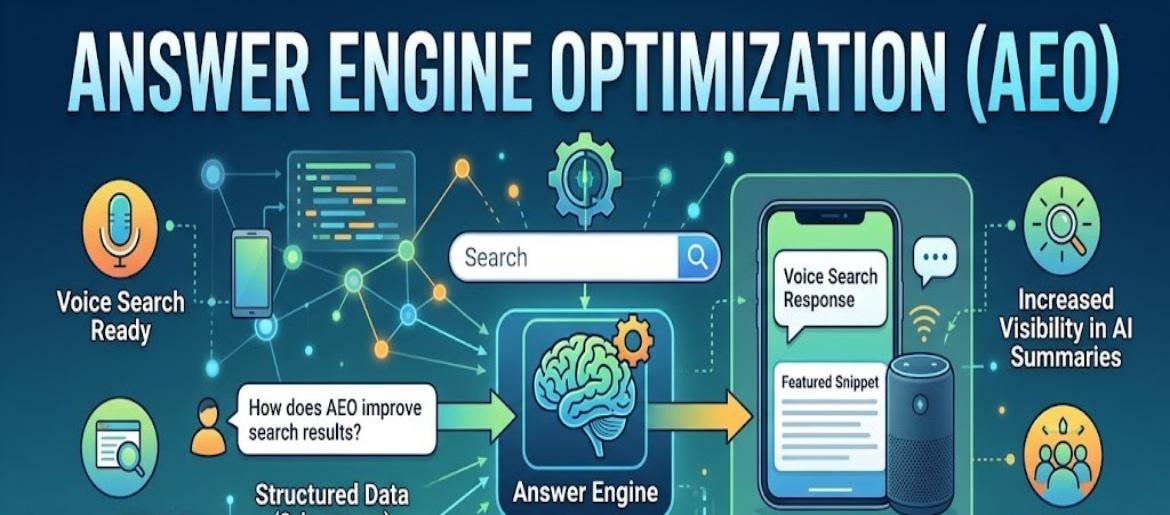
This is the new search. And it demands a new discipline: Answer Engine Optimization, or AEO. Here’s what it is, why it matters, and how to position your brand to win it.
What Is AEO — and Why Does It Differ from SEO?
SEO is fundamentally about ranking. You optimize a page so that Google’s crawler understands it, rates it highly against competing pages, and surfaces it when a user types a matching query. The destination is a list of blue links.
Says the experts at SEOBrand.com, leaders in generative engine optimization and AI search visibility , “AEO is fundamentally about being the answer. When a user asks an LLM a question, the model synthesizes a response from everything it learned during training — plus, in some systems, live retrieval. There is no ranked list. There is only the response. Your content either informed that response or it didn’t.”
The implication is significant: you are no longer competing for position ten versus position one. You are competing to exist in the model’s output at all. That shifts every optimization decision you make.
Build Content That Answers, Not Just Attracts
Traditional SEO content is often engineered to attract traffic — target a keyword, write 1,500 words around it, and hope users scroll enough to convert. Much of it is padded, circular, and written for the algorithm as much as the reader.
LLMs are merciless at detecting that. They were trained on enormous volumes of text and learned to weight sources that actually explain things clearly. If your content provides a genuine, complete, well-structured answer to a real question, it is more likely to be represented in training data and more likely to be surfaced in a retrieval-augmented generation (RAG) system.
Practical moves: Develop robust FAQ sections. Write clear, jargon-free definitions of terms in your industry. Create “What is X?” and “How does X work?” content that covers fundamentals comprehensively. These formats map directly to how users prompt LLMs — and how LLMs construct answers.
Establish Authoritative Brand Presence Across the Web
Google can check your backlink count in real time. LLMs cannot — but they absorbed the web during training, which means the credibility signals that existed when training data was collected are now baked into the model’s understanding of who is authoritative.
To dominate AEO, your brand needs consistent, accurate, positive representation across high-quality third-party sources: industry publications, Wikipedia, professional directories, press coverage, and expert roundups. If reputable sources frequently mention your brand in the context of your category, the model learns to associate you with that category.
Pursue earned media deliberately. Guest articles, podcast appearances, analyst mentions, and awards all contribute to the web of associations that LLMs use to evaluate credibility. This isn’t new PR advice — it’s PR advice with a direct line to your AI discoverability.
Optimize for Conversational Queries, Not Just Head Terms
Google users have historically typed fragmented queries: “best CRM small business” or “running shoes flat feet.” LLM users speak in full sentences and complex questions: “I run a 12-person SaaS company with a distributed sales team — what CRM would fit our workflow?”
AEO requires content that mirrors this conversational depth. Think about the real questions your customers ask in sales calls, support tickets, and onboarding sessions. Write content that answers those questions completely. Use natural language. Structure responses the way a knowledgeable human expert would explain something — not the way a keyword-stuffed blog post does.
Long-tail and conversational content is no longer a secondary strategy. For AEO, it is the primary one.
Use Structured Data and Clear Content Architecture
Schema markup, headers, and clean HTML structure help any automated system parse your content — and that includes the scrapers and retrieval systems that feed into AI products. If your content is buried in JavaScript-rendered pages, locked behind logins, or organized in ways that make it hard to extract meaning, you will be invisible to the systems that matter.
Structure your content with clear H2s and H3s that correspond to actual questions. Use schema markup for FAQs, how-tos, and product information. Ensure your most important content is publicly accessible and plainly written. These are not glamorous tactics, but they are the plumbing that makes AEO work.
The Opportunity Is Now
AEO is still early. Most brands have not yet adapted their content strategy to account for LLM discovery. That means there is a real first-mover advantage available — not by gaming an algorithm, but by doing the fundamentals better than everyone else: writing clearly, establishing genuine authority, and structuring content so that AI systems can find, understand, and use it.
SEO took years to mature into a crowded, competitive discipline. AEO is at the beginning of that curve. The brands that invest now — in comprehensive answers, earned reputation, and well-structured content — will own the AI-generated responses that the next generation of users is already relying on.
The question is no longer whether your audience uses AI to find information. They do. The question is whether they find you when they do.