
5 Things All Businesses Should Know About Managed Billing Services
Billing is the engine behind every company. That might seem like hyperbole, but it isn’t. Without timely, accurate invoicing and collections, even the most innovative businesses will struggle to maintain healthy cash flow. Yet billing functions are often regarded as back-office duties — managed manually, handled reactively, or spread across disconnected systems.
Eight in 10 small businesses — 82% — crash and burn because of cash flow issues. So, it’s clear that achieving sustainable cash flow should be at or near the top of corporate agendas.
Managed billing services offer a more strategic approach. By outsourcing billing processes to specialized service providers, businesses can streamline operations. However, before making the move, there are some essential considerations every company should understand.
Here are five things all businesses should know about managed billing services.
Managed Billing Goes Far Beyond Invoice Creation
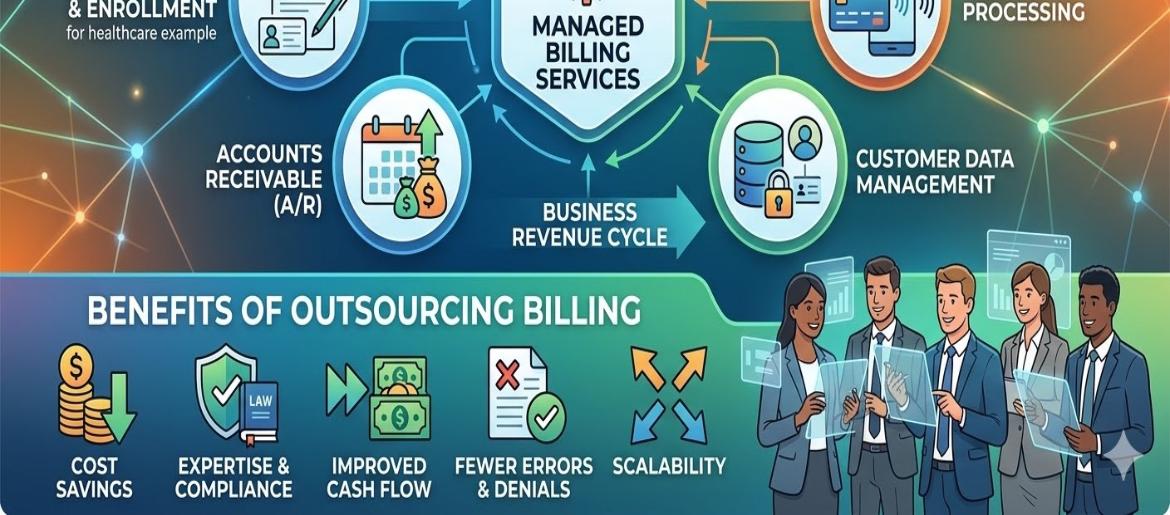
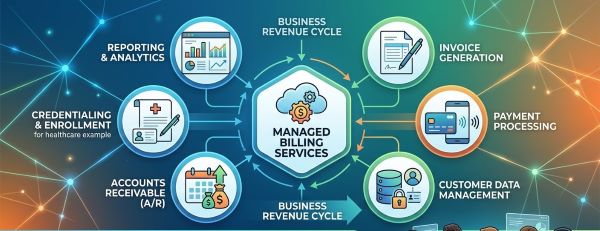
A common misconception is that managed billing services simply send invoices on their clients’ behalf. While that’s part of the package, it goes much further than invoice-submission services. The reality is that managed billing services oversee the entire revenue lifecycle.
This can include invoice generation and delivery, collections follow-up, payment processing, accounts receivable management, and more.
Many managed billing services providers also integrate with accounting systems to ensure financial data remains accurate.
Accuracy and Compliance Are Major Advantages
Billing mistakes won’t merely delay payments — as bad as that is in and of itself. They can also ruin customer trust and lead to deep-seated reputational harm. Incorrect amounts, duplicate charges, inaccurate tax calculations, or confusing payment terms can easily lead to disputes.
Managed billing providers specialize in minimizing these risks. They employ advanced platforms designed for precision and regulatory alignment.
When using a managed billing service, you can reduce the odds of the following headaches:
- Costly billing disputes
- Revenue leakage
- Regulatory penalties
- Audit complications
Accuracy is not just a nice-to-have feature — it’s a must-have since it can make or break your corporate reputation.
Managed Billing Can Improve Cash Flow Significantly
Late payments are rarely just a customer issue. More often than not, they’re the result of inefficient billing processes, such as the following:
- Invoices sent late
- Inconsistent follow-up
- Limited payment options
- Poor visibility into overdue accounts
You can avoid these inefficiencies by hiring a managed billing services provider. When billing is systematic and consistent, days sales outstanding (DSO) often decreases. Quicker collections boost liquidity and afford more capital for reinvestment and growth.
For many companies, the cash flow improvements will justify the managed billing services costs.
Scalability Is Built Into the Model
As companies expand, so, too, do billing complexities. Expansion may introduce multi-tier pricing structures, usage-based billing, international currencies, regional tax requirements, and
larger transaction volumes.
Manual systems that worked for a small team will usually become unsustainable as operations scale. The solution isn’t to remain small — it’s to find the right solution for optimal scalability.
Managed billing providers are structured to handle growth without requiring you to build a larger in-house billing team. Their infrastructure, technology, and staffing will adapt to what you need.
Instead of rebuilding internal systems every time you expand, managed billing services will evolve with your needs.
Outsourcing Doesn’t Mean Losing Visibility
One concern many company owners have is losing control over financial processes. However, that won’t be an issue if you find a reputable managed billing services provider. Most service providers in the space offer dashboards and reporting tools so you can track the following:
- Revenue trends
- Outstanding receivables
- Payment success rates
- Customer billing history
- Forecasted cash flow
Rather than relying on fragmented reports, businesses gain centralized, real-time insights. This improved visibility can support more informed decision-making and financial planning.
Managed billing services are more than a convenience — they’re also more than a value-added option for forward-thinking businesses. Ultimately, they’re a strategic tool for boosting operational efficiency and financial stability.
By boosting accuracy, fast-tracking collections, supporting growth, and delivering deeper financial insight, these services can transform how companies manage revenue.
However, success depends on understanding what managed billing truly entails and selecting a provider aligned with your goals. So, you need to do your homework for the best results.
For businesses experiencing billing inefficiencies, scaling challenges, or inconsistent cash flow, managed billing services may not just streamline operations. They may bolster the financial foundation for long-term success.