AI Content Detector vs Human Editor: Who Spots AI Writing Better?
AI written content is everywhere now.
A survey by BookBub found that 45% of authors use generative AI in their writing.
And according to data from Ahrefs, only 13.5% of top-ranking pages are fully human-written. The rest 86.5% of them? They include some form of AI content.
So, how can you tell if something was manually written by a human?
Well, there are two main ways
- Trust your judgment and read it manually
- Or use a reliable AI content detector to do it faster
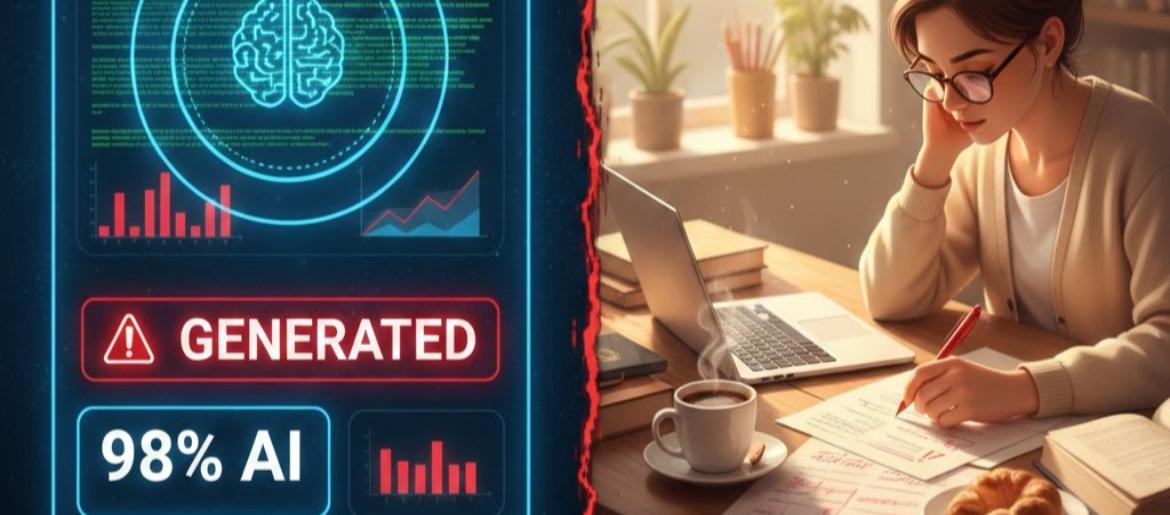
But here is the real question – who does a better job at spotting AI writing? A human? Or a tool?
Let’s get the answer.
What Does an AI Detector Do?
An AI detector is a tool that checks if content was likely written by a machine. It looks at patterns in the writing. These include things like –
- Short sentences
- Repeating phrases
- Lack of emotion
Some even check how often certain words appear. Most of the tools are regularly updated to easily detect content that is generated using paraphrasing tool or a summarizer.
It sounds smart. But it is not perfect. Because AI detectors are 100% accurate. This is especially true for non-native English writers. They often write in a simpler way, which detectors can mistake for AI.
That’s why it is important to use only reliable and trusted tools that give results with highest accuracy. Still, these tools are useful for a quick scan. If you are reviewing lots of content fast, they save time.
What Human Editors Do Differently?
Editors read with understanding. They don’t just scan for patterns. They look for tone and logic.
If a paragraph feels too flat or disconnected, an editor may suspect AI. If a sentence sounds okay but feels off, they dig deeper. They also notice when something reads too perfectly – which often happens with writing run through a paraphrasing tool or summarizer.
Unlike a detector, a person understands context. They know how the topic fits into the rest of the message. That makes a big difference.
But editors have limits too. They may not always spot machine-written content – especially if it has been heavily edited by a human later using paraphrasing tools.
The Best Approach
AI tools work best when they support people and not replace them. For example: a grammar checker can fix small errors but it won’t know if a sentence actually makes sense. Similarly, a word counter helps track length – but it won’t improve the quality.
Even an AI detector can flag possible issues, but only a person can tell if something actually feels human.
The smartest workflow? Use a mix. Start with tools. Then pass it to a human.
Which One Should You Trust?
That depends on your goal.
If you want to check large amounts of text quickly – use an AI tool first. It is fast and easy. But always review the results with a person.
If you are dealing with important content – like academic work, articles, or anything that reflects your brand – use a human editor + AI tools. This will help you spot emotional gaps that machines don’t see.
The best results come when humans and machines work together.
Final Thought
AI writing has become very common. And it is getting harder to spot. But that doesn’t mean it is impossible.
Use the right tools. Trust real people. Machines can scan. Humans can feel. That is the real difference.